Varsha Vasudev throws a curveball in Tamil cinema: two strangers, Leela and Madhavan Mash, meet by chance in Varanasi, and the next hour is measured in quiet walks, shared meals, and the shadows of the ghats. This is a film that dares to bet its entire runtime on the hope that two people sitting on a riverbank, saying very little, is enough.
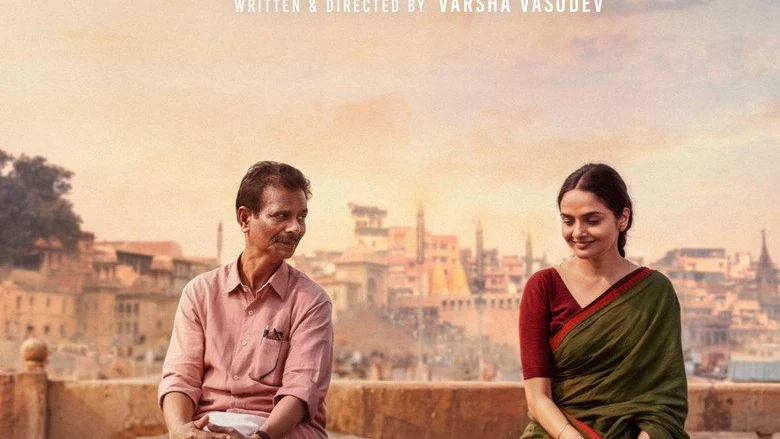
Indrans: The Heavy Weight of Restraint
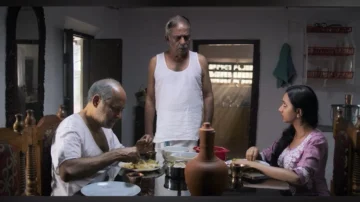
Indrans plays Madhavan Mash as a man who carries his loneliness in the slump of his shoulders, not in grand speeches. One specific scene, a simple meal by the river, finds him reacting to Madhoo’s Leela with a hesitation that speaks volumes. He trusts the stillness, and the film trusts him. There is no theatrical cry for attention here; just a performance that earns its emotional payoff through patience.
Madhoo Returns to the Frame
Madhoo’s return to the screen is a risk in itself. Her Leela is not defined by glamour but by a guarded curiosity. In the early conversation scenes, she holds a slight, nervous distance that makes the moment she finally smiles feel earned. She complements Indrans perfectly, creating a dynamic where neither actor overshadows the other, both are equally vulnerable.
Direction and Screenplay: A Quiet Bet That Nearly Pays
Vasudev’s strength is her unwavering focus on character interaction over plot mechanics, using Varanasi as a reflective, spiritual backdrop. However, the screenplay’s linear structure offers no external conflict or rising tension, which can feel like a gamble that never finds its payoff. There is a clear weakness in the lack of a third-act catalyst, leaving the emotional arc without a definitive climax.
Genre-Core Execution: Drama That Hinges on Atmosphere
As a drama, *Chinna Chinna Aasai* relies entirely on the emotional weight of two actors carrying a single-day story. The film uses the Varanasi ghats not as a tourist postcard, but as a recurring visual anchor for introspection. The river becomes a character, reflecting the characters’ unspoken wounds.
The romance is mature and observational, defined by the simple act of sharing a meal rather than by grand gestures. This risk works because the performances hold the scenes together, but it also means the film moves at a pace that requires significant patience.
The lack of incident is the film’s central creative gamble. It rejects traditional plotting for a meditative tone, and while it succeeds in creating a gentle reflection, it also risks alienating viewers looking for a stronger dramatic pull.
For viewers seeking a film that prioritizes emotional restraint over narrative speed, browsing Malayalam Drama reviews can uncover more such intimate character studies.
Audience Reception: A Film for the Patient Few
The available critic response, praising the “gentle reflection on love, loneliness, redemption, ” confirms the film’s niche appeal. One review notes that “Indrans and Madhoo’s charm bring emotional heft to this mature romance, ” a sentiment that suggests the film works best for those who value performance over plot. Without a verified IMDb score or wide social media consensus, the film feels like an intimate festival piece, more conversation starter than crowd-pleaser.
Is *Chinna Chinna Aasai* worth your time? Only if you are ready to sit still, to listen, and to let two strangers on a riverbank teach you something about silence. For a quiet afternoon watch on an OTT platform, it is a rare, meditative experience, provided you don’t expect the story to go anywhere fast. Transfer Trimurthulu review shares a similar reliance on performance over plot, but where that film is messy, this one is deliberately quiet.
For all its patience and sincerity, *Chinna Chinna Aasai* is a 3 out of 5 film that earns its score through sheer atmospheric commitment, even if its risk never fully lands.
Nooru Sami verdict similarly relies on a strong central performance to carry its dramatic weight.

Ankit Jaiswal is the Chief Author, covering Indian cinema and OTT releases with honest, no-filler criticism. An SEO strategist by background, he brings a research-driven approach to film writing, cutting through hype to tell you exactly what's worth your time.