Four friends spiral through adulthood marked as liabilities, parents disappointed, schools indifferent, society labeling them failures before they’ve begun. Vaazha II widens the lens on this familiar setup, swapping introspection for velocity, betting that chaos and comic timing can carry what the first film earned through genuine vulnerability.
The gamble is half-won. Savin SA’s sequel is demonstrably funnier and slicker than its predecessor, yet trades emotional durability for Instagram-ready momentum. It’s a sequel that knows what audiences laughed at last time and doubles down, without asking whether speed and charm can replace the weight that made you think.
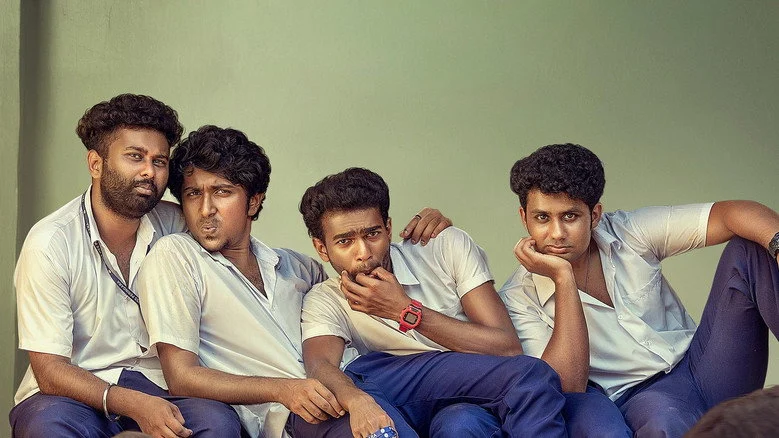
**Savin SA Expands Canvas But Loses Depth**
The director moves from singular focus to ensemble pressure, widening both emotional and geographical scope across four boys rather than one. That structural choice signals ambition, splitting screen time demands tighter writing and sharper interplay. Instead, the film treats this expansion as permission to accelerate, favoring lively energy over the kind of reflection that lingered after Vaazha. Times of India noted the film is “funnier, quirkier and slick, ” capturing the surface gains while missing what slowed the original to let moments breathe.
Vipin Das’s screenplay mirrors its predecessor’s DNA too faithfully. Linear structure, familiar emotional beats, and life-lesson architecture recycle the winning template without testing whether these four deserve the same runway. The pacing needed braking points, moments where chaos pauses and character settles, but instead the narrative sustains a reel-like energy that exhausts before it moves.
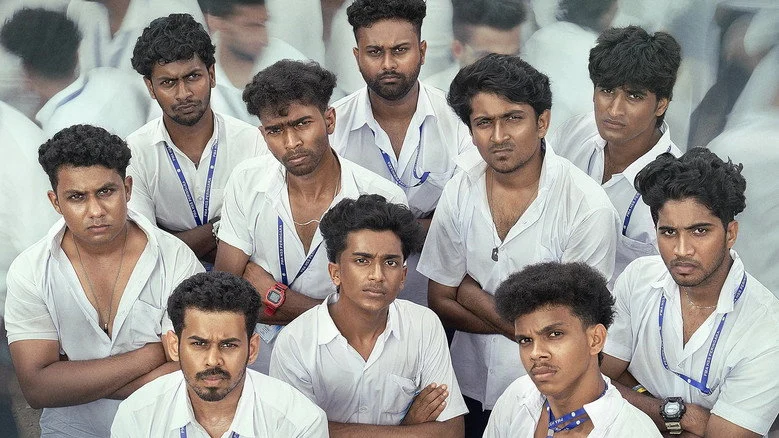
**Comedy-Drama Hybrid Chooses Velocity Over Resonance**
The film leans entirely on charm and comedic timing to anchor its drama. Humour is consistent, moments genuinely amusing, and the chaos deliberately orchestrated. But comedy-drama works when laughter and emotion occupy the same space, when a joke about failure also aches because we’ve seen the character’s face break before the punchline landed.
Here, the film sprints through life lessons without dwelling on cost. It tells us these boys embrace responsibility and find success on their own terms, but it doesn’t show us the quiet moment where that realization sticks, where winning at life, not society’s game, actually means something. New Indian Express captured this tension: “a fun ride that needed to slow down at times, ” which is critic-speak for “entertaining but hollow.”
The action elements exist in service of the comedy rather than as genuine genre architecture. Chaos becomes visual punchline, setpieces designed for laughs rather than stakes. It works for 90 minutes. By minute 120, you feel the difference between a film that entertains and one that stays with you.

**Ensemble Chemistry Carries Lightweight Material**
Hashir, Alan, Ajin, and Vinayak anchor the narrative as four friends navigating societal judgment. Their interplay generates consistent amusement, and the casting signals a film confident in its comedy ensemble rather than star power. Biju Kuttan, Alphonse Puthren, Vijay Babu, and Aju Varghese provide supporting texture, though their specific moments and dramatic functions remain undefined in the material’s current shape.
Without detailed scene work available, the supporting cast reads as functional, they populate the world these four inhabit without deepening it. That’s a screenplay choice, not a performance failure, but it limits the film’s ability to generate competing emotional stakes.
**No Controversy, Only Audience Expectation**
The film arrives free of political provocation or censorship friction, a straightforward comedy-drama sequel positioned squarely for predecessor fans. Its risk isn’t ideological; it’s artistic. The real controversy, if it exists, lives in the gap between what Vaazha accomplished and what Vaazha II settles for. Viewers seeking the emotional architecture that made the first film linger will find only surface charm here.
**The Verdict**
Go if you laughed at the original and want more of that energy without the weight. Skip if you’re hoping for a film that deepens what made Vaazha work, this sequel accelerates away from introspection. Watch it in theaters where the ensemble chemistry and comic timing land loudest.
Malayalam comedy-drama fans might find kinship in Jana Nayagan review, which wrestles with similar ensemble pressures through different genre mechanics.
Vaazha II: Biopic of a Billion Bros is funnier than its predecessor but shallower, a 3.5/5 sequel that mistakes velocity for substance.
Director Savin SA’s structural choices echo the risk-taking approach visible in Bad Boy verdict, though with less payoff in emotional stakes.

Ankit Jaiswal is the Chief Author, covering Indian cinema and OTT releases with honest, no-filler criticism. An SEO strategist by background, he brings a research-driven approach to film writing, cutting through hype to tell you exactly what's worth your time.