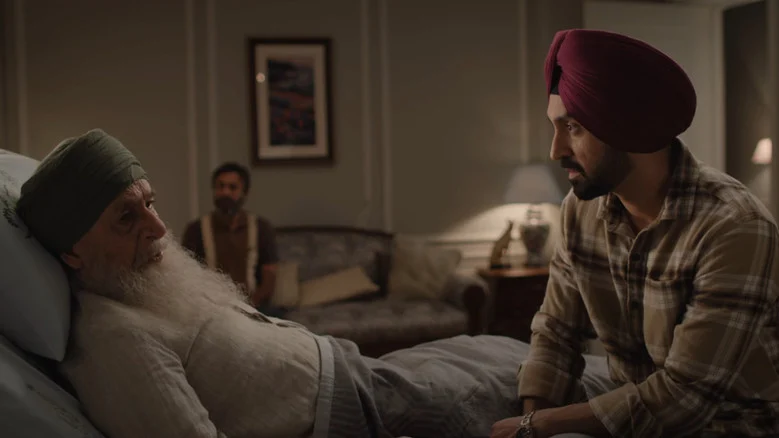
A 95-year-old man, his body a ruin of tremors and fragmented speech, mumbles, “Main vaapas aaunga” into the silence of a hospital room. His grandson, Nirvair (Diljit Dosanjh), listens without reply, the words hanging like a promise the old man can no longer keep.
Naseeruddin Shah’s Deathbed Confession is the Film’s Emotional Anchor
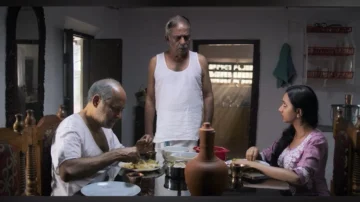
Naseeruddin Shah doesn’t just play Ishar Singh Grewal; he inhabits the slow dissolution of a mind trapped between decades. Shah’s physical tremors and fragmented speech patterns in the deathbed scenes are subtle craft choices that carry the weight of 78 years of separation. His minimal dialogue delivery in the confession scene, where he finally learns Afsana died ten years prior, is pure vulnerability without excess.
Imtiaz Ali’s Non-Linear Screenplay and Its Specific Flaw
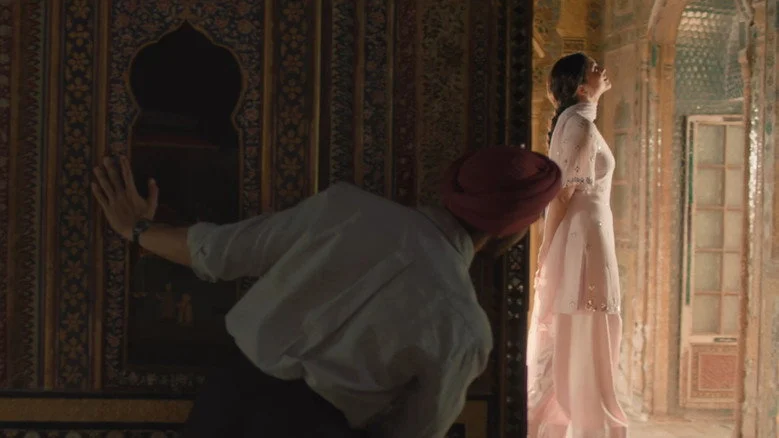
Imtiaz Ali revives his signature old-school romance with a structure that alternates between the muted, cold present and the warm, golden undivided Punjab of 1947. The screenplay handles historical trauma with nuance, weaving Partition’s mass migration into a personal tragedy. However, the transition between timelines is occasionally abrupt, breaking the immersion at key emotional beats. I found the second-half pacing slower than its first, focusing too long on revelation before resolution.
How the Romantic Drama Genre Relies on Memory as an Antagonist
The romance between young Ishar (Vedang Raina) and Afsana (Sharvari) hinges on a specific craft decision: the absence of a traditional villain. Time, memory, and the geopolitical horror of Partition serve as abstract antagonists, making their love feel doomed from the first gaze. The flashback of their first meeting, praised widely for its tender energy, is shot with warm, golden tones that contrast sharply with the cold, muted palette of the present. Music serves as a bridge between these worlds, enhancing the emotional resonance without overpowering the narrative.
Ali uses the non-linear structure to emphasize that the past is always present, as the narrator line “The past is always present” suggests. The historical trauma is never allowed to overshadow the personal longing, a balance few Partition dramas achieve. The result is a film that treats love and displacement as two sides of the same old wound.
The funeral of a dream is given the same screen weight as the birth of one. It’s a choice that pays off in Ishar’s final acceptance scene, where the camera holds on Shah’s face long enough to register the shift from desperation to peace. For those drawn to films that examine how memory shapes identity, this is an essential watch.
Diljit Dosanjh and Vedang Raina Bring Necessary Counterpoints
Diljit Dosanjh, as Nirvair, balances the role of caregiver and investigator with quiet determination. His performance in the scene where he discovers Afsana’s death is restrained, letting the weight of silence do the work. Vedang Raina’s young Ishar captures youthful passion with an energetic authenticity that sells the romance. Sharvari, as Afsana, portrays the character’s enduring love and eventual despair with enough emotional depth to make her final absence felt.
No Controversy, But a Clear Audience Divide
No political or censorship issues surround the film, but the audience reception reveals a clear split. Those who praise the emotional impact of Ishar’s final realization and the visual beauty of the flashbacks align with the 92% Rotten Tomatoes critic score. Others who complain about the confusing timeline structure and underdeveloped supporting characters represent the film’s limitation: it requires patience for its craft-first approach. The box office, declared a hit by trade analysts despite unavailable opening figures, suggests the critics’ vote won this round.
This is a film built for class audiences and fans of Imtiaz Ali’s older work, not those seeking fast-paced action or linear comfort. Watch it on the largest screen available in 2D, the warm cinematography of undivided Punjab deserves the canvas. The flashback sequences alone justify the ticket price, but the real reward is Shah’s final act of letting go. Hindi Drama reviews for similar emotional journeys.
Main Vaapas Aaunga earns a measured 3.5 out of 5, a beautiful film about loss that stumbles on its own timeline, but never on its heart.
For a similarly gentle, risk-filled two-hander anchored by generational memory, revisit Chinna Chinna review.
If you prefer messy genre mashups with comeback performances, check out Transfer Trimurthulu verdict.

Ankit Jaiswal is the Chief Author, covering Indian cinema and OTT releases with honest, no-filler criticism. An SEO strategist by background, he brings a research-driven approach to film writing, cutting through hype to tell you exactly what's worth your time.