Chandni meets Aarav in the unguarded space of college, where ambition hasn’t yet collided with emotion. What begins as an everyday connection deepens into something both tender and precarious, a romance built on shared routines that will eventually shatter under the weight of separate goals, diverging priorities, and the harsh arithmetic of adult responsibility.
Vivek Soni’s film arrives as a straightforward relationship drama, and it knows exactly what it is: a story about love discovering it cannot simply override the messy business of becoming an independent adult. The question isn’t whether these two belong together, but whether belonging together is enough.
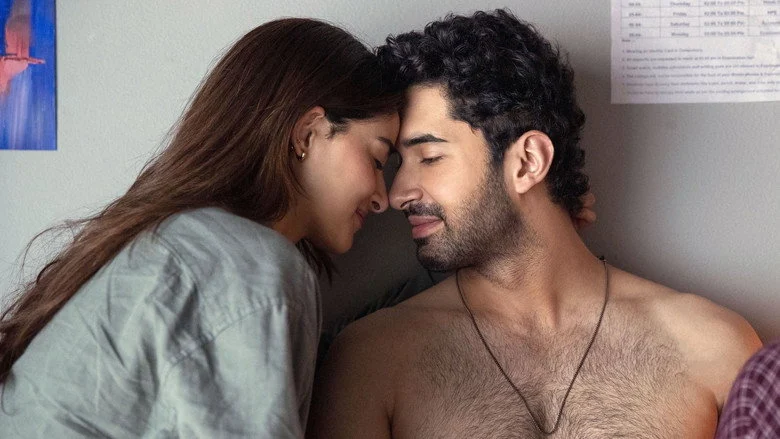
Ananya Panday Grounds Chandni’s Ambition
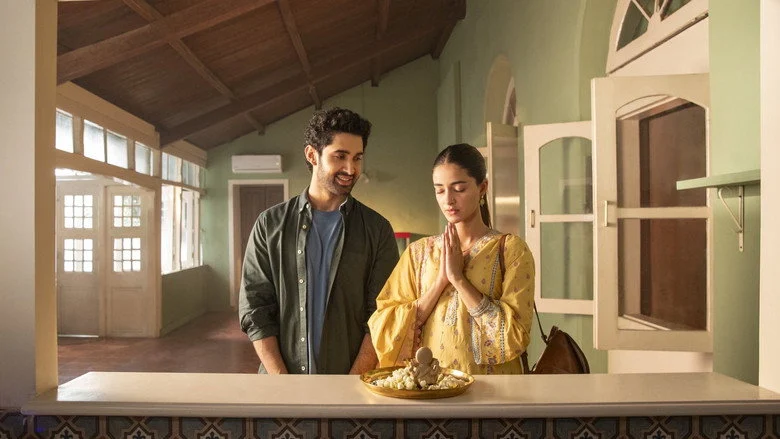
Panday plays Chandni as something the film refuses to soften: an ambitious woman whose career matters as much as her romance. She’s positioned not as a romantic figure first, but as someone for whom independence and professional growth function as non-negotiable. The early college-romance sequences establish chemistry through ordinary moments, routines and shared vulnerability that feel lived-in rather than performed.
Where the film tests Panday most is in the central tension, where career pressure begins fracturing the relationship. She carries the weight of that conflict without relying on tears or melodrama, instead embodying the quiet determination of someone choosing growth even when it costs connection. The separation stretch in the second half demands a different register, grief without dissolution, and Panday holds that ground.
Soni’s Direction Prioritizes Mood Over Plot Complexity
Soni contains the entire narrative within the relationship itself, using mood and musical framing as the primary storytelling devices rather than plot exposition or external antagonism. This restraint is a strength: the film trusts the audience to understand that conflict emerges from incompatible life trajectories, not from misunderstanding alone. The emotionally restrained climax, which reframes love as something that coexists with growth rather than overrides it, demonstrates that ambition.
The weakness surfaces in the middle stretch, where familiar breakup beats begin accumulating, misunderstanding, distance, the predictable architecture of separation. Soni and co-writers Tushar Paranjape and Akshat Ghildial work within convention rather than against it, and the screenplay never quite finds a way to make those standard moments feel necessary rather than inevitable.
Romance as a Drama of Competing Priorities
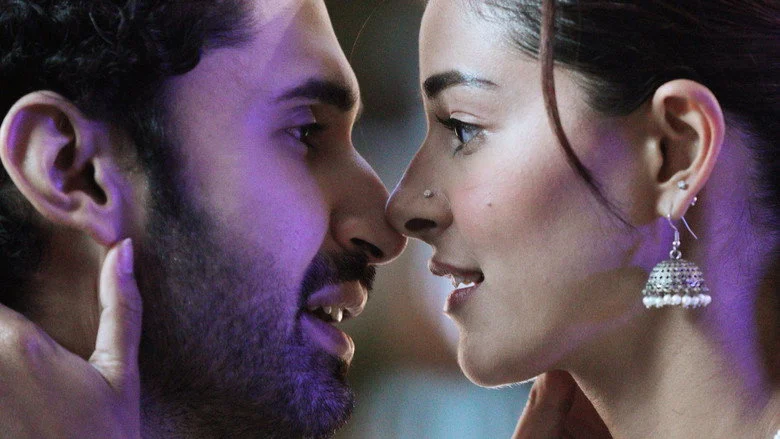
The film’s primary genre strength lies in how it weaponizes the central relationship against itself. Aarav and Chandni don’t fail because they stop loving each other; they fracture because love, in their case, cannot survive the collision between emotional dependency and the demands of independence. The college romance sequences establish this foundation: attraction and openness in a space where time feels infinite.
As adulthood pressures increase, the screenplay shifts tone deliberately. What was tender becomes fragile. The turning point, where career choices and personal priorities begin to damage what once felt secure, becomes the film’s emotional spine. Soni stages this not as a climactic betrayal, but as a slow recognition that commitment cannot override the gravity of self-growth.
The separation and heartbreak stretch that follows occupies the film’s second half, and here the music-forward presentation becomes essential. Rather than rely on dialogue to excavate feeling, the film uses mood, silence, and musical space to communicate what words cannot. The resolution, grounded and realistic rather than romantically redemptive, positions the ending as mature rather than sentimental: these two may have needed to break apart to become the people they were supposed to become.
For those exploring Hindi romance dramas beyond the obvious, Hindi Drama reviews here examine what happens when emotional authenticity demands more from the form than comfort allows.
Lakshya Lalwani Embodies Emotional Vulnerability
Lalwani’s Aarav functions as the emotional counterweight to Chandni’s ambition. He anchors the romance through scenes that rely on vulnerability and response to conflict, the moments where love expresses itself as sensitivity rather than possession. In the early sequences, his expressiveness grounds the relationship; in the second half, his helplessness in the face of Chandni’s necessary departure becomes the film’s emotional center.
The casting suggests an intention to avoid the masculine-stoicism default. Aarav’s ability to feel openly, without shame, becomes both his strength and his limitation within the narrative.
The Budget and Ambition Ask Different Questions
At ₹60 crores, this is a mid-tier Dharma Productions investment in romantic drama, a format the house has historically approached with either commercial caution or stylistic restraint. What remains unexplored in the available material is whether Soni uses that budget to deepen the world around these two characters or whether the film remains entirely interior, entirely focused on the intimate architecture of a single relationship.
The absence of a confirmed antagonist or substantial external conflict means the film must succeed entirely on the strength of its lead pair and the emotional authenticity of their collision with adulthood. That’s either a bold creative choice or a limiting one, depending on what the screenplay actually delivers beyond its familiar structural beats.
Chand Mera Dil works best as a film for viewers comfortable with intimate emotional drama over narrative surprise. Panday’s commitment to playing ambition rather than accommodation, and the film’s refusal to frame her career as the villain in her own love story, pushes past the formula far enough to warrant a watch, though not far enough to transcend the familiar rhythms of romance-drama entirely. This is a film about adults making hard choices, treated with the seriousness it deserves, but built from recognizable pieces. I’d recommend catching it in a theater where the mood and music can work without distraction, because the plot itself won’t carry the weight alone.
Chand Mera Dil examines a genuinely mature problem, whether love survives competing ambitions, with enough sincerity and restrained performance work to justify its existence, though the screenplay structure remains conventionally assembled: a respectable but not transformative 3 out of 5.
The film shares thematic and tonal alignment with Battle review, both examining how personal commitment collides with larger structural pressures.
Both titles rely on dual-role emotional scaffolding, one character’s ambition framing another’s sacrifice, similar to how Bhooth Bangla verdict tested its performers.

Ankit Jaiswal is the Chief Author, covering Indian cinema and OTT releases with honest, no-filler criticism. An SEO strategist by background, he brings a research-driven approach to film writing, cutting through hype to tell you exactly what's worth your time.