Michael Jackson’s silhouette moves across a darkened stage, moonwalk, spin, that iconic tilt, and the recreation feels alive in a way the rest of Antoine Fuqua’s film struggles to achieve. The performance sequences snap with kinetic clarity and period precision, but the moment the spotlight fades and conversation begins, the machinery of conventional biography takes over.
Fuqua’s approach to this music-biography hybrid reveals a fundamental creative choice: spectacle over interiority. What works cinematically, the Jackson 5 setups, the early solo-career performance reenactments, the staging of his rise to global dominance, drowns out everything else. What collapses is the harder work of understanding the person inside the performer.
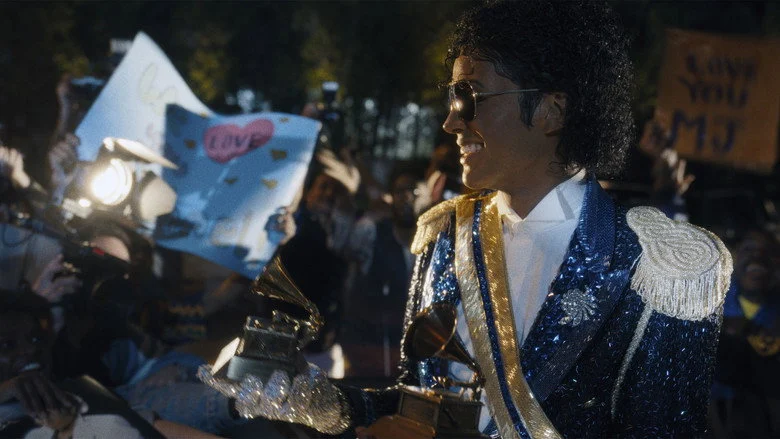
Jaafar Jackson’s Physical Mimicry Carries the Performance Sequences
Jaafar Jackson was cast for his visual resemblance, and that choice pays dividends whenever the camera captures movement and stage presence. His embodiment of Jackson’s physical vocabulary, the way he holds his frame, executes a spin, controls his gaze during performance, registers as genuine craft. The problem emerges in dialogue scenes, where imitation hits a ceiling and dramatic weight is required but rarely delivered.
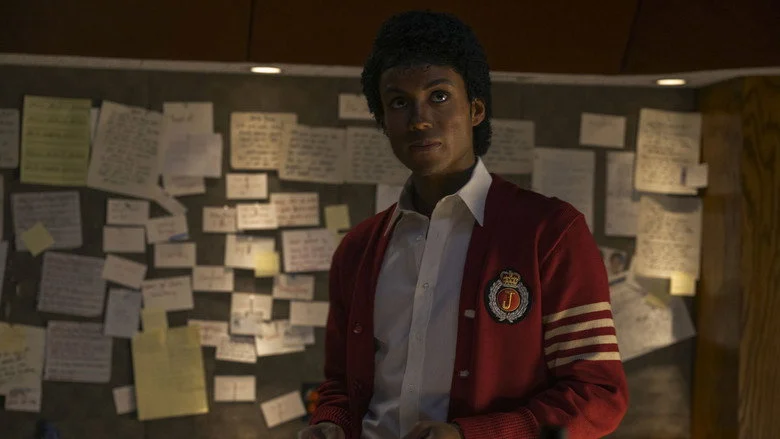
Fuqua Stages Concert Moments with Authority But Falters in Quiet Scenes
The director’s command of large-scale performance is evident. Concert recreation, lighting design, and the visual grammar of stardom come alive under his direction. His weakness surfaces in private spaces, family dinners, management meetings, psychological turning points, where his camera feels formal and his pacing cautious rather than revealing. He prioritizes surface biography over the contradictions that make Jackson’s story genuinely complex.
The Screenplay Follows Familiar Biopic Structure Without Deep Investigation
John Logan’s screenplay moves chronologically from childhood through the Jackson 5 era into early solo stardom, tracking the expected beats of rise-and-isolation. What it avoids, and what the critical response flagged as a crucial omission, is genuine grappling with the contradictions between Jackson’s artistry and his vulnerabilities. The dramatic exposition scenes feel schematic rather than earned.
The conflict between family pressure (Colman Domingo’s Joe Jackson), artistic ambition, and industry demands is laid out competently but never deepens into something that feels psychologically necessary. The Bad-era material marks the endpoint, leaving the film’s scope deliberately narrow. That choice, avoiding later controversy, reads as cautious rather than focused.
The film’s uneven pacing mirrors this structural choice. The first half, driven by performance setup and the novelty of early-career reenactment, moves with momentum. The second half slows under biographical obligation, unable to convert dramatic scenes into the kind of emotional payoff that would justify their screen time. Apple TV’s critical score of 39 reflects this mismatch between production ambition and narrative execution.
Colman Domingo, Nia Long, and Miles Teller Define Competing Pressures
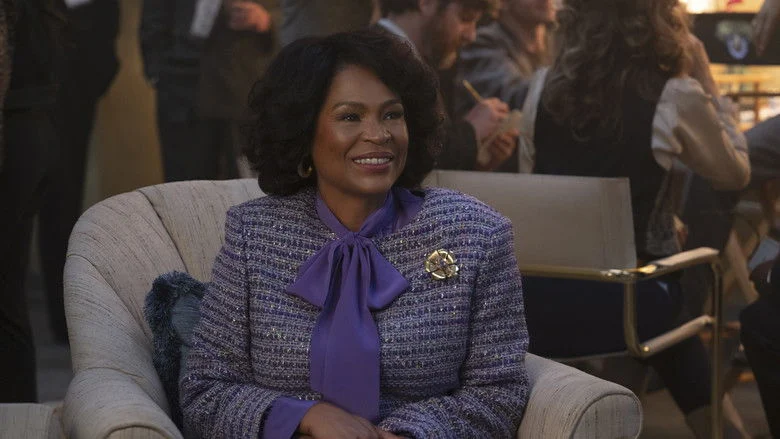
Colman Domingo’s Joe Jackson functions as the primary opposing force, authoritarian, demanding, the source of both discipline and damage. He brings weight to scenes of control and pressure without softening the character into something more sympathetic than the material allows. Nia Long’s Katherine Jackson provides the emotional counterweight, positioned as protector and conscience rather than active participant in the larger biographical machinery.
Miles Teller, cast as John Branca, represents industry concerns and business reality. His presence frames Jackson’s ambition against the machinery of commercial entertainment, though the screenplay rarely gives him scenes substantial enough to deepen that tension. Laura Harrier’s Suzanne de Passe appears in similar professional-trajectory moments, supporting the rise narrative without shifting its emotional register.
If you value performance recreation and the visual spectacle of music-biography staging, this warrants a theatrical viewing for the concert sequences alone. The production scale and period detail are undeniable. But if you’re seeking psychological depth or new understanding of Jackson’s contradictions, Fuqua’s film retreats into familiar, safe territory, prioritizing what it can show over what it should explore. Stream it at home if the music-biopic form alone satisfies; theaters demand more than spectacle can deliver alone.
For similar craftwork in music-biography staging, exploring Chand Mera review offers perspectives on performance-driven narrative work within different contexts.
Michael is a film that knows how to film a concert but not how to film a life, a competent but hollow reconstruction that settles for 3 out of 5 stars.
Fuqua’s approach mirrors the genre-blending tension seen in Battle verdict, where spectacle and substance must negotiate for screen time.

Ankit Jaiswal is the Chief Author, covering Indian cinema and OTT releases with honest, no-filler criticism. An SEO strategist by background, he brings a research-driven approach to film writing, cutting through hype to tell you exactly what's worth your time.