The camera glides through the silent corridors of an ancient Vishnu temple, dust motes dancing in shafts of sunlight as the Nagabandham ritual is unveiled. Abhishek Nama’s *Nagabandham – The Secret Treasure* offers a visual feast of sacred architecture, but its 185-minute runtime asks for a patience the inconsistent screenplay cannot always reward.

The Protagonist’s Journey: A Visual Anchor, An Emotional Void
Murli Sharma carries the weight of this spiritual quest with a grounded earnestness that suits the film’s mythic ambitions. His discovery of the temple’s mysteries in the opening sequence is evocatively staged, but his internal conflict remains curiously unexplored.
He functions better as a guide through the ritual’s wonders than as a protagonist with an arc. The climax’s revelation lands because of Nama’s visual sense, not because Sharma has given us a character we deeply care about.
Direction and Screenplay: Stunning Temples, Sagging Middle
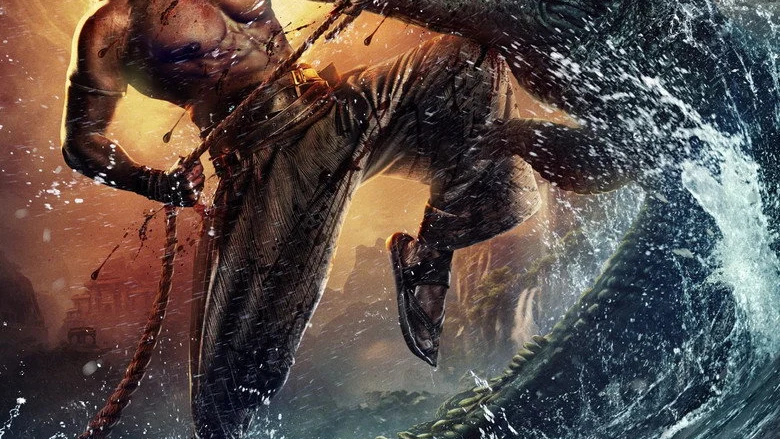
Abhishek Nama and Shravan Kumar Tadka’s screenplay follows a linear route that feels reverent but dramatically slack. The director’s strength is unmistakable in the temple photography, yet he allows the middle act to drift into repetitive discovery sequences that bleed momentum.
The central confrontation between protagonist and antagonist in the temple’s inner sanctum lacks the rhythmic build a scene of that magnitude requires. It is the film’s most criticised scene, and rightly so, it plays out as a checklist beat rather than a crisis of stakes.
Mythological Fantasy Execution: When Ritual Outpaces Drama
The film’s primary genre demands a balance between wonder and weight, and *Nagabandham* tilts heavily toward spectacle. The exploration of ancient Vishnu temples is the single most impressive craft element, every pillar, carving, and flame feels chosen for its spiritual charge. Nama’s camera treats the architecture not as backdrop but as a living text.
Yet the action sequences that the genre also promises feel like an afterthought. The choreography in the temple corridors is functional but never inventive, and the “secret treasure” of the title becomes a MacGuffin that generates more talk than tension. The adventure component gets lost in the reverence.
The genre’s best practitioners know that myth needs human friction to feel alive. Here, the ritual’s hidden secrets are revealed with technical competence but without the surprise or dread that fantasy thrives on. The middle section loses its grip because it preaches the sacred rather than dramatising the profane threat to it.
Supporting Cast: Jagapathi Babu’s Weight, Nabha Natesh’s Light
Jagapathi Babu plays the antagonist with his usual gravitas, his presence immediately raising the stakes every time he appears. That said, the script leaves his motivation frustratingly thin, he wants to exploit the ritual, but we never learn why, which reduces him to a figure of symbolic evil rather than a character.
Nabha Natesh brings warmth to her role, though her character exists primarily to react to the protagonist’s discoveries. V. Jayaprakash and Iswarya Menon provide solid support, while B.S. Avinash and Virat Karrna fill the edges of this mythological canvas without ever leaving a mark. The supporting cast signals the film’s ambition for a sprawling epic, but the writing never gives them a scene to own.
The Audience Reception Angle: Visuals Win, Patience Loses
Audience feedback mirrors critical notes almost exactly. The stunning temple photography and effective climax are widely praised, but the inconsistent pacing of the middle section and the 185-minute runtime are almost universally flagged. This is a film that divides viewers not on taste but on tolerance for meandering exposition.
For a mythological fantasy, the film’s strongest audience segment appears to be families and fans of temple lore, while those seeking tighter action or emotional payoff may leave restless. One first-person observation: I found myself admiring the craft long after the plot had stopped compelling me to stay engaged.
If you are drawn to the visual archaeology of Telugu mythological films, this journey through hidden temple corridors may reward your patience, ideally on the largest screen you can find.
For a different register of devotional intensity, consider how Alpha review in a completely different genre.
Nagabandham – The Secret Treasure worships its own visuals more than its story, earning a generous 2.5 out of 5 for ambition over execution.
For an alternative take on flawed mythmaking, flower she verdict.

Ankit Jaiswal is the Chief Author, covering Indian cinema and OTT releases with honest, no-filler criticism. An SEO strategist by background, he brings a research-driven approach to film writing, cutting through hype to tell you exactly what's worth your time.