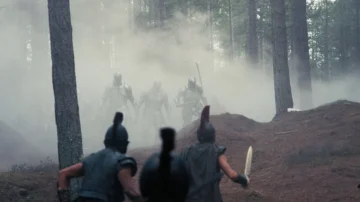
The opening act of Kara is where director Vignesh Raja earns his confidence. Karasaami, played by Dhanush, is introduced through a series of controlled, tension-filled beats that establish his command over the local landscape. This is the film’s most assured stretch, a slow-burn setup that builds the heist premise with genuine patience.
The early scenes work because they let Dhanush’s presence do the heavy lifting. He moves through the village power dynamics with a quiet authority that makes the thriller framework feel alive. It is a shame the rest of the film cannot maintain this level of composure.
Suraj Venjaramoodu’s Antagonist Works As Pressure, Not Personality
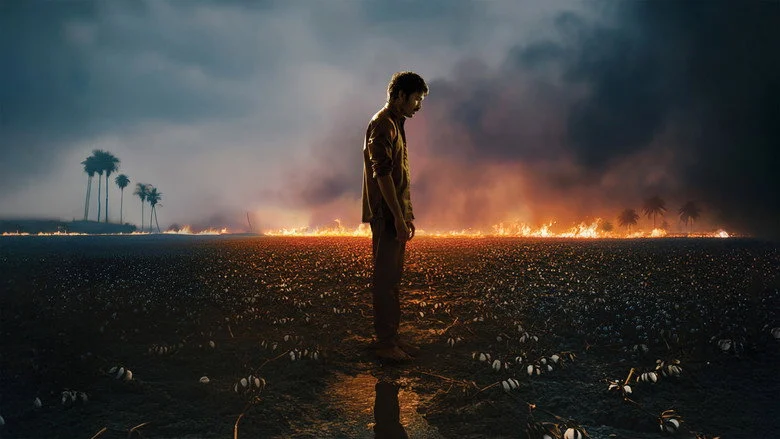
Suraj Venjaramoodu’s DSP M. Bharathan functions as a procedural obstacle rather than a fully realized villain. He applies pressure through pursuit and investigation, tightening the narrative screws around the protagonist in the mid-film passages. The role is written as a function, not a character.
That is not entirely a flaw. The thriller structure needs a relentless opposing force, and Venjaramoodu delivers the required menace without overplaying. But when the film leans on emotional confrontations in the second half, his character’s thinness becomes more apparent.
The supporting ensemble around him is steady without being spectacular. Jayaram anchors the local power-structure scenes with reliable presence, while K. S. Ravikumar adds familiarity to the village network setup. Karunas contributes texture to the rural setting, though none of these actors get moments that linger.
The Action-Thriller Craft Works When The Film Stays Focused
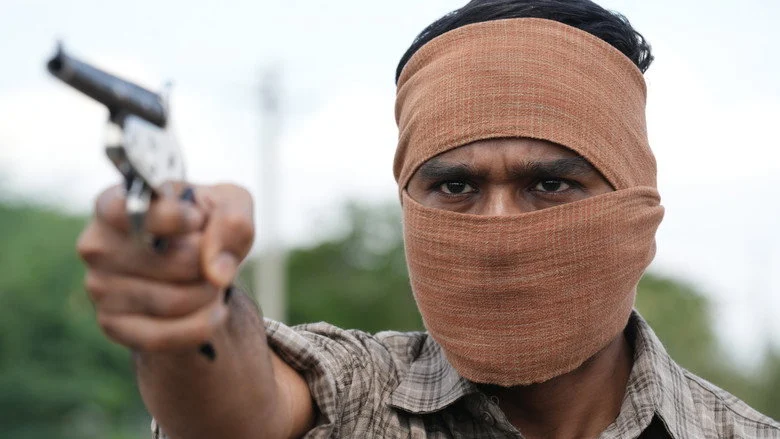
Kara’s genre execution is built on a slow-burn escalation rather than constant action density. The opening heist setup is the clearest example of this approach working, with tension sustained through careful staging and Dhanush’s central positioning. The film trusts its lead to carry the escalation chain, and for a while, that trust pays off.
The mid-film investigation and pursuit passages involving the police and village power figures maintain the thriller structure competently. These scenes rely on procedural momentum rather than spectacle, which suits the grounded visual style. The cinematography favors a mainstream, scaled-down aesthetic that prioritizes clarity over experimentation.
But the second half loosens its grip. The pacing drags, and the emotional beats feel familiar and outdated. What was controlled in the opening becomes uneven in execution, and the climax, while resolving the conflict, cannot fully recover the lost momentum. The editing tightens the first half but abandons that discipline later.
The film’s scale is ambitious, but the budget of ₹135 crore, as reported by Sacnilk, demands more than ambition. The opening day brought in ₹13.15 crore net in India and ₹20.20 crore worldwide, according to The Week. The first week total reached ₹25.15 crore net and ₹38.70 crore worldwide, per the same source, but the film was ultimately declared a flop.
For a Tamil action thriller that leans on local power dynamics, there is more to explore in the regional space. If you are looking for similar films that handle this terrain with sharper execution, browse more Tamil Thriller reviews.
Mamitha Baiju And The Supporting Cast Deserve Better Material
Mamitha Baiju plays Selli, but the research offers little detail on her character’s arc. What is clear is that the emotional writing around the female lead is part of the film’s weakness. Reviewers repeatedly called the emotional beats outdated, and Baiju’s role appears to suffer from that limitation.
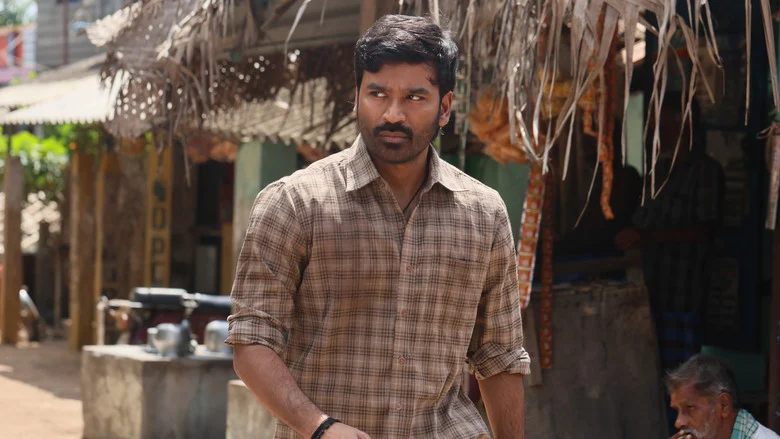
M. S. Bhaskar appears as an ageing villager, adding a layer of authenticity to the rural texture. Aadukalam Naren and Vela Ramamoorthy round out the authority figures, with the latter playing Commissioner N. Azhagar Nambi. None of these performers get substantial moments, but their casting signals a film trying to ground its thriller in recognizable Tamil social dynamics.
The supporting cast is not the problem. The screenplay simply does not give them enough to work with beyond their functional roles in the power structure. This is a Dhanush vehicle first and an ensemble piece second.
Box Office Reality And The Election Day Release
The film’s release coincided with Tamil Nadu election day, a scheduling choice noted in box office coverage. That context may have affected the opening numbers, but the sharp domestic drop after the first day, reported by The Week, suggests deeper issues. Koimoi tracked strong initial collections that were ultimately insufficient for the budgeted scale.
Sacnilk’s average critic rating of 5.3/10 aligns closely with the IMDb audience score of 5.3 from early user votes. The critical consensus points to a film with a confident setup and a weak second half. The trade verdict of “flop” is harsh but fair given the reported budget versus the worldwide gross.
What the film does better than its weaker material is establish Dhanush as a stable anchor. What it does worse is deliver on the promise of its premise. The emotional writing is less fresh than the thriller framework suggests, and the pacing unevenness hurts the overall impact.
I found myself checking the runtime in the second half, which is never a good sign for a thriller.
Kara is a film for Dhanush fans and those who appreciate slow-burn setups over consistent payoff. If you are looking for tight pacing throughout or fresh emotional writing, this is not the film for you. The best format to watch this is on OTT, where the runtime feels less punishing and the controlled opening can be appreciated without theatrical expectations.
Dhanush’s presence makes Kara watchable, but the film’s uneven execution and outdated emotional beats drag it down to a 5/5 rating that feels generous on reflection.
For a quieter romance that trusts its silences with similar patience, Commandovin Love review offers a different kind of restraint.
If you prefer a comedy that trusts its cast with sharper efficiency, Lechindi Mahila verdict delivers what Kara’s second half lacks.

Ankit Jaiswal is the Chief Author, covering Indian cinema and OTT releases with honest, no-filler criticism. An SEO strategist by background, he brings a research-driven approach to film writing, cutting through hype to tell you exactly what's worth your time.