A scheming small-town man navigating British-era power structures, where every risky plan collapses back onto its architect, is the kind of premise that lives or dies by the precision of its craft. Dijo Jose Antony’s Pallichattambi: The Origin arrives as a period action-thriller with that exact blueprint, and the textural choices the film makes in framing its morally ambiguous lead signal something worth paying close attention to.
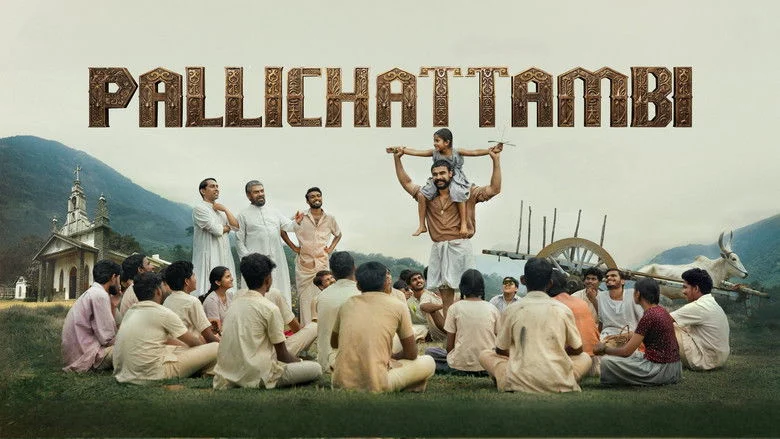
Tovino Thomas Carries the Weight of a Man Who Schemes His Way Into Corners
Tovino Thomas plays Chattambi, a man defined less by physical dominance and more by calculation. That is a meaningful departure from where Malayalam cinema typically places its action leads. The character’s appeal depends on whether Thomas can make cunning feel visceral, and his track record with layered protagonists suggests the casting is deliberate, not decorative.
The challenge for Thomas here is sustaining audience investment in a character who repeatedly engineers his own catastrophes. Playing a schemer demands controlled restraint over spectacle, and I find that register far more interesting to watch than straightforward heroism.
Dijo Jose Antony’s Direction Leans Into Period Atmosphere but Leaves Screenplay Architecture Exposed
Dijo Jose Antony has a clear visual grammar when working within contained, pressure-cooker narratives. Setting Pallichattambi against British rule and local power struggles gives him a textured backdrop with inherent dramatic friction. The period framework is the film’s most ambitious swing.
Writer S. Suresh Babu’s screenplay, however, carries the risk that most origin-story structures do, spending so much time establishing the world that the central conflict arrives late. A thriller built around a man whose plans perpetually backfire needs its structural reversals timed with near-surgical precision.
The dual cinematography credit, Divakar Mani and Tijo Tomy, raises a question about visual consistency across the film’s tonal registers. Period productions demand unified lighting logic, and split-DOP arrangements can fracture that continuity if not carefully coordinated.
Action Sandhosh’s Choreography Must Do More Than Muscle in a British-Era Frame
Period action is a distinct discipline. Contemporary stunt choreography mapped onto a colonial-era setting often produces anachronism, the geography of violence must feel bounded by the weapons, spaces, and social hierarchies of the time.
Action Sandhosh has the credibility to navigate that challenge, but the true test is whether the setpieces feel embedded in the film’s political texture. An action sequence that doubles as a statement about local power versus colonial authority is infinitely more interesting than one that simply fills runtime.
Jakes Bejoy’s score carries significant responsibility in a period film, it must do the atmospheric heavy lifting that production design alone cannot. His compositional range in Malayalam cinema suggests he understands how to build tension through restraint rather than volume.
For more Malayalam action reviews covering similar period and thriller territory, 5movieruiz reviews at 5movieruiz.net.in offer a broader frame of reference for where this film sits in the current landscape.
Vijayaraghavan and Sudheer Karamana Signal That the Film Understands Character Architecture
The presence of Vijayaraghavan and Sudheer Karamana in supporting roles is not incidental. Both actors carry decades of Malayalam cinema’s dramatic muscle memory. Vijayaraghavan, in particular, has a quality of moral weight that filmmakers deploy when a scene needs credibility it cannot manufacture through staging alone.
Sudheer Karamana brings a different register, a naturalistic quality that can make even small scenes feel inhabited. That the film recruited both, alongside Prithviraj Sukumaran in what appears to be a substantial supporting capacity, signals a production confident enough in its material to surround its lead with actors who demand equal screen respect.
Johny Antony, Baburaj, and T.G. Ravi completing the ensemble reinforces the film’s investment in texture over star convenience. A cast this layered on the supporting side suggests Antony and writer Suresh Babu designed the world around Chattambi carefully, not incidentally.
The Audience This Film Is Built For Will Find It; Everyone Else May Hesitate
There are no documented controversies surrounding Pallichattambi: The Origin, which in the current Malayalam industry climate is itself a kind of creative statement. The film arrives positioned squarely at action-thriller enthusiasts and period drama audiences, a combination that rewards patience and punishes viewers expecting immediate payoff.
The origin-story framing, by design, builds toward something larger. Whether that larger promise feels earned within this film’s own runtime is the central question its audience will leave with.
If the period setting holds and the screenplay’s reversal mechanics land, Pallichattambi: The Origin could be a genuinely distinctive entry in the Malayalam action space. If the structural scaffolding creaks, as origin stories often do, the cast is strong enough to hold attention through the gaps. Watch it for Tovino Thomas navigating a character who thinks before he fights, and for a supporting ensemble assembled with obvious care.
If films where a debut director bets everything on a non-conventional lead interest you, Itllu Arjuna review makes for a sharp companion piece to what Antony is attempting here with Chattambi’s calculated chaos.
Pallichattambi: The Origin is worth your time if period-set Malayalam thrillers built on character cunning rather than clean heroism are your register, it earns a provisional 3 out of 5, where the craft intent is clear even when the execution’s full weight remains to be felt.
For another film where an unknown lead carries an unconventional genre premise almost entirely on instinct, the Manithan Deivamagalam verdict shares this film’s willingness to bet on character over formula.

Ankit Jaiswal is the Chief Author, covering Indian cinema and OTT releases with honest, no-filler criticism. An SEO strategist by background, he brings a research-driven approach to film writing, cutting through hype to tell you exactly what's worth your time.