A daughter vanishes into the desert. Eight years later, she returns, but something in her hollow eyes refuses to come home. Lee Cronin’s The Mummy trades tomb-raiding spectacle for the intimate suffocation of a family watching their worst fear materialize in their own living room, where the real horror is recognizing that grief itself can be weaponized.
This is a film that understands its audience: those who find genuine terror not in jump scares or elaborate set-pieces, but in the slow erosion of safety within walls meant to protect. Cronin operates with restraint here, letting unease accumulate through what characters don’t fully understand rather than what monsters explicitly reveal.
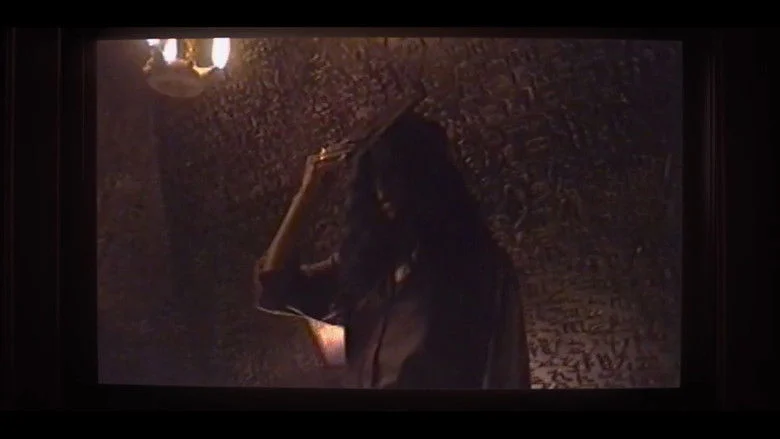
The journalist parent’s guilt carries the film’s emotional spine
The lead actor grounds this horror in parental desperation without veering into melodrama. During the reunion scene, they navigate the impossible space between relief and suspicion, a face trying to accept something it instinctively rejects. Their performance peaks during Katie’s body horror sequence, where physical and vocal work communicate the exact moment parental love collides with recognition of the inhuman.
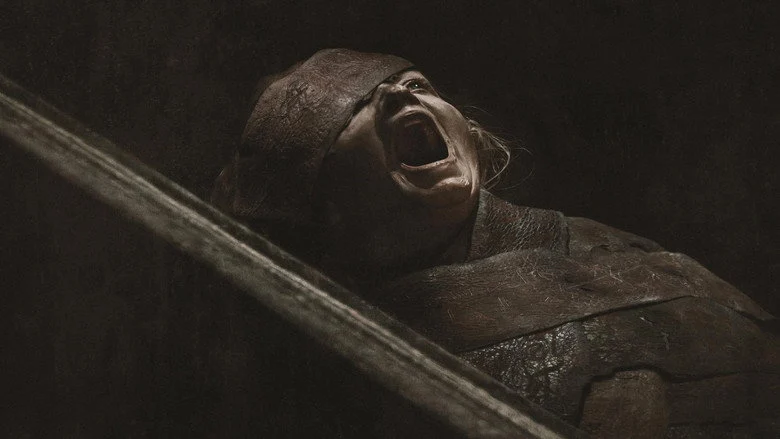
Cronin prioritizes mood over myth, but leaves crucial rules unexplained
The director sustains a consistent tonal register, favoring sustained dread over shock beats, and the screenplay’s linear structure, disappearance, return, transformation, confrontation, keeps momentum tight. Yet the mummy’s origins and motivations remain deliberately vague, which some viewers read as atmospheric ambiguity and others as narrative incompleteness. A late-act exposition sequence, where parents piece together backstory through dialogue, stumbles tonally against the film’s restrained visual language.
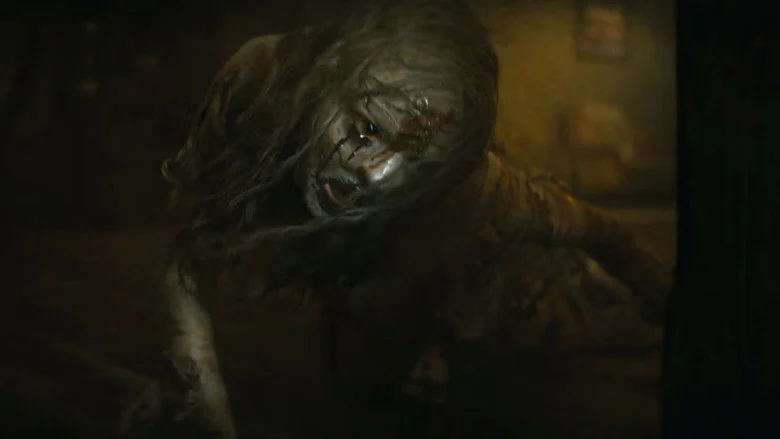
Body horror and silence do the work that gore cannot
The film’s first full reveal of Katie’s transformation, a sustained, unbroken take emphasizing physical distortion and behavioral wrongness, operates as the scene most viewers cannot shake. That sequence justifies the 134-minute runtime by refusing to cut away or offer relief.
Sound design functions as a character here. Dissonant strings and strategic silence in domestic spaces create claustrophobia more effectively than any music swell. The film avoids large-scale action entirely, which means tension either builds or stalls; there’s no middle ground. Some second-act sequences repeat beats that could have been tightened, and the third act leans on familiar horror resolution patterns rather than earning fresh territory.
Tight framing and low-light interiors emphasize entrapment, the harsh desert feels more livable than the family home by the film’s midpoint. Editing in the first half allows character and mood to breathe; the second half tightens for intensity, though transitions between quiet and violent moments sometimes jolt rather than flow.
The spouse provides grounded emotional counterweight
Supporting performances, particularly from Katie’s second parent, anchor scenes where parental instincts fracture. Arguments about how to handle Katie’s return generate psychological tension without melodrama. Katie-as-entity delivers a physically unsettling antagonist, using posture and minimal dialogue to suggest something fundamentally other, most effective in close-up moments where small behavioral shifts carry the weight.
The ending divides viewers between ambiguous dread and unfinished business
Audience response splits cleanly: some praise the slow-burn buildup and the decision to center character-driven horror over spectacle; others criticize the lack of clear mythology and find the ending either bravely open-ended or frustratingly incomplete. The film’s refusal to fully explain its supernatural mechanism feels intentional, grief doesn’t require explanation, only acknowledgment, yet viewers seeking coherent monster rules leave unsatisfied.
For fans of psychological horror who prioritize mood, atmosphere, and family trauma over external action, this represents a confident statement from a director unafraid of restraint. The R-rating comes from gore and violent content, but the film’s real violence is domestic and psychological, which may actually be more effective for audiences seeking character-grounded scares.
Horror enthusiasts drawn to Blumhouse’s track record of focused, low-scale terror should find this worth the theatrical experience, particularly on larger screens where sound design becomes a fully realized character. Those expecting mummy-adventure spectacle or clear mythology will likely feel shortchanged.
Viewers interested in how horror can weaponize family dysfunction may appreciate The Invisible Man (2020) from the same production company, which similarly centers unseen threats and domestic violation.
Lee Cronin’s The Mummy is a disciplined, emotionally precise horror film that trusts its audience to sit with dread longer than most modern genre work permits, a 3.5 out of 5 that respects both the material and the viewer’s intelligence, even when its mythology falters.
Similar examinations of grief and body horror can be found in our coverage of Nee Forever review, where character transformation serves different emotional registers.
For ambitious structural drama that doesn’t always bridge character and concept, consider our analysis of Peter verdict and similar tension between scope and execution.

Ankit Jaiswal is the Chief Author, covering Indian cinema and OTT releases with honest, no-filler criticism. An SEO strategist by background, he brings a research-driven approach to film writing, cutting through hype to tell you exactly what's worth your time.