Eera Babu, cheerful NRI, failed romantic, accidental fort-dweller, wakes up after a whiskey-soaked evening beside a deserted, supposedly cursed fort. His evening began with desperation: racing to stop his childhood love’s arranged wedding, then collapsing into inebriation when the plan crumbles. By morning, he’s tangled in a village mystery that locals fear deeply. Raakaasa positions itself as a blend of comedy, fantasy, and mythological thriller, but the execution stumbles across its own structural faults.
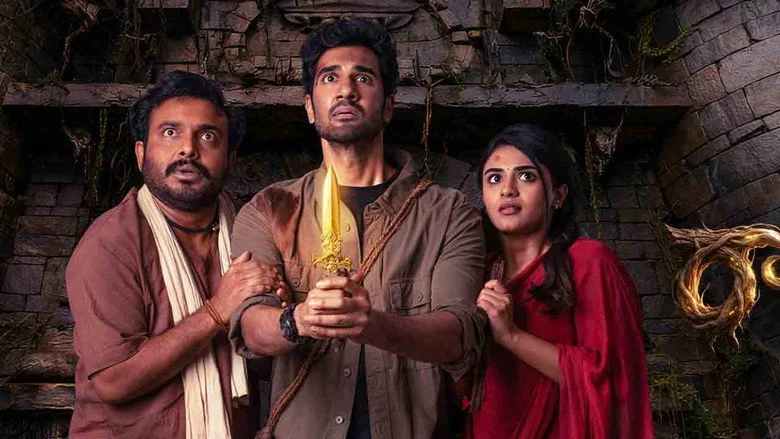
Sangeeth Shobhan’s Likability Carries the First Half’s Lighter Moments
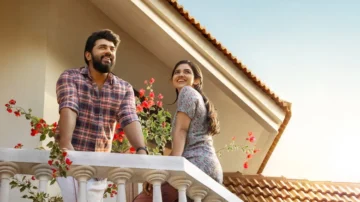
Sangeeth Shobhan brings an earnest charm to Veeru, grounding the character’s cheerfulness even when the screenplay asks him to pivot between romantic aspiration and supernatural confusion. His early scenes work: the desperation of a man chasing a lost love, the comedic self-awareness when schemes fail. However, the material doesn’t match his energy as the supernatural elements intensify. The actor relies on facial expressions and comic timing to hold scenes that lack sharper dialogue or clearer dramatic stakes.
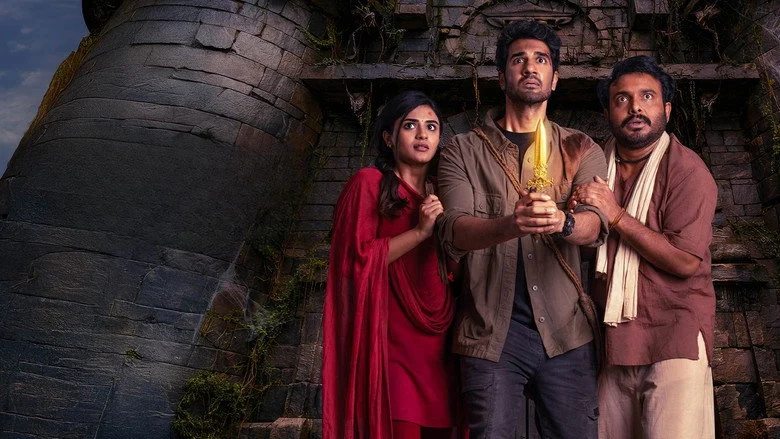
Manasa Sharma’s Debut Feature Struggles with Linear Plotting and Predictability
Director Manasa Sharma’s first feature arrives with ambition but limited structural control. The screenplay, co-written with Mahesh Uppala, follows a linear path that becomes too familiar by the second half. Once curses and sacrifices enter, the narrative retreats into well-worn mythological thriller territory. Sharma never finds the tonal balance needed to land both comedy and supernatural dread in the same frame. The pacing drags when the film should accelerate, and meaningful twists feel telegraphed rather than earned.
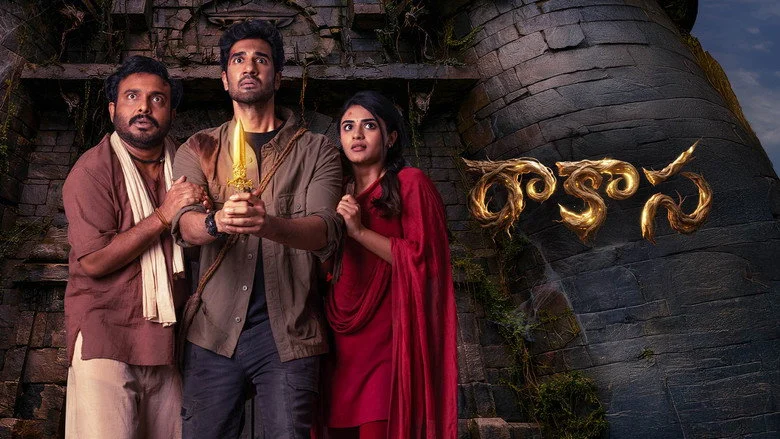
The Comedy-Fantasy Blend Fractures Into Two Conflicting Tones
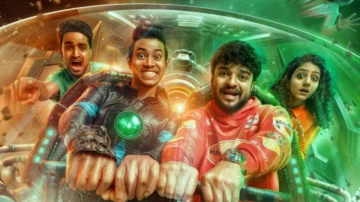
The first half leans into humor, Veeru’s misadventures, village dynamics, romantic fumbling, and finds occasional rhythm. Comedy moments work when the screenplay leans into character quirks and situational irony. The second half abandons this lightness entirely, shifting toward supernatural thriller mechanics with curses and village sacrifices. This tonal whiplash destabilizes the film’s identity. Neither tone dominates convincingly, leaving viewers unsure whether they’re watching a comedy that dabbles in fantasy or a thriller that forgot its setup was funny.
Raakaasa attempts to weave greed, revenge, mysticism, and adventure into its thematic fabric, but execution falters. The film’s treatment of bad luck as a constant companion, the central idea, feels underdeveloped. Scenes that could have deepened this concept instead move toward plot exposition. The supernatural elements, while offering visual potential, arrive without sufficient groundwork or emotional investment.
Times of India and Gulte both settled on a 2.5 out of 5 rating, reflecting the film’s inability to satisfy in either genre lane. The second half does summon better comic moments than much of the first, yet by then, the narrative’s predictability has already drained momentum. These brighter spots feel like rescues, not confirmations of the film’s stronger instincts.
Supporting Cast Talent Wasted in Underwritten Roles
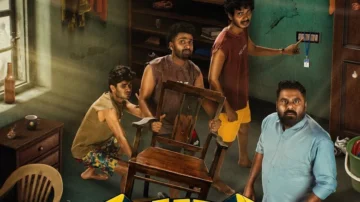
Tanikella Bharani, Brahmaji, and Ashish Vidyarthi fit their roles adequately but aren’t given enough to do. These are skilled character actors capable of stealing scenes, yet the screenplay confines them to exposition and reaction shots. Vennela Kishore, Rajsekhar Aningi, and others occupy space without defining memorable presences. The casting suggests the production house recognized the need for ensemble depth, but the writing never delivers scenes that justify their presence.
No Controversies, But Theatrical Release Couldn’t Sustain Audience Interest
Raakaasa generated no reported political, social, or censorship issues. The film’s struggle appears purely creative, an uneven tone and predictable second-half plotting. Released theatrically on April 3, 2026, before moving to Netflix OTT, the film failed to ignite box-office momentum. Audience reception hinged on whether viewers could tolerate the tonal shifts and forgive the screenplay’s reliance on familiar supernatural-thriller beats.
For fans of Telugu comedy with mythological leanings, Raakaasa offers some entertainment during its lighter passages. Sangeeth Shobhan’s warmth and occasional sharp comic timing provide reasons to stay engaged. But uneven writing, predictable second-half plotting, and a cast underutilized across its strongest performers make this a difficult sell. Watch this on OTT in a forgiving mood, not as a theatrical priority, but as a weekend option if comedy-fantasy experiments appeal to you.
More analysis of ambitious debuts can be found in Telugu Thriller reviews.
Manasa Sharma’s directorial voice echoes some of the quieter, character-driven instincts found in Bhishmar review.
Raakaasa never quite commits to either its comedic or mythological identity the way stronger genre films do. It’s a 2.5 out of 5 that prioritizes charm over craft, charm that’s too thin to carry an uneven narrative.
Both films struggle with balancing ensemble casts and thematic weight, as explored in reviews of G O verdict.

Ankit Jaiswal is the Chief Author, covering Indian cinema and OTT releases with honest, no-filler criticism. An SEO strategist by background, he brings a research-driven approach to film writing, cutting through hype to tell you exactly what's worth your time.