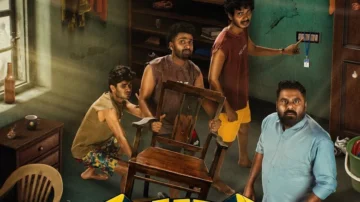
Sethu performs as a dead man inside his home, a quirky masquerade born from his paralyzed brother’s refusal to grieve. When a wounded stranger arrives at their doorstep, the careful equilibrium of their isolated world fractures. This is a film caught between intimacy and danger, warmth and menace, yet unsure which voice to trust.
Ratheesh Balakrishnan Poduval reunites with Kunchacko Boban after “Nna Thaan Case Kodu, ” but this collaboration stumbles where its predecessor held ground. The director reaches for a familiar blend of quirk and social observation, only to lose narrative clarity as the story progresses, leaving audiences with a character-driven drama that absorbs in pieces yet fails to cohere.
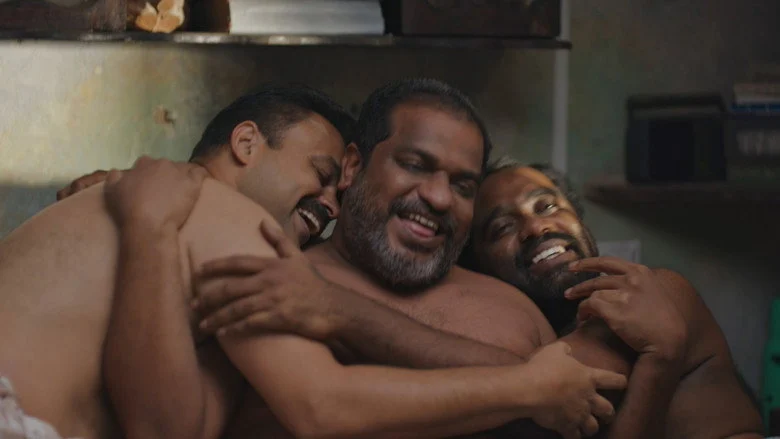
Kunchacko Boban anchors an impossible tightrope
Boban inhabits Sethu with genuine commitment, portraying a bullied government health worker whose entire existence orbits his brother’s emotional fragility. His performance captures the quiet strain of caregiving, the small humiliations of a man without agency in his own life. Yet even his conviction cannot stabilize the film’s wavering tone as it tilts between dark comedy and psychological thriller.
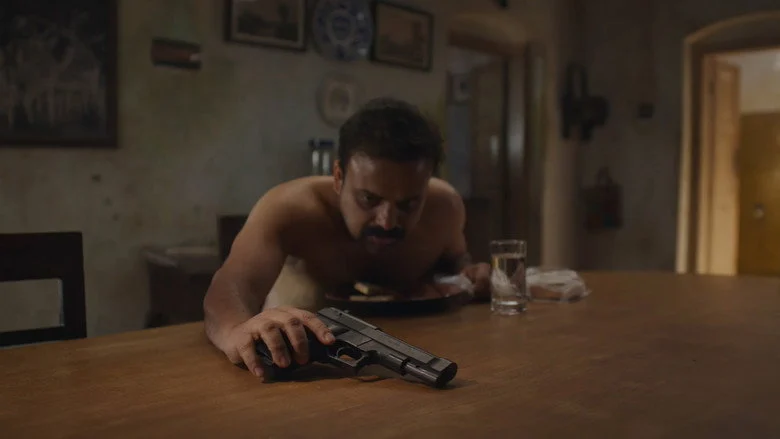
Direction that reaches but loses grip
Poduval’s screenplay leans into thriller territory while maintaining character-driven focus, a difficult balance that requires surgical precision. Instead, the narrative grows muddled in its second half, sacrificing the clarity that made his earlier work resonate. The film’s grip loosens noticeably, and the director never quite recovers the tension he establishes early.
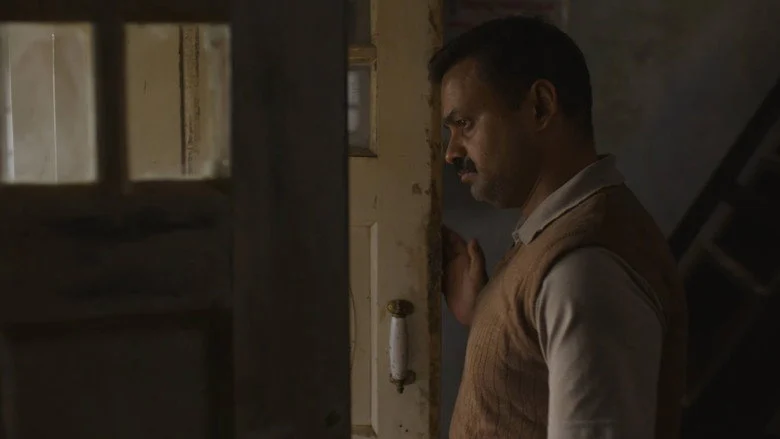
Drama and thriller tone collide without synthesis
The film’s foundation rests on the peculiar warmth of Sethu and Madhu’s relationship, a brother who impersonates the dead to sustain his paralyzed sibling’s emotional stability. This premise carries both comedy and tragedy, though the film treats it with more whimsy than earned weight, diluting what could have been profoundly unsettling.
When Rajendraprasad arrives as an armed stranger, the thriller machinery engages, but the tonal shift feels abrupt rather than organic. The film cannot maintain the delicate thread between quirky family drama and genuine menace, instead creating an experience that feels fractured and unresolved.
The psychological thriller elements, an officer named Armiyas closing in, old scores demanding settlement, arrive too late to reshape what has already become diffuse. These threads never weave into a coherent pattern, leaving viewers with absorbing moments that fail to accumulate into something larger or more satisfying.
For those interested in character-driven Malayalam drama, this site regularly reviews similar psychological explorations and family-centered narratives. Visit our Malayalam Drama reviews to discover more films that balance intimacy with tension.
Dileesh Pothan inhabits trauma with quiet intensity
Dileesh Pothan, as Madhu, transforms paralysis into emotional imprisonment, his refusal to acknowledge death becoming a window into deeper psychological damage. His casting signals the film’s intent to treat disability not as plot device but as character foundation, though the screenplay doesn’t always honor this choice with equal depth.
An uneven experience that asks too much of goodwill
New Indian Express observed that “despite committed performances, this character-driven drama that leans into thriller territory gradually loses clarity, resulting in an uneven experience that remains absorbing in parts yet ultimately unsatisfying.” This assessment captures the film’s central failure: it possesses the ingredients for something extraordinary but cannot synthesize them into coherence.
The film works best when it trusts its characters over plot mechanics, when Sethu’s impossible caregiving and Madhu’s emotional fragility occupy the frame. Once external conflict arrives, once Rajendraprasad and Armiyas demand narrative attention, the film loses its footing. It becomes unclear whether we’re watching a family drama that turns thriller or a thriller that forgot its emotional core.
For character-driven drama enthusiasts and Kunchacko Boban admirers, this presents a conflicted proposition. The performances justify the investment, and isolated scenes bristle with genuine observation about rural life, social humiliation, and familial obligation. Yet the overall architecture crumbles before the end credits, leaving a film that means well but delivers incompletely. Watch if you value committed acting over narrative satisfaction; skip if you require clarity and coherence from your psychological thrillers.
Vaazha II similarly explores how family dynamics can destabilize under external pressure, though with greater Vaazha II review.
Oru Durooha Saahacharyathil reaches for psychological complexity but settles for uneven storytelling, a 2.5/5 film that proves even committed performances cannot anchor a narrative adrift.
Ratheesh Balakrishnan Poduval’s loss of control echoes the structural problems that undermined Jana Nayagan’s ambitious Jana Nayagan verdict.

Ankit Jaiswal is the Chief Author, covering Indian cinema and OTT releases with honest, no-filler criticism. An SEO strategist by background, he brings a research-driven approach to film writing, cutting through hype to tell you exactly what's worth your time.