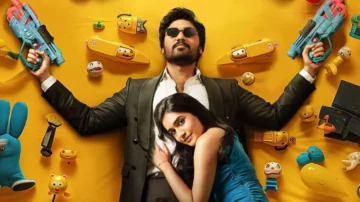
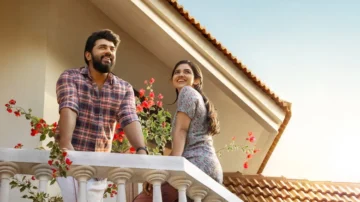
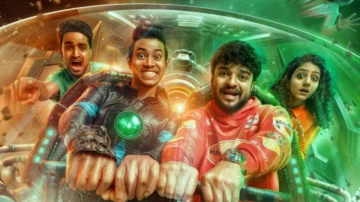
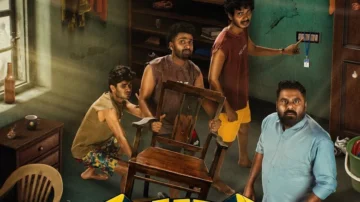
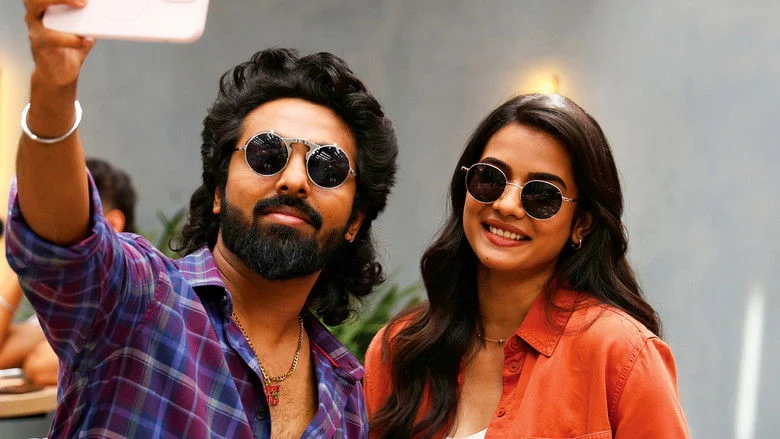
A young man inherits not just his father’s name but his father’s reputation, the village’s standing joke, marked by looks and legacy before he even speaks. G.V. Prakash Kumar steps into Happy Raj with an ease that suggests he understands this character’s quiet desperation, and for long stretches, that instinct is enough to keep you watching.
Maria Raja Elanchezian Sets Up a Strong Second Act, Then Forgets to Trust Her Own Film
The film finds its real rhythm once Happy lands in Bangalore, and that arrival feels like a second opening. The culture-clash engine between village traditionalist Kathamuthu and NRI father Rajiv is genuinely sharp comedy writing. But the first fifteen minutes arrive as a flat, narrated explainer, front-loading backstory that the film’s own performances could have communicated far more elegantly.
As Times of India put it plainly, Happy Raj opens with a problem that too many films share: it doesn’t trust its audience to figure things out on its own. That lack of faith haunts the screenplay long after the narration ends. Maria Raja Elanchezian’s instincts as a writer improve considerably once the characters start colliding, but the structural hesitation never fully disappears.
The Comedy Earns Its Laughs Only When the Families Finally Collide
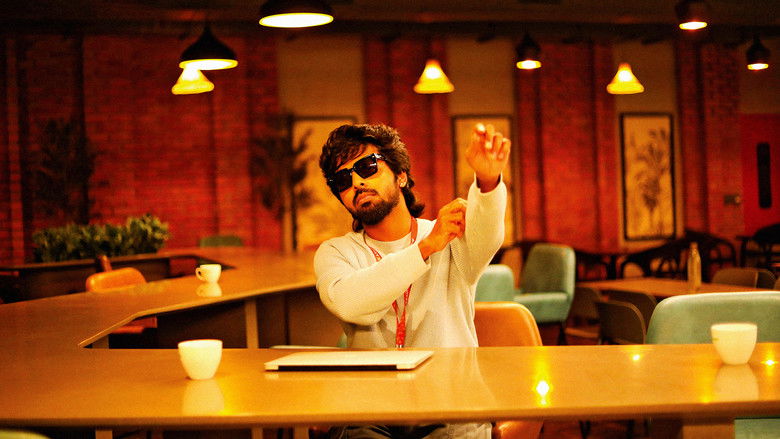
For a film running two hours and thirty-six minutes, Happy Raj takes its comic premise seriously only in patches. The first act is largely set-up for set-up’s sake, with the village backdrop serving as mood rather than material. Once Happy meets Kavya in Bangalore, the film finally exhales.
The comedy of collision, Kathamuthu’s earthy village logic pressed against Rajiv’s polished NRI sensibility, is where the writing sharpens. These scenes carry the film’s central argument: that love is always, at some level, a negotiation between worlds. The performers lean into the awkwardness with enough conviction to make it land.
Composer Justin Prabhakaran keeps the film’s mood buoyant, and tracks like Thuru Thuru and Aadiney Irupen do the job of pacing transitions. Cinematographer Madhan Christopher keeps the Bangalore sequences airy without becoming slick. Neither department overreaches, which is, in its own quiet way, a form of discipline.
If you enjoy watching Tamil comedy dramas balance heart with chaos, Tamil Comedy reviews on this site cover a wide range across the genre’s recent output.
George Maryan Steals Every Scene He Occupies as Kathamuthu
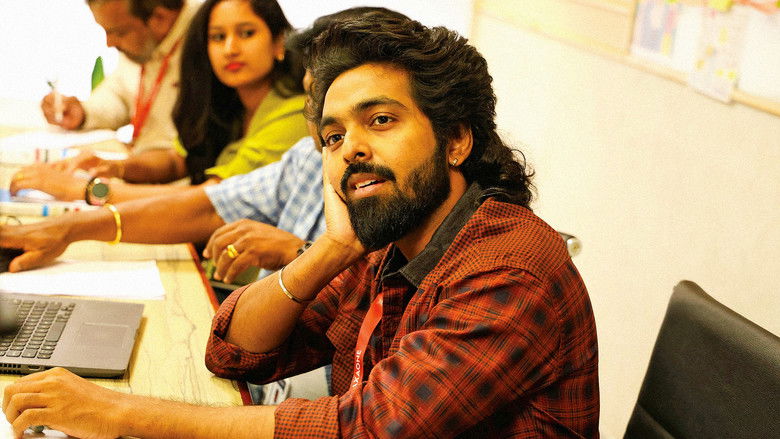
George Maryan’s Kathamuthu, nicknamed Kuthirai Mutta for his face, carrying that mockery with a dignity that borders on tragic comedy, is the film’s most alive creation. Every time Maryan is on screen, the film’s energy shifts upward. He doesn’t play embarrassment; he plays pride worn in the wrong setting.
Abbas as Rajiv, the NRI father, handles the counter-role with restraint. I found his controlled exasperation in the family-meeting sequences to be the more interesting performance choice, reactive rather than reactive-loud. Sri Gouri Priya as Kavya has warmth but limited material beyond her function as the romantic bridge.
No Controversy, but a Noticeable Divide Between Who This Film Reaches and Who It Loses
Happy Raj carries a U/A certificate and positions itself firmly as family entertainment for all age groups. The film earns a 3.0 from Times of India, which feels about right, a score that signals neither disappointment nor surprise, just a film that does enough and occasionally more. There are no controversies surrounding the production, no censorship friction, no political sparks.
What does exist is a quiet audience divide: those who arrive for GV Prakash’s comic energy will find it, eventually. Those expecting tight comic architecture from the first frame will have burned through patience before the film gets good.
Happy Raj is worth a theatrical watch if you’re a committed fan of GV Prakash’s persona, his timing in the Bangalore half of the film justifies the patience the first act demands. If you’re walking in cold, the expository opening may test you. The second half earns what the first half borrows on credit.
Happy Raj (2026) is a flawed but occasionally charming Tamil comedy-drama that earns its warmth in the second half, carried almost entirely by George Maryan’s scene-stealing and GV Prakash’s comic instincts, worth a reluctant 2.75 out of 5, specifically for audiences willing to wait for a film to become itself.

Ankit Jaiswal is the Chief Author, covering Indian cinema and OTT releases with honest, no-filler criticism. An SEO strategist by background, he brings a research-driven approach to film writing, cutting through hype to tell you exactly what's worth your time.