A single weathered cap arrives in the life of an IT professional named Lakshman and immediately starts bending probability around his head. Harshith Rangaswamy’s shoestring fantasy thriller bets everything on that one object, and on Raam Tej’s face beneath it.
When Luck Becomes A Costume You Can’t Take Off
The film opens on the wrong side of probability. Lakshman, nicknamed “Lucky” with the irony of a man who has stopped correcting people, is introduced through the daily grind of an IT professional whose life refuses to cooperate.
Then the cap arrives. Rangaswamy wastes little time converting the object from a curiosity into a mechanism, and the film’s central engine kicks in.
What distinguishes the premise from the usual cursed-trinket template is its refusal to separate wish-fulfilment from threat. The cap does not just grant fortune; it begins to price it. That is the dramatic contract the film writes in its first act, and it is a smart one.
A Fantasy Engine That Refuses To Explain Its Own Rules
Here is where the film’s ambition and its limitations collide. The cap is clearly designed as a rule-based device, benefits paired with consequences, fortune with a bill attached, but the film is stingy with those rules.
Rangaswamy’s screenplay runs on a linear spine: misfortune, discovery, transformation, reckoning. That clarity is a virtue in a low-budget thriller, where confusion reads as cheapness.
But a fantasy mechanism only generates real suspense when the audience can feel the edges of its logic. Without those edges, the middle stretch leans on atmosphere and Raam Tej’s shifting demeanor rather than on genuine dramatic inevitability.
There is also the matter of the antagonist. The director has described the cap itself as both the hero and the villain, and that is a legitimate artistic choice, an object as antagonistic force, consequence as conflict.
But when the screenplay needs a human face to push against, it has to reach for one, and the reach is not always convincing.
Raam Tej’s Face As The Film’s Real Special Effect
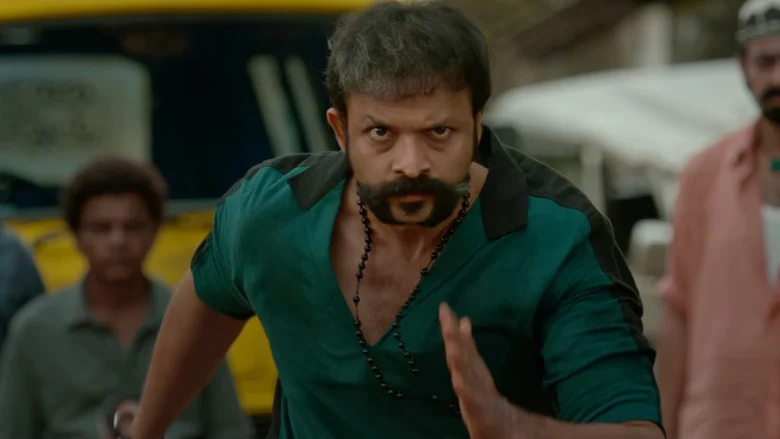
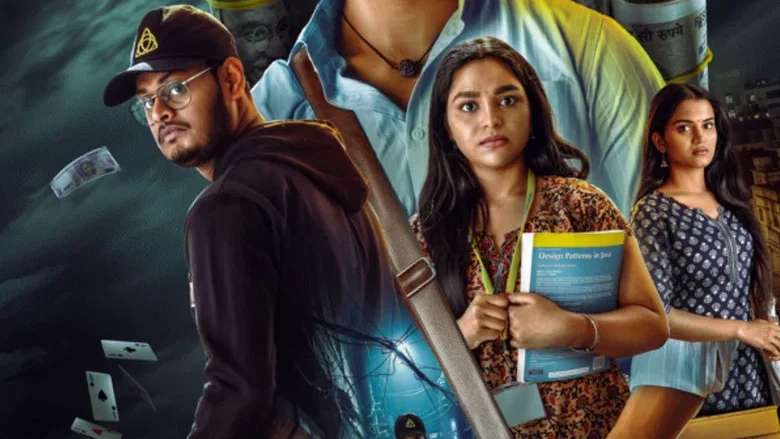
With no star machinery and no spectacle budget, the film’s entire emotional load rests on its lead, and Raam Tej carries it with a performance built on small physical adjustments rather than grand gestures.
Watch the shoulders. Before the cap, there is a permanent slump, a man who has learned to occupy as little space as possible.
After it, the posture straightens, the chin lifts, and the eyes start making contact that the earlier Lakshman would have avoided. It is a legible transformation, and it is the film’s most reliable piece of craft.
The performance also carries the film’s moral argument. As the luck compounds, a new tightness enters Tej’s jaw, a wariness that suggests Lakshman knows, on some level, that the bill is accruing. That register, confidence laced with dread, is what keeps the middle act from flattening into a wish-fulfilment montage.
Rithi Shetty appears among the principal cast, and the film’s treatment of her character is symptomatic of its broader economy: present, functional, but never given the scene-level weight that would make the relationship register as anything more than a narrative placeholder.
The supporting ensemble, including a director-turned-actor in a key role, fills out the world adequately without ever threatening to steal the film from its central object. That is by design, but it is also a limitation.
Sixteen Days, One Hat, And The Discipline Of Small Cinema
The production context matters here, and not as trivia. Shot in 16 days including patchwork on a shoestring budget, the film bears the marks of its constraints in ways both flattering and not.
What the schedule enforces is discipline. There is no room for decorative camera movement, no luxury of coverage, and the film’s visual grammar is consequently stripped down to the essentials: faces, the cap, and the space between them.
The cap itself is the film’s most consistent visual motif, recurring in framing that quietly shifts its meaning from talisman to threat. That is economical filmmaking of a real kind.
Where the constraints bite is in the film’s climax, where the emotional stakes require a scale the production cannot quite deliver. The reckoning arrives, but it arrives small, and the gap between the film’s thematic ambition and its physical means is visible.
The comparison to other recent Kannada genre experiments is instructive. Just as Manduka collapsed under the weight of its own withheld information, Mr. Lucky risks a similar frustration by keeping its central mechanism too opaque for too long, though it manages its mystery with more discipline than that film managed its concealment.
And where KillR leaned on a lead performance asked to carry an entire conceptual apparatus, Tej’s turn here is the more grounded anchor, less showy, more sustainable across the runtime.
The film’s closest thematic sibling is Detective Teekshanaa, which shares its faith in brains over brawn and its interest in consequence over spectacle. Mr. Lucky is the looser, stranger cousin of that impulse.
What it signals, more broadly, is a welcome willingness across contemporary Kannada thrillers to build suspense from a single idea rather than a checklist of set pieces.
The Box-Office Arithmetic Of A Sixteen-Day Gamble
Commercially, this is a film with almost no safety net. The production banners behind it are small, the release is a 2D Kannada theatrical push, and the opening-day figures reported at the time of release were explicitly provisional, the trade trackers had not yet logged real collections.
For a film made on a shoestring, that is not necessarily fatal. The break-even threshold is low enough that a modest word-of-mouth run could make the arithmetic work, and the underdog production story, a former IT professional turned filmmaker collaborating with a Bengaluru street vendor turned actor, is exactly the kind of narrative that generates local press and curiosity bookings.
But the UA16+ certificate narrows the family audience, and the absence of a star name means the film has to earn every ticket. In the current exhibition market, that is a hard ask for any title without a franchise or a marquee lead.
The larger question is whether the regional fantasy-thriller pipeline can sustain films this small. Mr. Lucky is a test case: a high-concept premise executed at a scale that cannot hide its seams.
If it finds its audience, it argues for more of the same. If it doesn’t, it argues that the model needs a bigger swing.
The Bill Always Comes Due, Even For A Borrowed Hat
What lingers after the credits is not the cap’s mechanics but the film’s quiet argument about luck itself: that fortune received is never fortune owned, and that a man who builds his life on a borrowed mechanism has mortgaged something he cannot see.
Rangaswamy’s film is too thin in places to fully earn that idea, and its refusal to define the cap’s rules keeps the audience at a frustrating distance. But it is a film with a genuine idea and a lead performance that respects it.
In a market that rewards scale, Mr. Lucky is a small, stubborn argument for the opposite, and it leaves you wondering, long after the hat comes off, who exactly was wearing whom.

Ankit Jaiswal is the Chief Author, covering Indian cinema and OTT releases with honest, no-filler criticism. An SEO strategist by background, he brings a research-driven approach to film writing, cutting through hype to tell you exactly what's worth your time.