Prince Joy opens on Fort Kochi’s damp, salt-eaten backstreets, where a low-tier gang member named Antony Yakuza dreams of being taken seriously. The problem is that the film keeps changing what “serious” means.
For roughly forty minutes, Titans behaves like a lean criminal-procedure picture: a final score, a tech-savvy roommate, a getaway driver with a face that gives nothing away. Then the inexplicable arrives, and the movie’s genre contract starts renegotiating itself in real time.
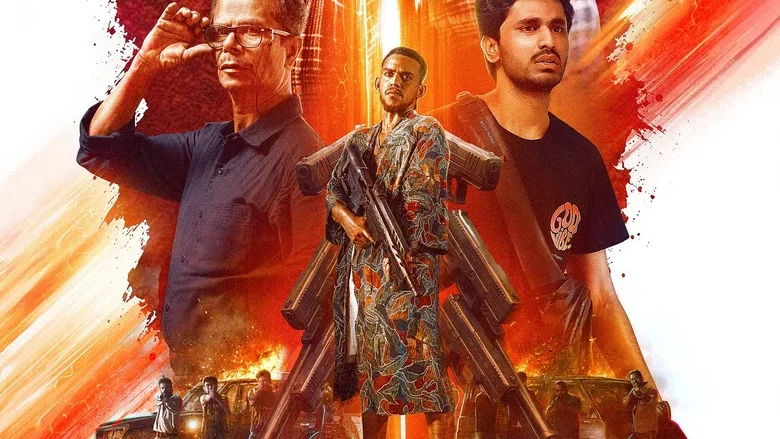
A Small-Time Crook’s Last Score Is the Most Reliable Thing Here
Jayasurya plays Antony as a man whose ambition is entirely external, he doesn’t want money so much as a seat at a table that keeps sliding away from him. Watch how he holds his shoulders in the gang’s presence: squared, eager, slightly too forward, like a job applicant who’s read the room wrong.
That physical insistence is the film’s most coherent through-line. Antony’s need to be seen never curdles into self-pity, which keeps a fundamentally unlikeable striver watchable even when the screenplay loses its grip on him.
Nihal Nizam’s Anwar gives him a functional counterweight, the tech guy who treats the job as a puzzle rather than a ladder. Their domestic shorthand, two men sharing a cramped space and a shared delusion, is the closest the film gets to emotional grounding.
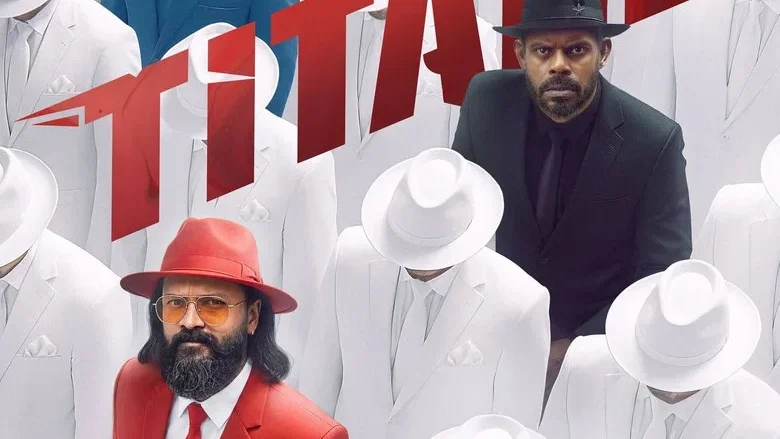
Vinayakan’s Getaway Driver Is the Only Real Engine of Suspense
Rejimon is introduced as a practical necessity and immediately becomes the film’s most interesting problem. Vinayakan plays him with an unnerving flatness, no raised voice, no theatrical menace, just a stillness that makes every line sound like it’s been rehearsed for someone else’s benefit.
The recruitment scene is the movie’s cleanest piece of genre engineering. An ordinary criminal procedure becomes a mystery simply because the man behind the wheel refuses to explain himself, and the audience starts doing the work the screenplay should be doing.
That is also where the strain shows. Rejimon’s hidden agenda is the film’s designated destabiliser, but the script keeps him at arm’s length, doling out ambiguity without ever letting the character’s actual objective sharpen into something an audience can weigh against Antony’s.
Compare the controlled unease of Garividi Lakshmi, which understood that a folk biopic’s power lives in what the frame withholds, and Titans starts to look like a film that has confused opacity with depth.
The Fantasy Arrives and the Tonal Floor Gives Way
Once the inexplicable incidents begin, the film’s visual grammar shifts toward a heightened, Western-tinged palette, eccentric costumes, saturated interiors, a Fort Kochi that suddenly feels like a film set rather than a place people live in.
It’s a deliberate rupture, and for a stretch it’s genuinely disorienting in the right way. The problem is that the comedy and the fantasy don’t so much merge as take turns, and the thriller mechanics that powered the first act get buried under tonal housekeeping.
Suresh Krishna’s CI Vyasan is the clearest casualty of this drift. The character exists as a procedural obstacle, and Krishna plays him with a clipped, watchful impatience, but the film never decides whether he’s a threat, a comic foil, or a red herring.
The same structural vagueness afflicts the supporting tier, named characters drift in and out without establishing allegiance or function, and by the second hour the ensemble feels less like a designed machine than a collection of promising entrances.
Prince Joy Can Stage a Scene but Can’t Yet Sustain a Tone
The director’s instincts are real: he favours medium shots that keep the trio in the same frame, letting suspicion play out spatially rather than through dialogue. When Rejimon stands slightly behind Antony in a doorway, the blocking does the work a page of exposition couldn’t.
What he hasn’t solved is the film’s central integration problem. Crime, comedy, mystery and fantasy each get their own register, and the transitions between them are managed with cuts rather than with rhythm, so the escalation feels administered rather than earned.
James Sebastian’s screenplay is linear and cleanly structured at the outset, but the second half substitutes incident for consequence. The job stops mattering, and once the objective dissolves, so does the tension that made the first act hum.
The restraint Jayasurya brings to Antony’s late-film uncertainty, a slackening jaw, a hesitation before he speaks, recalls the psychological weight he carried through VISA – Vintara Saradaga, where a similarly understated register had to do the emotional heavy lifting for a film with too many competing ideas.
The Ending Resolves the Plot and Abandons the Premise
Without spoiling the mechanics, the resolution leans hard on the fantasy apparatus to untangle what the crime plot knotted, and the effect is oddly deflating. Antony’s ambition, the one genuinely human engine in the movie, gets absorbed into a larger, stranger design that never quite earns its scale.
It’s the same failure mode that The Third Murder sidestepped by refusing to let its mystery outgrow its characters. Titans makes the opposite bet, and the climax feels like a different, lesser film arriving to close out the one we were watching.
What lingers isn’t the fantasy. It’s Vinayakan’s face in the rearview mirror, a man who knows more than he says and never gets the scene that would let us understand why.
For the Producers, This Is a Bet on Genre-Blending Over Star Safety
Producers Mithun Manuel Thomas and Irshad M. are wagering that Malayalam audiences will follow Jayasurya into a hybrid rather than a straight crime vehicle, and the theatrical marketplace will render that verdict quickly. The Jayasurya–Vinayakan pairing is the film’s real commercial asset, and it’s underused in the marketing’s favour of the fantasy hook.
The bigger industry question is whether this signals a maturing appetite for tonal risk across contemporary Malayalam thrillers, or whether it confirms that audiences still reward clean genre promises over ambitious collisions. The answer will shape what gets greenlit next season.
Titans is a film built on a genuine idea, that a man’s need for recognition can be hijacked by forces he can’t name, and it keeps losing its nerve at exactly the moments it should press hardest.
Jayasurya and Vinayakan deserve a script that trusts their stillness; instead they get a movie that fills every silence with something stranger and less interesting.

Ankit Jaiswal is the Chief Author, covering Indian cinema and OTT releases with honest, no-filler criticism. An SEO strategist by background, he brings a research-driven approach to film writing, cutting through hype to tell you exactly what's worth your time.