Five women wear Jyothi Poorvaj’s face in the first twenty minutes of KillR, and the film never quite decides whether that’s a mystery or a marketing gimmick.
By the time the AI avatar arrives, you suspect the answer is both.
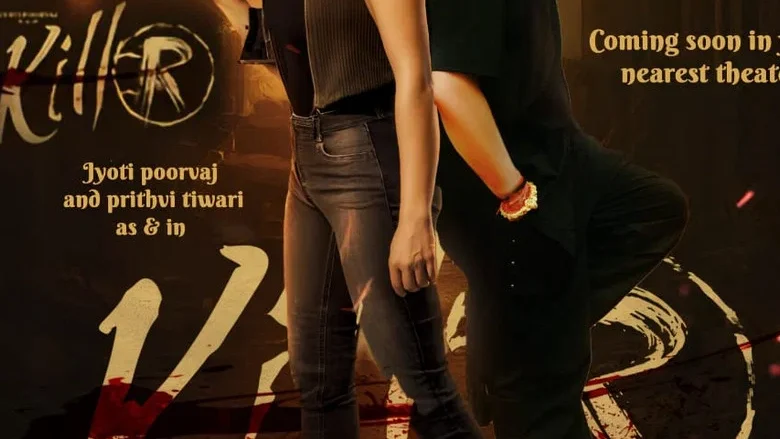
A Terrorist, A Spy, A Vampire: The Teaser Promised A Riddle, The Film Delivers A Rubric
The opening act runs on a clean, nasty hook: Rania, Raktika, Julia, Sia, one woman, four dossier photographs, and a scientist named Dr. Poorvaaj who seems to know which file is real.
Poorvaaj, pulling triple duty as director, producer and co-star, stages the identity question with real confidence, a face in a doorway, a name spoken twice, a memory that refuses to line up.
Then the film starts explaining itself, and the air leaks out. The teaser’s famous question, terrorist, spy, actress or vampire, is answered too early, too tidily, and with far less nerve than the question deserved.
The AI Avatar Is The Film’s Biggest Idea And Its Laziest Shortcut
Here is where KillR separates itself from the sharper, leaner strain of contemporary Telugu thrillers: it wants to be a philosophical puzzle about free will, but it treats its own technology as a get-out-of-jail card.
Whenever the screenplay writes itself into a corner, the AI avatar materialises, delivers a portentous line, and the plot resumes as if nothing happened. Rules are established and then quietly ignored.
That’s not ambition. That’s a structural escape hatch dressed as a big idea, and it flattens what should be the film’s most unnerving stretch.
What Jyothi Poorvaj Does With Four Personalities, And Where The Performance Fractures
Credit where it’s earned: Jyothi Poorvaj is doing actual work here, differentiating her personas through posture and vocal register rather than costume changes.
Julia holds her chin a half-inch higher than Rania; Sia blinks too slowly, as though translating the room in real time. These are small, deliberate choices, and they land.
What she can’t fix is the script’s refusal to let any single identity sit still long enough to become a person. The film keeps switching channels before we’ve learned to care about the one we’re watching.
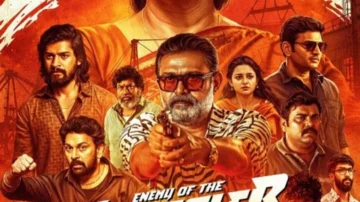
Compare the controlled stillness Saran Shakthi brought to Enemy Of The Smuggler, a performance that trusted silence, and this one starts to feel like a sprint through a role that wanted to be a marathon.
Poorvaaj The Director Is Undone By Poorvaaj The Scientist
The film’s most revealing problem is casting: the man behind the camera also plays the genius scientist who explains everything, and the film can’t resist cutting to him whenever the audience might be left to think.
Manish Gilada, in the few scenes he’s given room to work, registers as a genuinely unsettled presence, a man doing arithmetic behind his eyes, but the screenplay keeps shoving him into corridors and forgetting him.
Where a tighter film would have let a single reaction shot carry the dread, KillR cuts to exposition. The camera moves constantly; the tension doesn’t.
The Score Swells Where The Silence Should Have Held
Suman Jeeva and Asheer Luke’s score is competent and almost always wrong, it announces every revelation a beat before the image earns it, robbing the audience of the small thrill of figuring something out first.
The visual grammar is similarly impatient: close-ups arrive before we’ve had a wide shot to orient ourselves, so the identity switches register as editing tricks rather than psychological ruptures.
Just as he showed a firmer grip on atmosphere in the more disciplined #Cult, Poorvaaj here mistakes volume for intensity. The film is loud where it needed to be quiet, and quiet where it needed to explain.
Panorama-Style Ambition Without The Franchise Infrastructure
KillR arrives as a self-financed, auteur-driven science-fiction swing in a market that rewards scale, and that’s precisely the problem. Without a studio banner behind it, the film’s effects work and marketing reach are both capped.
The Telugu theatrical market has spent two years cycling through remake pipelines and mid-budget genre experiments; a female-led AI thriller is a genuine novelty, but novelty alone doesn’t fill seats on a crowded festival weekend.
Poorvaaj has staked his own leverage on this, director, producer, star, which means the box-office risk sits entirely on one man’s shoulders. That’s admirable. It’s also the reason nobody will be able to absorb the loss if it underperforms.
The Ending Doesn’t Earn Its Ambiguity
When the final confrontation arrives, the film reaches for the kind of unresolved, identity-dissolving conclusion that the best contemporary Telugu thrillers have made their signature, and then blinks.
The question of whether Rania is a victim, a weapon, or simply a person is raised and then answered with a shrug. We leave the theater not unsettled, but merely uninformed.
That’s the film’s real sin: not that it’s confusing, but that its confusion isn’t load-bearing. Ambiguity should feel like a knife; here it feels like a draft.
KillR wants to be a film about who gets to define a woman’s identity, the scientist, the state, the algorithm, or herself. It ends up letting all four answer at once, and none of them convincingly.
Poorvaaj has the instincts of a real genre filmmaker and the discipline of a man who hasn’t yet learned to trust his own images. The next one might be worth the wait. This one is worth a matinee, a notebook, and a very long conversation afterward.

Ankit Jaiswal is the Chief Author, covering Indian cinema and OTT releases with honest, no-filler criticism. An SEO strategist by background, he brings a research-driven approach to film writing, cutting through hype to tell you exactly what's worth your time.