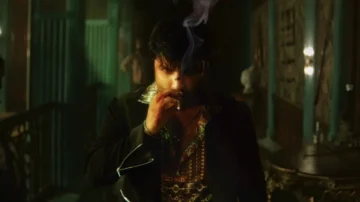
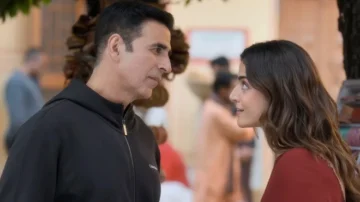
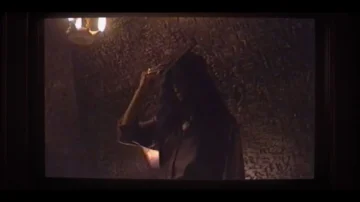
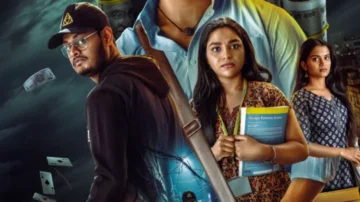
The camera finds Rishan Sha’s Vijay kneeling in the red laterite dirt of Naivad, phone torch blazing, performing a death-summoning rite for a subscriber count. The village watches in silence. The algorithm, unfortunately, is watching too.
When the Hoax Becomes the Haunting, the Horror Has Nowhere Left to Hide
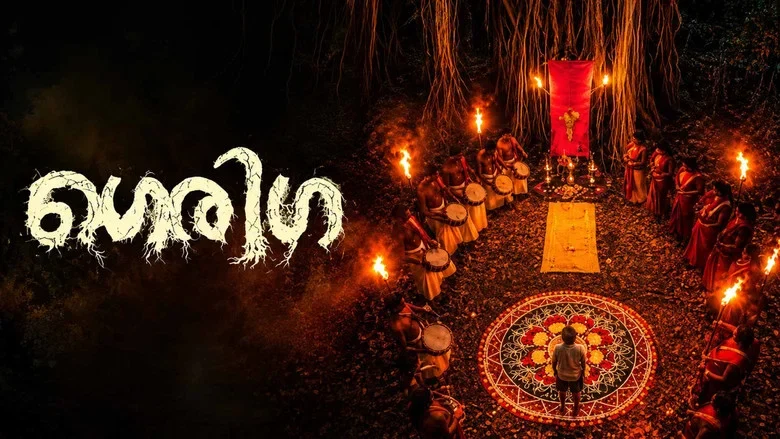
Bhaskar Bantupalli’s debut opens with a genuine idea: a sacred Kerala ritual, Geriga, treated as content fodder by five YouTubers with ring lights and no reverence. The premise earns its first shiver because the desecration is specific, a named village, a named rite, a named price.
Then Vijay is possessed, and the film’s structural problem announces itself in the same breath as its best scene. News of his father’s sudden death arrives in the same sequence, stacking supernatural violation on top of familial grief with no air between them.
That collision should be the film’s engine. Instead it becomes its alibi, the movie keeps generating new urgencies rather than sitting inside the one it already has.
A Twelve-Day Countdown That Runs Out of Ideas Before It Runs Out of Days
The second act converts grief into a stopwatch. Twelve days to complete the ritual properly, or Vijay is lost. It is a clean suspense scaffold, and for roughly forty minutes it works.
But a countdown is a promise of escalation, and Geriga spends its middle stretch reshuffling the same three beats: the friends research, the friends argue, the possession worsens. The rules of the ritual stay maddeningly vague, what must be completed, by whom, at what cost, so the deadline carries no weight.
Compare the tighter spatial discipline Bantupalli’s contemporaries bring to confined dread in Mr. Lucky, where every room narrows the noose. Here the village is wide, pretty, and dramatically inert.
Rishan Sha Splits Himself in Two, and Only One Half Survives
Sha’s pre-possession Vijay is all performance, the practiced grin, the camera-facing tilt of the chin, the voice pitched for a microphone that isn’t there. It is a sharp, unflattering portrait of a man who has mistaken attention for identity.
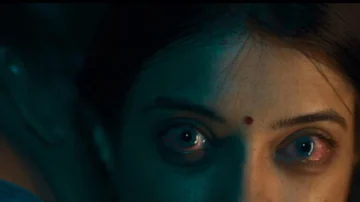
The possessed Vijay is where the film asks for something harder, and where Sha’s physical register falters. He plays the entity with a slackened jaw and a fixed, unblinking stare, but the body stays too composed.
Real possession horror lives in involuntary motion, the tremor, the wrong breath, the hand that doesn’t belong to its owner.
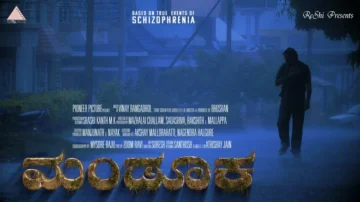
The same collapse of concealment undermines the contemporary release Manduka, which also mistook a withheld truth for a sustained one. Both films confuse withholding information with building pressure.
The Friends Are Bodies, Not People, and the Film Never Notices
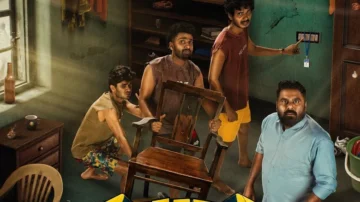
Four YouTubers surround Vijay, and the screenplay gives none of them a defining want beyond the group’s shared panic. They exist to hold flashlights, shout his name, and react.
Neebha Bala gets the most screen time of the supporting principals, and she does something quietly useful in the early ritual scene, a half-step backward when the chant begins, a hesitation the others don’t share. It is the only moment the film admits one of these people might actually believe.
The rest of the ensemble is texture. When a horror film’s supporting cast functions as a chorus of terror rather than a set of individuals, every subsequent death or danger lands on a stranger.
Prashanth Kanchapalli’s Camera Understands the Contrast; the Edit Doesn’t Trust It
Kanchapalli, doubling as cinematographer and editor, builds a real visual thesis: the flat, over-lit sheen of phone footage against the oil-lamp amber of the village at night. The shift between those two registers is the film’s most articulate statement about spectacle versus belief.
Then the editing betrays it. Scenes are cut at the moment of maximum tension rather than through it, the chant rises, the lamp gutters, and we are already in the next argument. Jinu Vikayan’s score fills the gaps with low drone and sudden stingers, doing work the staging should have done.
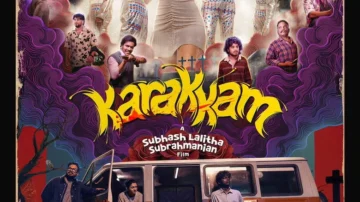
The genre sibling Karakkam fumbled its tonal balance differently, but both films share a distrust of their own silences.
Venugopal Devi’s Bet, and the Remake Pipeline’s Growing Fatigue
Producer Venugopal Devi is staking a theatrical release on a first-time director and a lead with no bankable track record, in a Malayalam horror market currently flooded with ritual-adjacent titles. That is a genuine gamble, and the absence of any reported opening-day figures suggests the market has not rewarded it.
The broader math is unforgiving. Regional horror has become the most crowded shelf in Indian exhibition, and a film without a star, a franchise, or a genuinely novel mythology struggles to hold screens past week one. Geriga’s ritual is distinctive; its marketing hook is not.
Audiences hunting for the next great Malayalam scare are increasingly discerning, and the contemporary Malayalam horrors that endure tend to be the ones that trust atmosphere over incident.
The Ending Refuses to Pay for What the Premise Promised
Without disclosing the climax, it is fair to say the resolution reaches for emotional closure the screenplay never earned. The father’s death, introduced as the film’s most potent wound, is resolved as plot mechanics rather than grief.
That is the deepest failure here. Geriga wants to say something about how we turn the sacred into content, then refuses to let its protagonist actually pay the spiritual bill. Vijay is rescued, or released, or simply stopped, and the village that believed in the rite remains a backdrop.
Bantupalli has an eye and a premise. What he lacks is the patience to let dread accumulate instead of announcing it. The ritual demanded reverence. The film settled for a reaction shot.

Ankit Jaiswal is the Chief Author, covering Indian cinema and OTT releases with honest, no-filler criticism. An SEO strategist by background, he brings a research-driven approach to film writing, cutting through hype to tell you exactly what's worth your time.