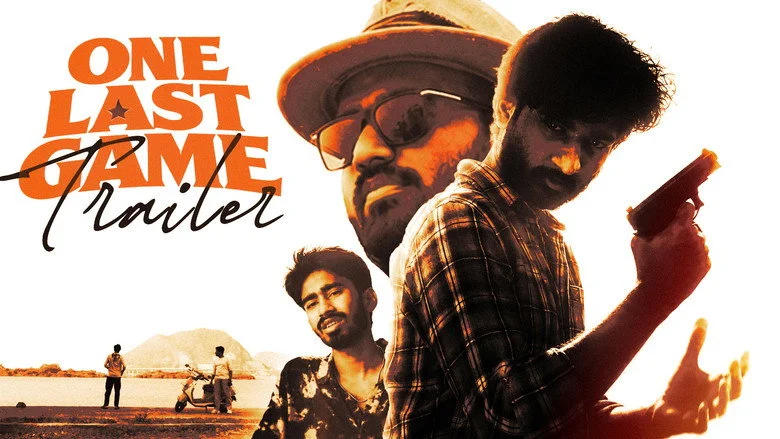
Ken Duken sits at the poker table, his eyes fixed on the cards as if they hold the key to his survival. In that single close-up, you see a man who has already lost everything but is still betting his soul. That is the gravitational pull of One Last Game, a performance that holds a structurally uneven film together by sheer force of conviction.
Regina Lund Turns the Antagonist Into the Film’s Sharpest Weapon
Regina Lund plays the debt collector with a chilling stillness that makes every scene she occupies feel like a trap door. She does not raise her voice, she simply waits, and that patience is more menacing than any threat. “The objective of the game is to know when it’s over, Gellert!” she says, delivering the film’s most quotable line with the precision of a scalpel.
Stefan Ayassi Epmeier’s Direction: One Good Idea That Runs Out of Chips
Director Stefan Ayassi Epmeier understands that poker is not about the cards, it is about what happens in the silence between bets. The first act builds tension with disciplined close-ups and dim lighting that mirrors Gellert’s internal darkness. But by the middle section, the psychological pressure begins to feel repetitive rather than deepening. The screenplay, credited to no publicly listed writer, leans too heavily on the same note, Gellert hesitates, the antagonist pushes, the chips stack, until the tension starts leaking instead of tightening.
The Poker as Addiction Metaphor Works, But Only Just
Here is where One Last Game does something smarter than most gambling films: it never glamorises the game. The poker table is not a stage for heroism but a confession booth, and every hand Gellert plays peels back another layer of his ruin. The final hand, the scene most praised in early audience responses, lands with genuine weight because Duken plays it not as a victory lap but as a man walking toward his own execution.
That said, the film stumbles in its second act, where the psychological tension becomes a loop instead of a spiral. We watch Gellert face the same demons in slightly different lighting, and the script lacks the sharp dialogue of Rounders or the visceral stakes of The Gambler to make those repetitions feel purposeful. The ending’s unexpected turn does recontextualise some of the slog, but not enough to erase the drag entirely.
The cinematography saves several stretches, with tight framing that turns every hand reveal into a minor cardiac event. Epmeier knows when to hold a close-up and when to pull back, but he does not always know when to move on.
Dan Van Husen Adds Texture Where the Script Forgets
Dan Van Husen appears in key poker scenes and brings a lived-in weariness that the film desperately needs. His presence signals a world where addiction is not a dramatic event but a daily condition. He does not get a hero moment, and that is exactly why his casting works. He is the ghost at Gellert’s table, a reminder that every gambler has a version of him waiting in the wings.
Missing Release Info and the Film’s Uncertain Place in the Conversation
With no confirmed release date, no publicly listed production house, and no clear certification, One Last Game enters the world as something of a ghost itself. Audience complaints about the unclear language and missing details mirror the film’s own gamble, it asks you to invest without knowing the full hand. But the lack of controversy or political angle means the conversation stays focused on the craft, which is both a relief and a missed opportunity for resonance.
If you are drawn to stories about addiction where the monster is internal, One Last Game delivers a solid third act and a lead performance worth watching. But if a slow, repetitive middle section kills your patience, wait until you are in the mood for something deliberately paced and emotionally punishing. Best watched on a streaming platform where you can pause, because you might need to breathe.
One Last Game is a 3/5 psychological thriller that wins the final hand but almost folds in between, watch it for Duken, and forgive the rest.
Browse more Telugu Thriller reviews for similar tension-driven storytelling.
For a more grounded take on addiction and redemption, Gatta Kusthi review offers a different emotional register using role reversal.

Ankit Jaiswal is the Chief Author, covering Indian cinema and OTT releases with honest, no-filler criticism. An SEO strategist by background, he brings a research-driven approach to film writing, cutting through hype to tell you exactly what's worth your time.