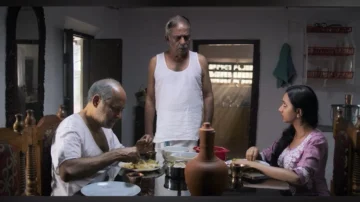
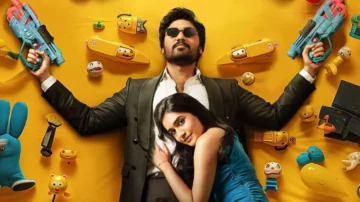
The vintage doll’s seal cracks open, and two petty thieves stare into the abyss they’ve just unlocked. A Yakshini, ancient and furious, emerges in a visual flourish that promises a genre spectacle, only for the film to stumble badly on its way to the next scene.
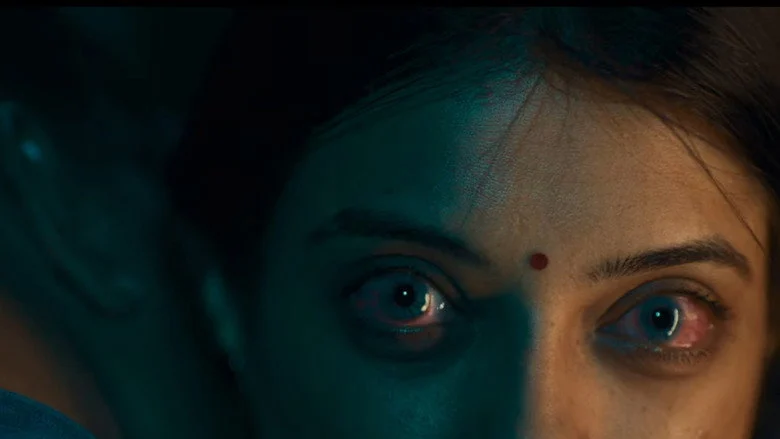
Vaisakh Ravi: A Debut Anchor in a Wobbling Ship
As Niranjan, the last heir returning to a blood-soaked estate, Vaisakh Ravi carries the film’s emotional weight with surprising steadiness. His fear is palpable, but his resolve in the final hall, standing toe-to-toe with the supernatural, is where he truly lands his debut.
There is a natural, unforced quality to his dialogue delivery that makes you wish the script had given him more to work with. The scene where he first traces the curse’s markings on the wall shows an actor trying to find depth in a linear narrative.
Abhilash Warrier’s Uneven Grip
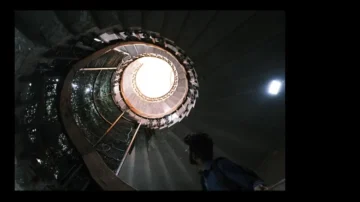
Director Abhilash Warrier’s strength is unmistakable in the horror atmosphere: the dark corridors and moody lighting are effectively sinister. The screenplay, however, follows a painfully linear structure that leaves little room for surprise.
The most jarring flaw is the transition between the thieves’ accidental unleashing and Niranjan’s arrival. It is a pacing black hole that kills the momentum just as the film should be tightening its grip. A plot hole exists in this exact seam, and it pulls the viewer out of the experience.
Where Aroopi Works and Rattles
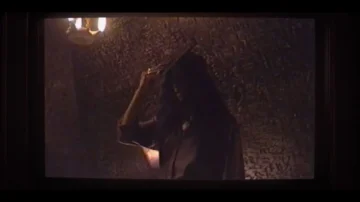
The Yakshini myth is a rich vein in Malayalam folklore, and Warrier taps into its visual potential effectively. The scene of the entity emerging from the doll stands out as a genuine craft achievement, lighting, sound design, and Neha Chawla’s physicality converge into a moment of real terror. The background score, though derivative in places, amplifies the supernatural dread competently.
The problem lives in the middle act. Once the mystery is set up, the film falls into a predictable rhythm of jump scares and exposition that reveals too little, too late. The backstory of the Yakshini remains frustratingly shallow, reducing a potentially complex antagonist to a generic vengeful spirit. The climax, set in the main hall, relies on tropes rather than tension, and the confrontation feels rushed after the slower build-up.
I genuinely wanted the horror to be smarter. The cinematography is dark and committed, but the editing in the second half betrays the first half’s promise, making the final confrontation feel like a checklist item rather than a payoff.
Supporting Cast: Utility Players in Thin Roles
Joy Mathew, as Niranjan’s father, injects the only real emotional depth into the film. His brief scenes carry a weight that the rest of the supporting cast cannot match. Sakshi Badala and Kannan Sagar perform their functions competently, but their characters are drawn with such thin strokes that they barely register as individuals.
The sheer size of the supporting roster, nearly twenty names, signals an ambition the runtime cannot accommodate. Most of them exist to be scenery, not people, and the film’s horror loses impact when we have no one to care about beyond the lead.
Audience Fit and the Risk Factor
This is a debut that bets everything on its visual horror and a lead performance. It is the kind of risk that Malayalam cinema needs, trying a full-fledged supernatural thriller with a known myth, but the execution does not match the ambition. Horror fans will find the first act genuinely engaging, but those who demand narrative depth will check out by the interval.
There are no major controversies or political angles surrounding the film, which is refreshing. The audience reception mirrors the critics’ divide: praise for the Yakshini’s visual design and Vaisakh Ravi’s promise, but clear frustration with the pacing and the underdeveloped supporting arcs. This is a film that succeeds in flashes but fails to sustain its own premise.
If the Yakshini emerging from the doll is the highlight, the transition to Niranjan’s return is the film’s biggest stumble. You can see an assured debut in the fragments, but you also see a screenplay that needed another draft. For dedicated horror fans, this works best in a regular cinema where the sound design can do its job. For everyone else, it is a watch best saved for a streaming night when patience is in good supply.
Browse more Malayalam Thriller reviews for genre films that balance atmosphere with tighter writing.
The Verdict: Worth a Look, but Bring Patience
Aroopi is a debut that announces a promising lead actor and a director with a solid visual sense, but the script’s pacing and shallow character work hold it back from being anything more than a competent first attempt. I’d give it a 2.5 out of 5, a film to watch for the craft moments, not the story.
For a tougher, more character-driven action thriller, check out how Alpha review through sheer performance energy.
If visual grandeur over narrative grip sounds familiar, Nagabandham Secret verdict between spectacle and story.

Ankit Jaiswal is the Chief Author, covering Indian cinema and OTT releases with honest, no-filler criticism. An SEO strategist by background, he brings a research-driven approach to film writing, cutting through hype to tell you exactly what's worth your time.