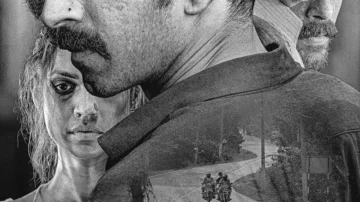
Nethaji Srinivas opens his Telugu crime thriller not on a corpse but on a pharmacy shelf, where the medicine that should heal is the weapon that kills. It is a genuinely unnerving premise, and for roughly twenty-seven minutes the film tries to hold it.
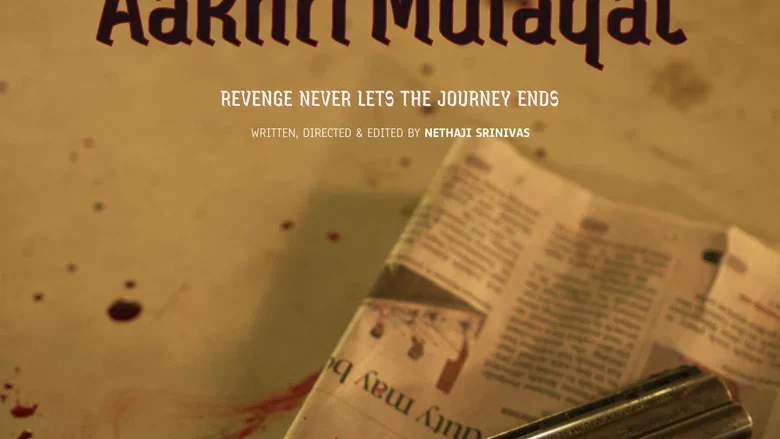
Counterfeit Antibiotics Are a Braver Villain Than Any Gangster
The smartest thing Aakhri Mulaqat does is refuse narcotics, smuggling, and land-grabbing as its criminal engine. Its commodity is fake antibiotics, a racket that turns every hospital drip into a potential murder weapon.
That choice gives the procedural stakes a public-health dread that most Telugu crime outings never bother to manufacture. When a photojournalist named Aravind starts pulling at the thread, the film briefly becomes about accountability rather than ballistics.
Two Rival Gangs, One Invisible Antagonist, Zero Pressure
Then the screenplay hedges. Instead of committing to the medicine racket as its spine, it bolts on a second axis: two rival gangs grinding each other down over greed and revenge.
This is where the compression turns hostile. Within a runtime this short, the warring factions get names, grudges, and screen time but no interiority, they function as noise around Aravind’s investigation rather than a genuine threat pressing against it.
The film never identifies a single antagonist worth fearing, which is fatal for a thriller. Villainy that is distributed across a crowd is villainy that nobody in the audience has to flinch from.
A Photojournalist Who Reports Instead of Bleeding
NC’s Aravind is the film’s one clean structural idea: a civilian investigator whose weapon is exposure, not a service revolver. The performance plays him as watchful and procedural, a man who trusts a notebook more than a gun.
But watchfulness alone cannot carry a climax. Without a scene that forces Aravind to physically pay for what he has uncovered, his restraint reads as passivity rather than resolve.
The supporting ensemble, Hameed, Bashir, Ferooz, Sameer, orbit the gang thread with no discernible dramatic function beyond filling a faction roster. Gorli Sai Kumar’s Inspector Vikram Kumar at least gives the police side a face, though the institutional pressure he represents never tightens around anyone.
The Director Trusts Silence, Then Fills It With Exposition
Srinivas has an instinct for withholding: he lets the racket reveal itself in fragments rather than through a briefing scene, which is the right call. The film’s quieter passages, where Aravind simply watches and waits, are its most confident.
Then the dialogue arrives to explain what the images already said. Characters narrate the conspiracy to each other, and the tension that the staging had earned gets spent on clarification.
Where My Dear Stranger lets its coldness do the work, this film keeps interrupting its own atmosphere to make sure nobody in the audience is lost.
What the Short Format Buys and What It Costs
The compressed runtime is a legitimate formal choice, and it does produce a lean, unromantic crime story with no filler romance or comic relief. That discipline is rare in this market.
But the film pays for it. Journalism, organized crime, police procedure, and gang vendetta all demand establishment, and twenty-seven minutes cannot give any of them a second coat of paint.
The film also lacks the performance gravity that anchors similar material. The quiet, coiled presence in Manithee shows what a single body in a frame can do; here, the ensemble rarely gets to hold a moment long enough for that to happen.
What Aakhri Mulaqat shares with Newton's 3rd Law is a faith in restraint over spectacle, and the same problem of restraint that never converts into momentum.
The Ending Refuses to Punish Anyone
When the threads finally converge, the film resolves its investigation but never its anger. The medicine racket is exposed; the men who profited from it are not made to feel the weight of what they did.
That is a strange kind of mercy for a story about poisoned antibiotics, and it leaves the audience with a question the film never asks aloud: who was supposed to suffer for this?
For a genre that lives on consequence, that omission is the real failure, not the short runtime, not the crowded factions, but the refusal to let anyone pay.
The Verdict
Aakhri Mulaqat is a promising premise that never becomes a punishing film. It has a genuinely original criminal commodity, a clean investigative viewpoint, and a director who understands that silence is cheaper than a score cue, but it spreads itself thin across too many factions and too few minutes to land a real blow.
For a market where the thriller is currently the most interesting thing happening on screen, this one reads as a sketch rather than a statement, part of a broader appetite for contemporary Telugu thrillers that are still learning to trust their own dread.
Rating: 2.5 / 5
It is not the counterfeit pills that linger after the credits, it is the suspicion that the film was more interested in the racket than in anyone it destroyed.

Ankit Jaiswal is the Chief Author, covering Indian cinema and OTT releases with honest, no-filler criticism. An SEO strategist by background, he brings a research-driven approach to film writing, cutting through hype to tell you exactly what's worth your time.