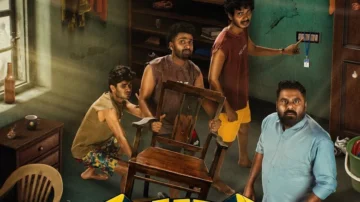
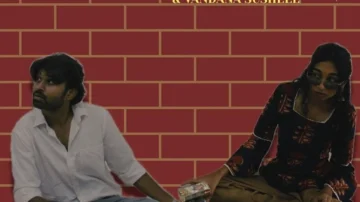
The film opens with Raghuvaran (Pavish Narayan) at his lowest point, jobless, drowning in debt, and abandoned by his family after his girlfriend Avantika’s (Naga Durga) lavish spending spirals out of control. It’s a sharply plotted burn that leads to a compelling confrontation: he challenges her to take on the “man’s role” for four months, to feel every pound of the pressure she never noticed.

Pavish Narayan Carries the Weight with Relatable Rage
Pavish Narayan’s Raghuvaran isn’t a saint; he’s a hollowed-out man whose frustration simmers just beneath the surface. The scene where he finally confronts Avantika about the spending feels painfully earned, his voice cracking not from anger but exhaustion.
Narayan’s physical performance, slumped shoulders, defeated pauses, grounds a premise that could have easily drifted into caricature. He makes you believe a man could break this quietly.
Magesh Rajendran’s Script Gets the Idea Right, the Execution Uneven
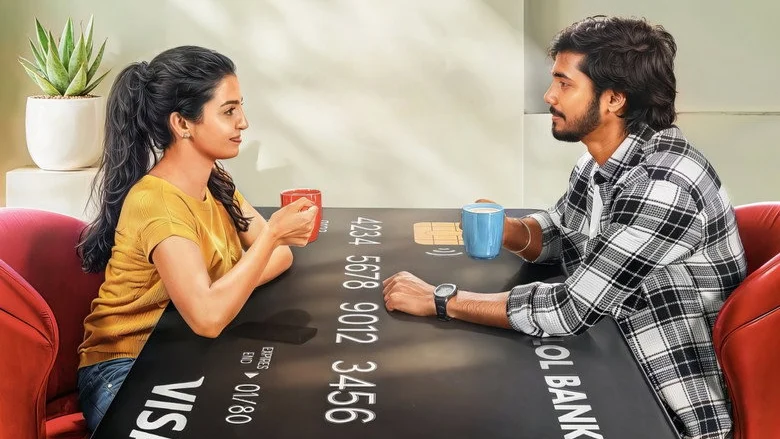
Director Magesh Rajendran constructs a linear narrative that grips you through the central challenge, but the screenplay falters when it shifts into a police interrogation segment. That tonal detour feels like a different film barging in, disrupting the comic-romantic rhythm.
The strength lies in the clear, high-concept hook. The weakness is Rajendran’s inability to trust his core conceit without reaching for genre-breaking detours that don’t land.
The Comedy Hits When the Role-Reversal Bites
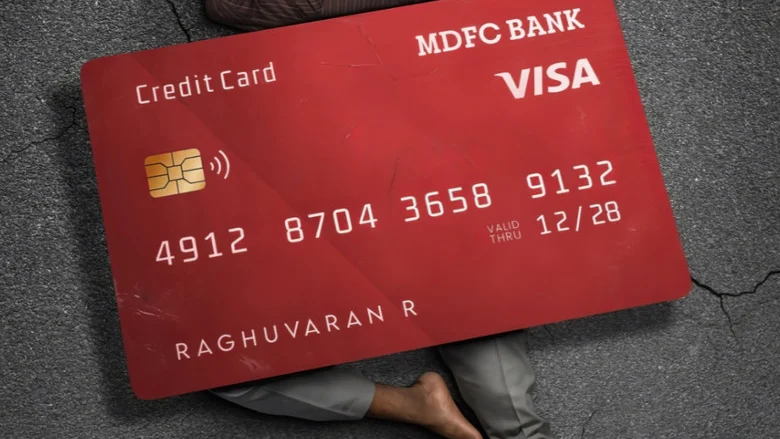
Rajendran uses role-reversal as a comedic weapon, mining laughs from Avantika’s clumsy attempts to manage finances and family expectations. The challenge scene itself is the high point, a tense, funny standoff that recalls classic screwball battles of wills.
But the comedy works best when it stays grounded in the couple’s domestic friction. The financial consequences drive the conflict with a sharpness rare for this genre, making the laughter feel earned rather than forced.
The climax delivers the narrative payoff: Avantika’s decision on whether she rises to the pressure. Yet the journey there occasionally loses focus, especially when the script reaches for generic rom-com beats that feel too familiar.
The Supporting Cast Adds Texture but Not Depth
Adithya Kathir and K.S. Ravikumar appear in supporting roles, but the research offers little detail on their specific moments. That itself is telling, neither seems to leave a strong imprint on the narrative.
K. Selvaraghavan and Vanitha Vijayakumar are intriguing casting choices given their heavier dramatic pedigrees, but their presence signals an ambition the film doesn’t fully fulfill. They hint at a richer family drama that remains underexplored.
A Clever Hook Searching for Its Full Potential
Box office data was unavailable at the time of this review, so we judge the film purely on what it delivers. The role-reversal concept is smart, and the setup is efficient, but the execution often settles for conventional resolutions when it could have pushed harder.
I wish the script had trusted its own premise enough to sidestep the police segment entirely and double down on the domestic tension. The most praised scene, the challenge, shows what the film could have been if it stayed that focused throughout.
For audiences who enjoy Tamil romantic comedies with a social edge, this remains a worthwhile watch. Tamil Romance reviews offer a fuller picture of what the genre can achieve when it stays disciplined.
Love Oh Love is a watch for fans of rom-coms with a twist, best enjoyed in a regular 2D show where you can lean into its better moments and forgive its stumbles. The premise alone provides enough conversation material for the ride home.
Love Oh Love is a clever, uneven experiment that earns a 3 out of 5 for its brave concept and Narayan’s performance, even as it struggles to stay consistent.
If this role-reversal angle intrigues you, Lenin review offers a similarly flawed but passionate dramatic rebellion.
For another performance-driven, uneven genre experiment, One Last verdict shares this film’s scrappy ambition.

Ankit Jaiswal is the Chief Author, covering Indian cinema and OTT releases with honest, no-filler criticism. An SEO strategist by background, he brings a research-driven approach to film writing, cutting through hype to tell you exactly what's worth your time.