The premise is promising: a man trapped in Kerala’s dense forests, caught between survival and a growing paranoia about the wildlife around him. But Lurk, an action thriller that also wants to be a social drama about human-wildlife coexistence, never decides which story it wants to tell. This indecision sinks the experience early, and the central conflict, survival, revenge, and deception, remains a distant hum rather than a gripping reality.
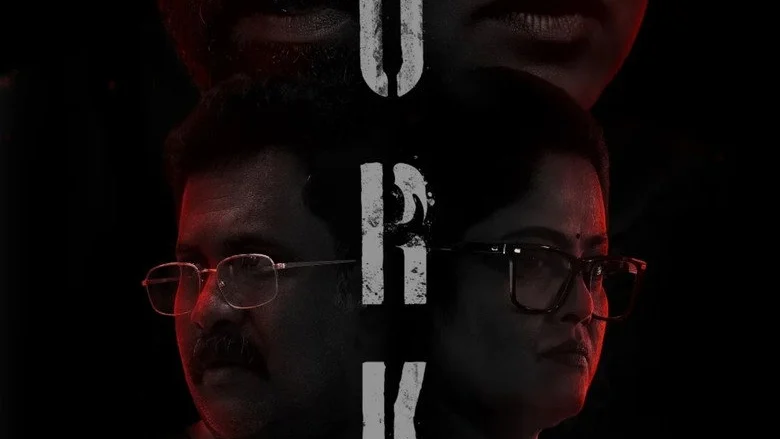
Saiju Kurup’s Face Works Harder Than The Script
Saiju Kurup carries the film almost entirely on his physicality. In the early forest sequences, his weary eyes and controlled body language suggest a man who has seen too much, yet the screenplay never rewards that restraint.
He has a good voice for endurance roles, but the writing gives him little to chew on other than silence and reaction shots. Kurup does enough to make you wish the material around him was as alert as his performance.
Aju Varghese And Prashanth Alexander: Misplaced Relief
Aju Varghese appears in a few comic-relief beats that feel surgically inserted from a different film. His timing is intact, but the tonal whiplash undercuts the tension the film struggles to build. Prashanth Alexander, meanwhile, brings a quiet menace in his limited screen time, one moment where he simply watches from a distance suggests a character the screenplay forgot to develop.
These are actors capable of more, and their inclusion here signals an intent to balance genre thrills with grounded performances. The film just doesn’t honour that intent.
The Thriller Mechanics Are Stuck In Low Gear
For a film billed as an action thriller, Lurk is remarkably passive. The geography of the forest is never established clearly, which kills any sense of spatial danger. When a character should feel cornered, the camera just cuts to another angle.
The setpieces lack choreographic imagination. There is no single chase or fight that registers as memorable. The human-wildlife conflict, its core draw, is depicted through predictably edited shots that reduce the animals to plot devices rather than genuine threats.
Social drama elements appear in short bursts, a line about development encroaching on forest land, but they are never woven into the thriller fabric. The film stays at a simmer when it needs a boil.
Anumol K. Manoharan Deserves A Better Arc
Anumol K. Manoharan plays a role that seems designed to ground the story emotionally. She has one quiet scene where she confronts Kurup’s character about his obsession, and her controlled anger is the rare moment the film feels personal.
But the screenplay sidelines her for long stretches, reducing a promising performer to a reactive presence. I suspect this character was fuller in an earlier draft, because the fragments leave a clear impression of wasted potential.
The Audience And The Empty Verdict
Without critical scores, box office data, or audience sentiment available for Lurk, the film exists in an uncomfortable vacuum. What is present is a solid central performance, a socially relevant theme, and a director who shows competence in framing actors but not in building momentum.
The lack of any significant online chatter or release-week noise suggests a film that arrived and left without disturbing the ecosystem. That itself is a kind of verdict.
For more on Malayalam films that balance action and social commentary, browse our expanding collection of Malayalam Thriller reviews.
Lurk is a watch only for Saiju Kurup completists or those curious about how a promising human-wildlife conflict premise can be drained of its tension. If you do watch, a streaming platform at home is the most forgiving format, there is little here that demands a theatre’s attention.
M.A. Nishad’s film struggles to earn a 2/5, stuck between genre obligation and dramatic ambition it never reconciles.
Compare this hollow thriller with the tighter, more character-driven execution in Odyssey review.
For a more effective revenge drama, see how Varavu verdict understands its genre mechanics.

Ankit Jaiswal is the Chief Author, covering Indian cinema and OTT releases with honest, no-filler criticism. An SEO strategist by background, he brings a research-driven approach to film writing, cutting through hype to tell you exactly what's worth your time.