The central conflict is simple on paper: a parent must shield a child’s future while the weight of village constraints presses down on every decision. Shiva Nirvana frames this not as a loud rebellion, but as a quiet, grinding negotiation between dignity and survival in a Telugu heartland that feels both specific and familiar.
This is a watch for those who like their action wrapped in domestic anxiety, not for anyone expecting a slick urban thriller.
Ravi Teja Channels Restraint, Then Unleashes the Storm
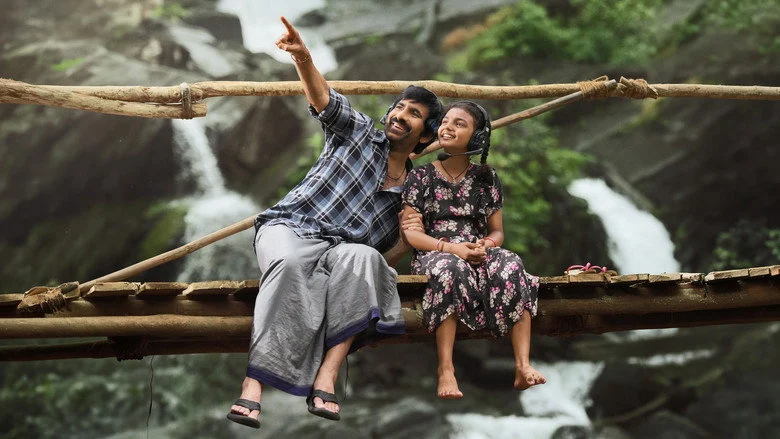
Ravi Teja operates in a lower register for much of the first hour, trading his usual manic energy for a simmering vigilance. Watch how he hovers near Baby Nakshathra’s scenes, the physicality suggests a man who has built his entire world around a single, fragile point of light.
When the narrative demands the switch to protective fury, he earns it through that earlier stillness. His breakdown in the second half, when the village’s social pressure peaks, lands harder because he didn’t waste his ammunition early.
The Screenplay’s Strength is Its Patience; Its Flaw is Its Repetition
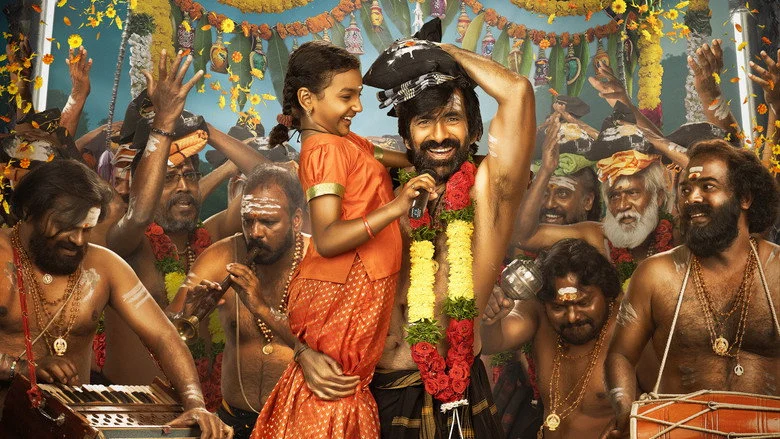
Shiva Nirvana’s direction shows a clear fondness for his characters, particularly in how he stages the cramped domestic interiors where Kaveri (Priya Bhavani Shankar) tries to maintain normalcy. The screenplay’s structure builds the threat incrementally, making the eventual eruption of conflict feel like a natural consequence rather than a contrived twist.
However, the middle stretch loses momentum by circling the same argument between the lead and the village elders too many times. One specific confrontation with Sai Kumar’s character could have been cut entirely without losing any narrative thread.
Nirvana knows how to frame a shot, but he trusts his audience’s memory a little too little, spelling out motivations that were already visually obvious.
Setpieces Built on Geography, Not Just Fists
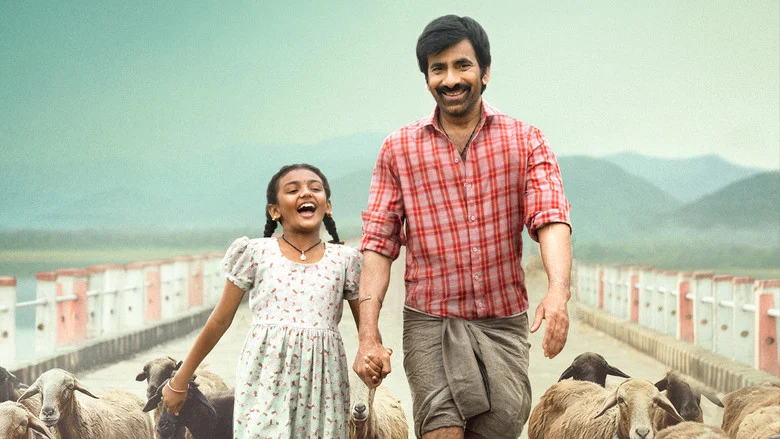
The action here is choreographed around the terrain, fields, narrow lanes, and the looming presence of the village shrine. One chase sequence through a harvested field uses the dry stalks as both cover and obstacle, giving the stunt geography a tactile roughness that CGI-heavy spectacles lack.
The climactic confrontation is less about choreography and more about emotional payoff, which suits the film’s family-drama core. The violence is sudden and brutal when it comes, but it never feels like the point, it’s the punctuation to a sentence about parental responsibility.
For a 2h 25m runtime, the action beats are sparse but effective, each one carrying a narrative charge rather than existing as a standalone showpiece.
Priya Bhavani Shankar and Sai Kumar Ground the Family Core
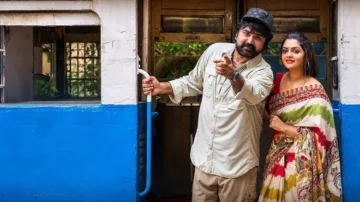
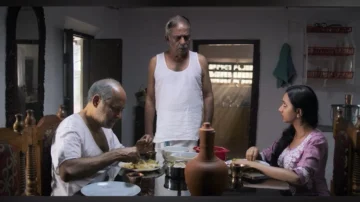
Priya Bhavani Shankar’s Kaveri is the film’s emotional anchor, and she plays the role of a mother trying to hold her household together with a quiet steeliness. Her best moment comes in a dinner-table scene where she calmly redirects a hostile conversation, her eyes doing more work than the dialogue.
Sai Kumar, as the voice of tradition, brings his usual gravitas but finds a shade of vulnerability that prevents the character from becoming a mere caricature of rigidity. Swasika Vijay and Ajay Ghosh fill out the supporting canvas with professional ease, each contributing to the suffocating social pressure the protagonist fights against.
A Familiar Political Undercurrent of Rural Power Dynamics
The film doesn’t wade into explicit political commentary, but the power structure of the village, who gets heard, who gets silenced, carries an unmistakable social charge. The antagonist force isn’t a single villain but the collective inertia of a community that prioritizes hierarchy over a child’s future.
This angle will resonate with audiences who’ve seen similar dynamics play out in real life, even if the resolution feels slightly too neat for the complexity it raises. The film is ultimately more interested in the father’s emotional journey than in dismantling the system itself.
Audience reception among family crowds has reportedly been warm, with the emotional core outweighing any narrative quibbles, though action purists may find the setpieces too sparse for their taste.
For more Telugu action reviews, browse our extensive coverage of regional cinema’s biggest releases.
Verdict: A Father’s Love, Rendered in Familiar but Earnest Strokes
Irumudi doesn’t reinvent the genre, but it executes its core promise with enough conviction to satisfy its target audience of mass, class, and family viewers. The pacing issues in the middle are real, yet the film’s emotional payoff, anchored by Ravi Teja’s measured performance, makes the journey worthwhile.
See it on the biggest screen you can find if you value the family-drama half; the action is competent but not the reason to buy a ticket.
Irumudi is a sincere, if uneven, drama that knows exactly whose hearts it wants to win, and it largely succeeds, a solid 3 out of 5 for its craft and performances, docked a point for its repetitive middle act.
Fans of this paternal-protection theme might also enjoy Musafir Cafe review for its similar emotional core.
For a quieter take on familial loss, Souls Wind verdict offers a different kind of stillness.

Ankit Jaiswal is the Chief Author, covering Indian cinema and OTT releases with honest, no-filler criticism. An SEO strategist by background, he brings a research-driven approach to film writing, cutting through hype to tell you exactly what's worth your time.