The frame holds on a gust of wind moving through an empty field, and for a moment, the film’s title feels earned. Peter Yung Wai-Chuen’s 1982 drama, a production from Associates (Asia) Film Company, wants to be a meditation on loss and longing, but its elliptical structure often keeps the audience at arm’s length. Released on 23 December 1982, this is a work of genuine artistic ambition that never quite finds the emotional voltage to match its visual poetry.
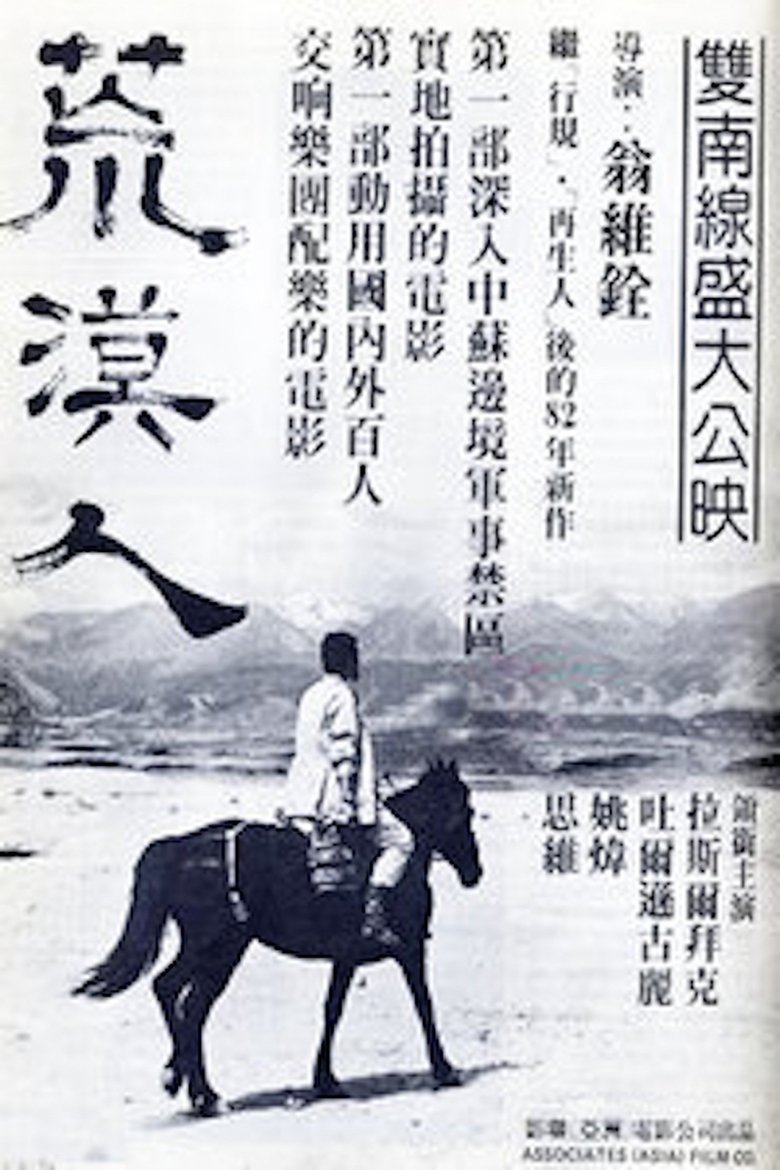
Si Wai Yiu’s Restrained Presence Anchors a Film That Refuses to Explain Itself
Si Wai Yiu carries the film with a performance built almost entirely on restraint. There is a quiet dignity in how he inhabits the frame, suggesting inner turmoil through posture rather than dialogue. His silence becomes the film’s most eloquent feature, even when the screenplay gives him little to work with in terms of explicit motivation.
Wai Tiu Yi-Shun provides a complementary counterweight, offering moments of warmth that offset the film’s pervasive melancholy. Their shared scenes carry a tentative chemistry that suggests a deeper connection the script never fully articulates. One wishes the film trusted its actors enough to let these exchanges breathe beyond their clipped, minimalist framing.
The Direction Prioritises Atmosphere Over Narrative, and It Shows
Peter Yung’s direction demonstrates a clear visual sensibility, favouring long takes and natural light that give the film a documentary-like authenticity. He understands composition, often placing his subjects against vast landscapes that dwarf them, reinforcing themes of isolation and impermanence. The influence of Terrence Malick’s early work is palpable, though Yung lacks Malick’s ability to marry philosophy with dramatic momentum.
The screenplay, co-written with Chui Hiu-sing, is where the film stumbles. Its episodic structure feels less like deliberate artistry and more like an inability to commit to a central conflict. Scenes drift into one another without clear causal links, and character decisions remain frustratingly opaque. The film’s refusal to explain itself is a risk that only partially pays off.
There is a poetry to the way Yung shoots wind moving through grass and light filtering through leaves, but poetry alone cannot sustain a feature-length narrative. The pacing becomes a test of patience, and the emotional payoff promised by the opening imagery never fully materialises.
A Film That Demands Patience but Rewards Only the Most Committed Viewers
This is a drama that expects its audience to meet it halfway, to fill in the emotional gaps the screenplay leaves open. For viewers attuned to slow cinema and meditative storytelling, there is something to admire in its purity of vision. For everyone else, the experience may feel like watching a series of beautiful photographs that never quite animate into a story.
The film’s obscurity is not entirely undeserved, but it is also not entirely fair. It represents a specific moment in Hong Kong cinema when art-house impulses were finding their footing, and its existence matters even if its execution falters. One can appreciate the attempt without fully surrendering to its spell.
Those seeking narrative clarity or conventional dramatic arcs should look elsewhere. This is a work for completists and students of regional cinema history, not for casual viewers seeking entertainment. Its rewards are subtle and intermittent, like the wind it takes as its subject.
For more explorations of quiet, contemplative cinema, browse our curated CN Drama reviews.
The Supporting Cast Signals Intentions the Script Never Realises
The limited supporting players present in the film suggest a broader social canvas that the narrative never fully explores. Their presence hints at a world beyond the central pair, yet the screenplay keeps them at the periphery, reducing them to atmospheric texture rather than substantive characters. This is a missed opportunity, as their interactions with the leads could have grounded the film’s abstract themes in tangible human stakes.
Audience Reception Remains Muted for This Obscure Art-House Entry
Without significant critical or audience data available, the film exists primarily as a footnote in Hong Kong cinema’s art-house wave. Its sparse footprint suggests a limited theatrical run and minimal cultural impact, even in its home territory. The absence of controversy or political engagement in the film’s reception reflects its inward-looking, apolitical sensibility, which may have further limited its reach during a period of vibrant social filmmaking in Hong Kong.
Final Verdict: A Curious Artifact for Cinephiles, a Chore for Everyone Else
If you are a student of Asian cinema’s quieter corners, this is worth seeking out for its visual ambition and sincere performances. If you are looking for a compelling drama with emotional resonance, this will likely frustrate you. Watch it on a rainy afternoon when you are prepared to sit with silence and let the images do the talking.
Souls of the Wind is a film of admirable intentions and incomplete execution, earning a modest 2.5 out of 5 for its visual poetry and the commitment of its leads.
For a more emotionally accessible take on fractured identities, revisit Batwara 1947 review.
If you prefer your dramas with sharper narrative teeth, see how Awarapan 2 verdict handles similar themes of longing.

Ankit Jaiswal is the Chief Author, covering Indian cinema and OTT releases with honest, no-filler criticism. An SEO strategist by background, he brings a research-driven approach to film writing, cutting through hype to tell you exactly what's worth your time.