The year is 1999, and a college student plummets from a building while a single mother is struck by a speeding car on the same night. Cop Vasudev sees a pattern where others see coincidence, and his quiet obsession drives this compact Telugu thriller toward a chain of consequences that the title promises from the start.
For audiences tired of noisy commercial thrillers, this one signals its intentions early: a minimalistic investigation, a grounded 1999 setting, and a lead actor who would rather observe than explode.
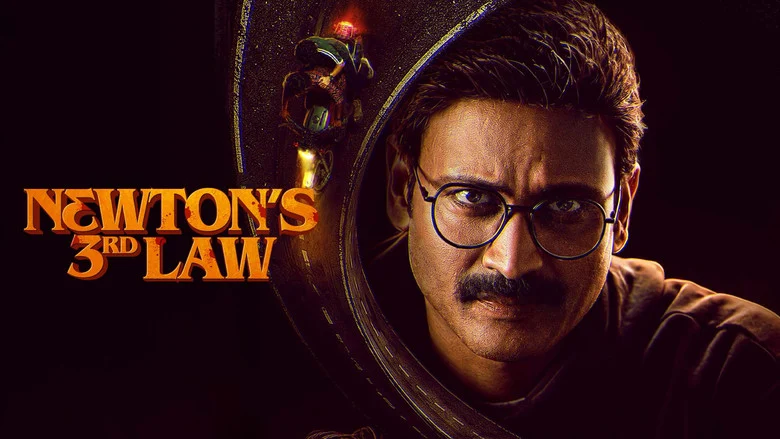
Sumanth’s Restraint Gives the Investigation Its Spine
Vasudev is a cop defined by patience, not bravado. Sumanth plays him through methodical questioning and silent observation, especially in the stretches where he connects the two deaths through small, accumulating details.
His controlled register keeps the procedural honest. Where a louder performance would have manufactured false tension, Sumanth’s quiet intensity makes the clue-hunting feel earned rather than staged.

Rajesh Karna’s Direction Favors Clarity Over Flash
Karna directs with a single-thread focus, refusing to pad the mystery with inflated staging or commercial distractions. The setup is efficient, and the central premise stays legible throughout.
The flaw arrives in the middle, where the screenplay leans on exposition to align its clues. Emotional beats get subordinated to plot mechanics, and the pace flattens during these information-heavy stretches. I found myself checking the runtime around the hour mark, not out of boredom, but because the film’s own momentum dips noticeably.
The Genre Core: A Procedural That Respects Its Own Rules
The thriller engine runs on delayed linkage. Two deaths in 1999, seemingly unrelated, get pulled into one investigation thread as Vasudev traces how family secrets and personal histories collide. The suspense comes from watching connections form slowly, not from sudden violence or chase choreography.
Karna’s best decision is treating the case as a puzzle of character connections rather than a race against a visible villain. The hidden-human-cause model keeps the audience guessing about motive, and the reveal structure pays off by tying every suspect back to the central cause-and-effect theme.
The dramatic weight rests on consequence, not action. That choice will frustrate viewers expecting commercial elevation, but it serves the film’s compact mystery structure well. The opening murder link setup and the investigation scenes where Vasudev traces the chain of consequences are the film’s strongest craft moments.
Jagapathi Babu and Srinivas Avasarala Anchor the Suspense Network
Jagapathi Babu occupies a pivotal role tied directly to the central mystery, functioning as one of the key suspense anchors. His casting signals that the film wants gravitas in its hidden corners, and his presence elevates scenes that might otherwise feel procedural.
Srinivas Avasarala appears within the network of characters connected to the case, adding intellectual weight to the investigation’s social web. Both actors are underwritten compared to Sumanth’s lead, but their casting choices suggest the film’s intent to ground its thriller in recognizable, credible faces rather than caricatured suspects.
For those who appreciate a cerebral investigative drama, there is more worth exploring in Telugu Thriller reviews that value procedure over spectacle.
Audience Fit: A Class-Audience Thriller With Clear Boundaries
This is not a film for viewers hunting mass-action pacing or frequent songs. The audience complaints center on the middle-section slowdown and limited action, both of which are accurate assessments of what the film deliberately avoids.
What remains is a crime-and-family connection that rewards patient viewers. One critic noted that “Sumanth spearheads a largely satisfying minimalistic crime thriller, ” while another called it “a no-nuisance cop investigates a double murder in 1999.” Both quotes capture the film’s honest ambitions and its ceiling.
Watch this on OTT, where its deliberate pacing and dialogue-driven investigation can breathe without the pressure of theatrical expectations. It is a solid, unflashy addition to the investigative drama space, and Sumanth’s performance makes the two-hour runtime worthwhile for genre purists.
Newton’s 3rd Law earns a fair 3 out of 5 for its disciplined storytelling and Sumanth’s anchored lead turn, even if its middle act tests your patience.
For a lighter contrast in investigative family dynamics, Sathyavan Savithiri review trades tension for comic charm.
If you prefer romance with your drama, Anbe Diana verdict offers a familiar but charming alternative.

Ankit Jaiswal is the Chief Author, covering Indian cinema and OTT releases with honest, no-filler criticism. An SEO strategist by background, he brings a research-driven approach to film writing, cutting through hype to tell you exactly what's worth your time.