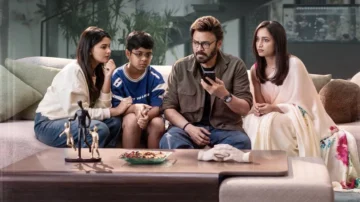
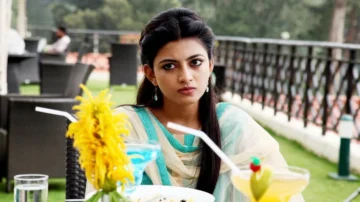
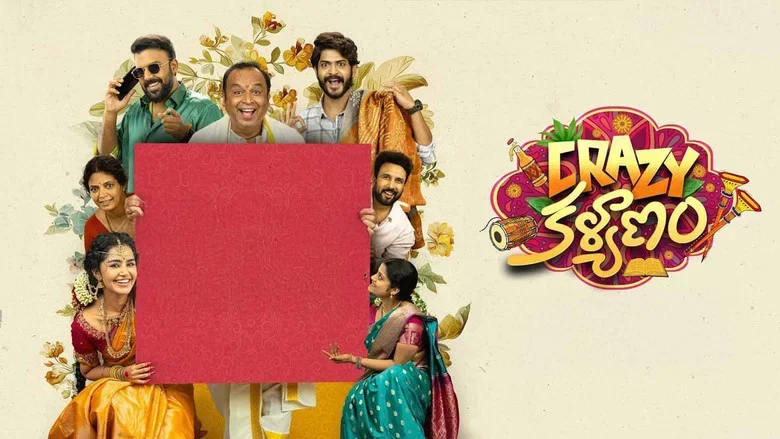
Anupama Parameswaran’s Keerthi wants a degree before a mangalsutra, and her father wants a wedding before the neighbours start talking. That collision of ambition and reputation is the entire engine of Crazy Kalyanam, a village-set family drama that arrives with its moral pre-drawn and its ending already signed.
A Proposal Meant For One Daughter, Redirected To Another
The film opens on Parvathalu, a village patriarch whose entire sense of self is staked on public standing. When a marriage alliance arrives for his elder brother’s daughter, he quietly reroutes it toward his own Keerthi, and the household detonates.
It’s a genuinely sharp piece of plotting, because it converts a socially ordinary arrangement into a betrayal inside the family rather than outside it. The conflict isn’t a villain demanding a bride; it’s a father rearranging the furniture of his own reputation.
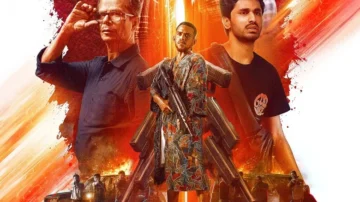
That instinct for internal combustion is what distinguishes stronger work in this space. The screenplay resists the kinetic sensationalism that overtook My Dear Stranger, opting instead for a slower, drawing-room pressure that builds through negotiation rather than incident.
Balraju’s Bottle Keeps The First Half Breathing
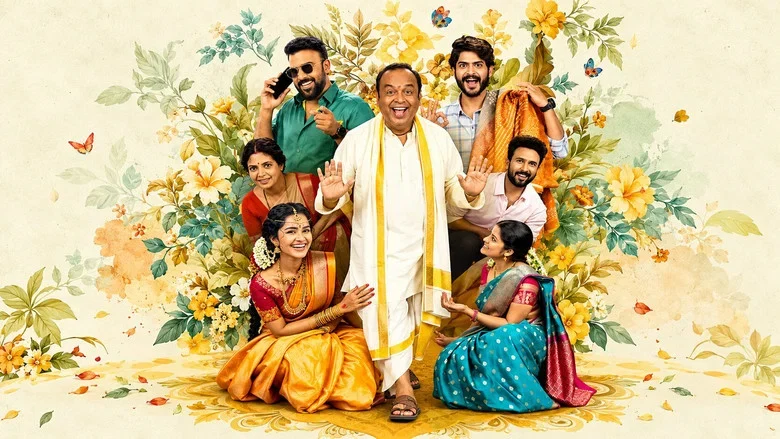
Tharun Bhascker Dhaassyam plays Balraju, the alcoholic elder son-in-law who stumbles through the village creating fresh problems every twenty minutes. He is the film’s comic release valve, and for a while, he’s the only thing keeping the tone from hardening too early.
The problem is structural: the comedy and the drama are running on separate tracks rather than feeding each other. Balraju’s drunken chaos delays the serious conflict instead of complicating it, which means the first half coasts on incident while the real argument waits in the wings.
Once the film commits to its emotional register, that momentum evaporates. The shift from slapstick household disruption to tearful father-daughter reckoning is abrupt, and the narration never quite recovers its footing.
Naresh Holds A Long Take When The Script Won’t
VK Naresh is the film’s most valuable asset, and he knows it. As Parvathalu, he plays paternal love and social vanity as the same gesture, a hand on a shoulder, a glance toward the doorway where the neighbours might be listening.
There’s an extended sequence built around his character that the film treats as its emotional summit, and Naresh carries it in a single sustained stretch without cutting away. His voice drops rather than rises, and his stillness while Keerthi makes her case is more damning than any outburst would be.
Parameswaran, for her part, plays Keerthi’s resistance with a tight, contained frustration rather than tearful pleading. She’s strongest in the silences between her father’s sentences, where her jaw sets and her eyes stay level, a young woman calculating how much of herself she can afford to surrender.
Her work here has the same quality of quiet resolve she brought to the emotional core of Srinivasa Mangapuram, though this material gives her less room to surprise.
A Village That Looks Lived-In, A Camera That Doesn’t Notice
The Telangana village backdrop is the film’s most persuasive production choice, with courtyards, verandas and narrow lanes that carry the weight of communal observation. Reputation feels physically present because the architecture keeps neighbours within earshot.
Badrappa Gajula’s camera, however, rarely does anything with that geography. The framing stays functional and flat, content to record conversations rather than trap characters inside them, and the visual language never generates the claustrophobia the story is begging for.
Suresh Bobbili’s score is deployed generously, cuing emotion the screenplay hasn’t earned. By the time the father’s realization arrives, the music is doing the heavy lifting that the writing should have handled two reels earlier.
The Climax Arrives Exactly Where You Left It
Parvathalu’s change of heart is the film’s thesis, and it lands with the precision of a scheduled train. He understands that a daughter should study, work and stand on her own feet, a conclusion the audience reached somewhere in the first act.
What’s frustrating isn’t the message but the refusal to complicate it. Keerthi never has to argue her case against a genuinely persuasive counter-position; her father is simply wrong until he isn’t, and the screenplay never lets him articulate why his fear might have teeth.
The romance with Uday is even thinner, a placeholder relationship that exists to give Keerthi something to lose. Akhil Raj Uddemari has almost nothing to play, and the film never asks him to.
What Boosam Jagan Mohan Reddy’s Banner Is Actually Betting On
This is a modest, regionally-targeted family drama arriving without the franchise scaffolding or star-vehicle muscle that usually guarantees a Telugu theatrical opening. Producer Boosam Jagan Mohan Reddy is betting on the marriage-and-education conversation resonating with family audiences in the Telangana belt.
That’s a real market, but it’s also a crowded one. The mid-two-star critical cluster suggests the film will need word-of-mouth from viewers who respond to the father-daughter material rather than the comedy, and that’s a narrow path in a theatrical market increasingly dominated by spectacle.
Parameswaran’s box-office leverage in this segment is genuine but limited, she draws audiences who want relationship drama, not event cinema. For the producers, the smarter play may be a quick OTT transition, where this kind of intimate family conflict actually finds its audience.
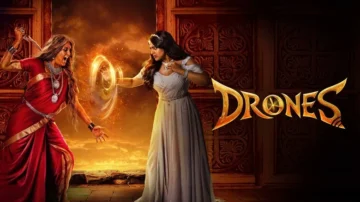
What the film reveals, more than anything, is how much room remains for the kind of grounded character work that peers like Drones attempted with more formal ambition but comparable tonal confusion. Both films understand their emotional target; neither quite trusts it.
That hesitation is the real story here, a film with a clear social argument and a lead performance strong enough to carry it, undermined by a screenplay that mistakes agreement for drama. The education debate deserves a better opponent than a straw father, and Keerthi deserves a fight worth winning.

Ankit Jaiswal is the Chief Author, covering Indian cinema and OTT releases with honest, no-filler criticism. An SEO strategist by background, he brings a research-driven approach to film writing, cutting through hype to tell you exactly what's worth your time.