Mu. Maran opens on a kitchen at dawn, a widowed father packing a tiffin box he will never eat from, and the camera holds on his hands a beat longer than the child’s face. That single gesture tells you what kind of film Appa Kutty wants to be.
For forty minutes it is a tender domestic drama about a man whose entire geography is his daughter’s school route. Then the floor gives way.
The Tiffin Box Is a Promise, Not a Prop
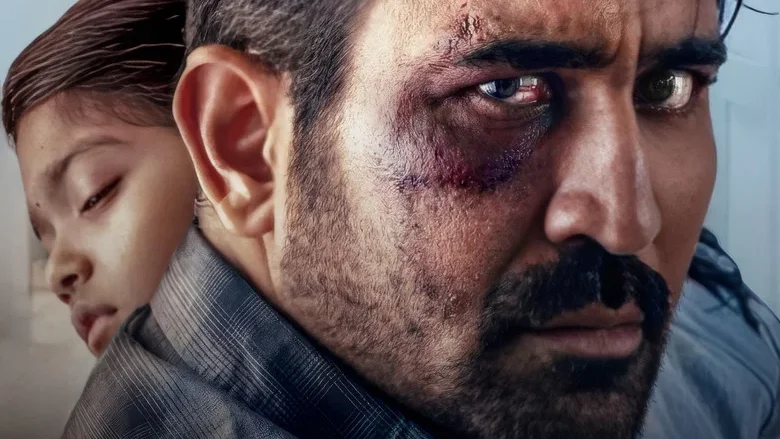
The first act runs on absence. The daughter never says she wants a mother; she simply positions herself between her father and the young woman who enters their lives, and the framing does the arguing for her.
Maran trusts silence here. Vijay Antony’s register is pitched low, a man who speaks to his child in half-sentences and finishes his own thoughts with a nod. It is the most controlled work he has delivered in years.
Just as the director demonstrated a more patient approach to household tension in Aakasamlo Oka Tara, the camera here refuses to decorate grief. It sits on doorframes and waits.
When the Genre Switches, the Film Forgets to Breathe
The post-interval pivot into child abandonment and trafficking is where the material gets serious, and where the screenplay gets impatient. The tragedy that should be a slow emotional amputation arrives with almost procedural speed.
Suddenly the father is an investigator, and the film’s grammar changes from held close-ups to courtroom blocking. The shift works as escalation; it works less well as psychology. We lose the man we spent forty minutes learning.
The trafficking thread gives the thriller a social conscience, but the script treats that conscience as a destination rather than a question. The villains are a network, not a face.
The Courtroom Is Where Vijay Antony Stops Whispering
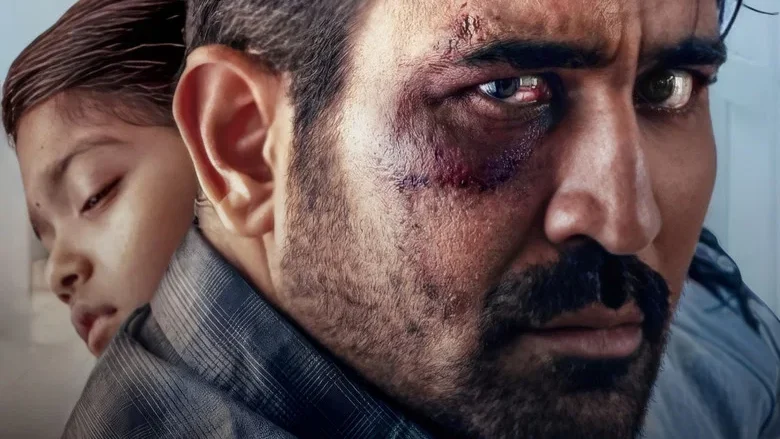
In the legal sequences, Antony’s body changes. Shoulders square, jaw sets, and the paternal murmur hardens into something that carries to the back row of the hall. It is the performance’s sharpest turn.
You can trace the same discipline in his work opposite caste prejudice in Nooru Sami, where the restraint was moral rather than protective. Here the restraint is a lid, and the courtroom lifts it.
Baby Lithanya is the film’s quiet engine. She plays longing without performance, a child who looks at other families the way adults look at old photographs. When the screenplay later endangers her, the stakes feel earned rather than engineered.
Bhagavathi Perumal arrives in the second half and immediately raises the temperature of every scene he shares. He does not play menace as volume; he plays it as patience.
A Score That Underlines What the Actors Already Said
The background score is the film’s most insecure collaborator. Where Antony’s stillness does the work, the music insists on telling you how to feel, and the result is a scene that argues with itself.
Maran’s staging in the courtroom is otherwise disciplined, long takes, minimal cutting, the judge’s bench framed at eye level so the father must look up to argue. That choice is worth more than any musical cue.
The film’s kinship with the sprawling crime architecture of O.M is instructive: both want to widen a personal story into a systemic one. Only one of them earns the widening.
What the Second Half Refuses to Ask
The trafficking subplot raises a question the screenplay never quite answers: who is responsible for the children nobody claims? The film gestures at social failure but retreats into individual heroism whenever the answer gets uncomfortable.
That retreat is the film’s real limitation. It wants to be a social thriller, but it is happiest as a father’s revenge ballad, and the two impulses pull against each other in the final act.
Still, the emotional climax lands. The promise a father makes to a daughter in the first act is paid off with a physical gesture rather than a speech, and the restraint is welcome.
D Empire’s Bet and the Tamil Thriller Market
D Empire Production and R. Loganathan Film Factory carry the distribution weight here, and the commercial math is instructive. Reports indicate OTT, satellite and theatrical rights covered production costs before release, which lowers the theatrical risk considerably.
That pre-sale cushion matters in a market where the Tamil family-thriller hybrid has become a reliable, if crowded, exhibition slot. Antony’s box-office leverage rests on a loyal base rather than opening-weekend frenzy.
The broader trajectory of contemporary Tamil thrillers suggests audiences will reward this film’s emotional sincerity more than its procedural ambition. The courtroom is the selling point; the trafficking machinery is the risk.
The Verdict: A Father’s Film That Wants to Be a System’s Film
Appa Kutty is at its best when it forgets it is a thriller. The tiffin box, the school gate, the child’s silence, these are the film’s true evidence, and Antony carries them with a gravity that never tips into melodrama.
What it cannot quite sustain is the larger claim it makes about abandoned children and the networks that profit from them. The film raises the alarm and then hands the rescue to one man, which is both its comfort and its cop-out.
It is a film about a promise kept in a world that keeps very few. That the promise is small, domestic, and almost invisible is precisely the point, and precisely the limitation.

Ankit Jaiswal is the Chief Author, covering Indian cinema and OTT releases with honest, no-filler criticism. An SEO strategist by background, he brings a research-driven approach to film writing, cutting through hype to tell you exactly what's worth your time.