The opening image is a child’s sandal, half-sunk in wet earth, and Sai Baali holds on it a beat longer than comfort allows. That patience is the film’s thesis: the crime is the surface, the silence beneath is the story.
A Disappearance That Refuses to Announce Its Own Gravity
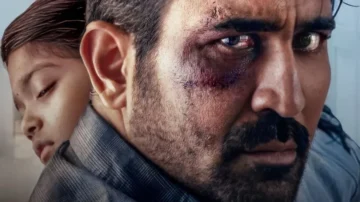
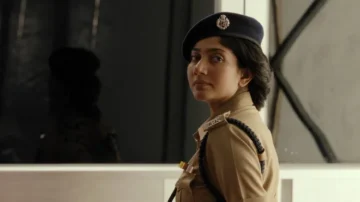
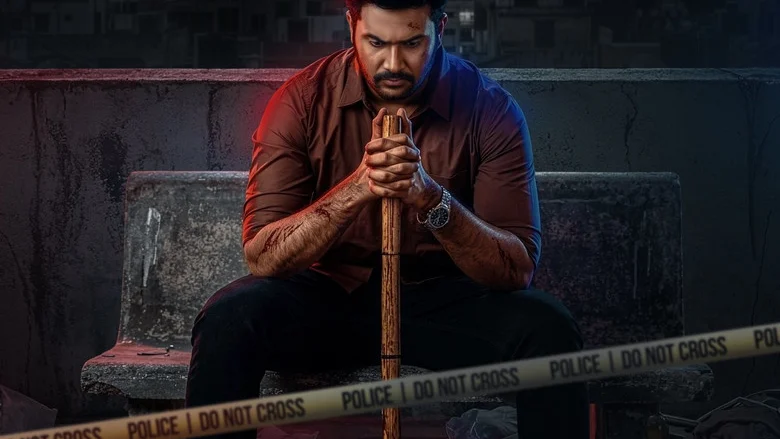
Rahul Vijay enters as a police officer assigned to a case nobody wants to name aloud, young girls, gone, the trail already cold. The screenplay does not sprint to the body; it lingers in the registrar’s office, in the way a mother folds a uniform that will never be worn again.
That restraint is the film’s first gamble, and it mostly pays. Baali understands that a missing-person procedural lives or dies on the texture of waiting, not the velocity of the chase.
When Deception Becomes the Only Reliable Clue
By the second act, every witness has a reason to lie, and the film’s engine becomes the officer’s slow calibration of who is performing grief and who is genuinely hollowed out. Vijay plays the detective as a man who listens with his whole face, chin lowered, eyes tracking the speaker’s hands rather than their mouth.
It is a performance built on withholding, and it recalls the quiet exhaustion he carried through VISA – Vintara Saradaga, where the register was softer but the discipline identical. Here, the stillness has teeth.
The Interrogation Room as a Stage for Micro-Expressions
Baali stages his key confrontations in cramped, fluorescent rooms where the camera sits at table height, forcing the actors into an unflattering intimacy. Archana Iyer, as the female lead, gets one devastating sequence opposite Vijay in which she never raises her voice, her hands stay folded, her jaw tightens once, and the room tilts.
It is the kind of scene that separates a performance-led thriller from a plot-led one. The revelation arrives not through a confession but through a half-second of eye contact that breaks before the question finishes.
A Criminal World Rendered in Shadow and Static
The antagonist remains deliberately diffuse, a network rather than a face, and Baali shoots the criminal underworld in long, static wide shots that make the frame feel like evidence photographs. It is a colder visual grammar than the kinetic sensationalism that overtook KillR, and it suits the material’s suffocating dread.
Where the film stumbles is in its refusal to fully commit to a single suspect; the middle stretch cycles through red herrings with a procedural thoroughness that occasionally flattens tension into paperwork.
The Pacing That Betrays Its Own Best Instincts
The first half moves with deliberate, almost novelistic patience, clues accumulate, suspicion shifts, and the officer’s certainty erodes in small, visible increments. The second half, however, begins to hurry, stacking revelations with a haste that undercuts the earlier discipline.
Just as he demonstrated a tighter spatial control in Bouma, Baali knows how to hold a frame; what he hasn’t yet mastered is knowing when to release it.
Star Box Stories and the Economics of the Mid-Budget Procedural
Star Box Stories and Ripple Slide Studios have backed a film that sits squarely in the mid-budget Telugu thriller lane, a segment where theatrical returns depend on word-of-mouth rather than opening-weekend spectacle. Vijay’s box-office leverage here is real but narrow; he is a performer audiences trust rather than a star they flock to.
The film’s commercial fate will hinge on whether the procedural faithful show up on the strength of the premise alone, a bet that contemporary Telugu thrillers have increasingly been willing to make.
The Uncomfortable Resolution of a Case That Doesn’t Close
The ending refuses the clean catharsis of a solved case, the officer walks out of the station into daylight that feels wrong, and the film does not tell us whether the girls were found. That ambiguity is either the film’s most honest gesture or its most evasive one, and Baali leaves the verdict to us.
What lingers is not the mystery but the weariness on Vijay’s face as he unlocks his car, the sense that some investigations end not with answers but with the quiet decision to stop asking.
Ah is a thriller that trusts its silences more than its revelations, and in a market that rarely does, that alone is worth the ticket.

Ankit Jaiswal is the Chief Author, covering Indian cinema and OTT releases with honest, no-filler criticism. An SEO strategist by background, he brings a research-driven approach to film writing, cutting through hype to tell you exactly what's worth your time.