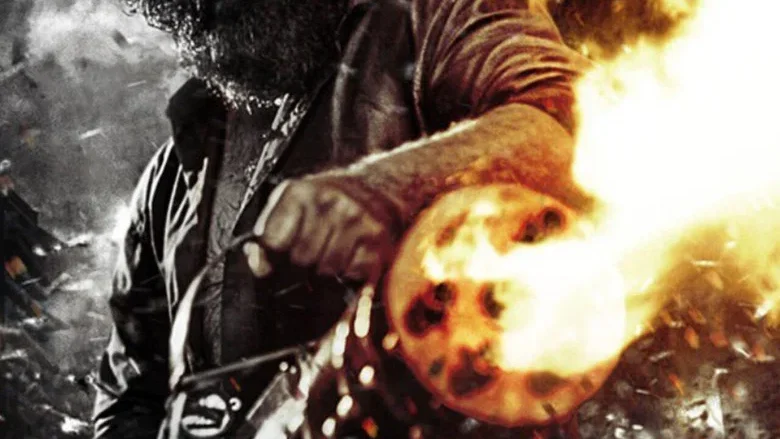
A bloodied man walks a road at night, and the camera refuses to look away. Agastya Narasimha’s Maarige Daari announces its moral ledger before a single line of dialogue lands.
The Revenge Premise Arrives Pre-Justified, And That Is The Problem
The film opens with the promise of consequence rather than catharsis. Narasimha, who writes, directs, and stars, wants us to feel the toll of the path rather than the thrill of the pursuit.
It is a noble instinct, and a dangerously abstract one. Revenge narratives live or die on the specific texture of the grievance, and this one keeps its wound in shadow.
The central mechanism is a widening gap between justification and aftermath. Every act of violence is meant to cost something, and the screenplay keeps reaching for that cost without ever letting us count it.
There is an obvious structural ambition here, the kind of contained descent that Pulse attempted with more spatial discipline. Where that film trusted its geography, this one trusts its star’s face.
Narasimha The Performer Is Best When Narasimha The Writer Steps Back
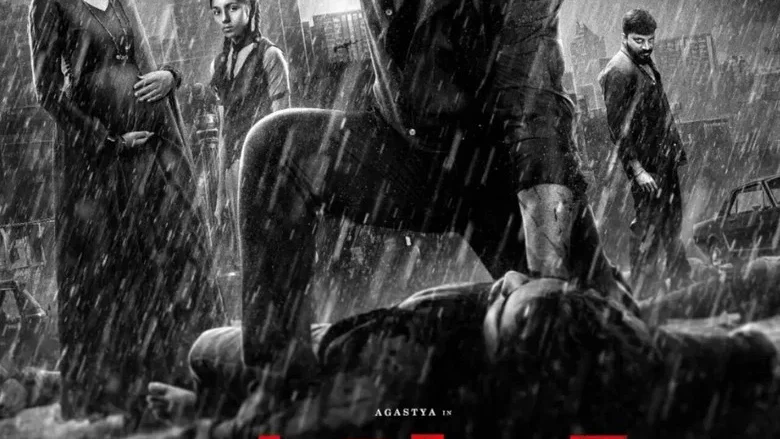
The lead performance has a stillness that the script rarely earns. In the aftermath of violence, he does not rage; he goes quiet, jaw set, eyes dropping to the floor before finding the room again.
His physical register is a man folding inward. Shoulders rounded, gait heavy, he moves through confrontation scenes like someone carrying an invisible weight.
The problem is that the screenplay keeps explaining what the body is already saying. A scene of silent aftermath will be followed by a line that translates the silence into thesis.
That instinct to clarify is the film’s most persistent weakness. It recalls the performance tension in Shankarabharana, where a strong central turn was similarly undermined by a film unwilling to let it breathe.
Supporting Figures Drift Through The Frame Without Anchoring It
Cockroach Sudhir registers briefly as a physical presence in the margins, all nervous energy and quick exits. Ankitha Gowda carries a quieter weight in her scenes, though the screenplay gives her little to do beyond witness.
The broader ensemble, the royal relatives and roadside figures who populate the journey, function as texture rather than character. They enter, they react, they exit.
For a revenge film to land, the world around the avenger needs to feel worth the cost of his choices. Here the world is thin, and the cost becomes theoretical.
The A certificate is honest about the film’s adult register, and the violence is presented without flinching. What it lacks is the human density that would make that violence linger.
Gowda’s Camera Finds Texture, Antony’s Score Fills The Gaps
Jagadish Gowda, doubling as cinematographer and editor, favors tight framing and low light. Faces are often half-lit, and the choice suits a protagonist who is himself only half-visible to us.
The editing, though, betrays the visual patience. Scenes that begin with held frames accelerate into choppy cutting, as if the film does not trust its own stillness.
Riyo Antony’s score is asked to carry emotional weight the screenplay has not earned. It rises on cue, and the effect is less enhancement than substitution.
At just over two hours, the film has no excuse for the slack in its middle stretch. The journey is relentless in description, but the pacing is more dutiful than driven.
What the film does share with Lambodhara 2.0 is a half-built architecture, a strong premise that never quite assembles into the structure it promises.
Radha Films Bets On A Unified Author, And The Bet Is Incomplete
Radha Sannaiah’s Radha Films is staking its release slate on a first-time unified voice. The gamble is understandable; unified authorship can produce the kind of singular vision that cuts through a crowded market.
But the market for contemporary Kannada thrillers is no longer satisfied with premise alone. Audiences have been trained by sharper, more disciplined work.
Narasimha’s theatrical leverage as a lead is still unproven, and the film’s commercial sustainability will depend on word of mouth from adult audiences rather than franchise momentum.
The A certificate limits the family audience, and the lack of a recognizable antagonist limits the mass appeal. This is a niche bet in a market that rewards clarity.
The Road Ends Where It Began, Which Is The Point And The Failure
The final stretch returns the protagonist to the moral question that opened the film. Has the path been worth it? The film’s answer is appropriately uncomfortable.
But discomfort is not the same as depth. The ending gestures at consequence without dramatizing it, leaving the audience to supply the weight the screenplay could not.
Narasimha has the instincts of a serious filmmaker and the presence of a compelling lead. What he lacks, for now, is the discipline to let his own work breathe.
Maarige Daari is a road worth walking once, but the film never convinces us the destination was inevitable.

Ankit Jaiswal is the Chief Author, covering Indian cinema and OTT releases with honest, no-filler criticism. An SEO strategist by background, he brings a research-driven approach to film writing, cutting through hype to tell you exactly what's worth your time.