Amal Neerad opens on a knot of bodies in motion, thieves sprinting a corridor that narrows as the frame tightens, and for a moment the old swagger is back. Then the ensemble starts explaining itself, and the spell thins.
An Escape Built on Loyalty, But Not on Jeopardy
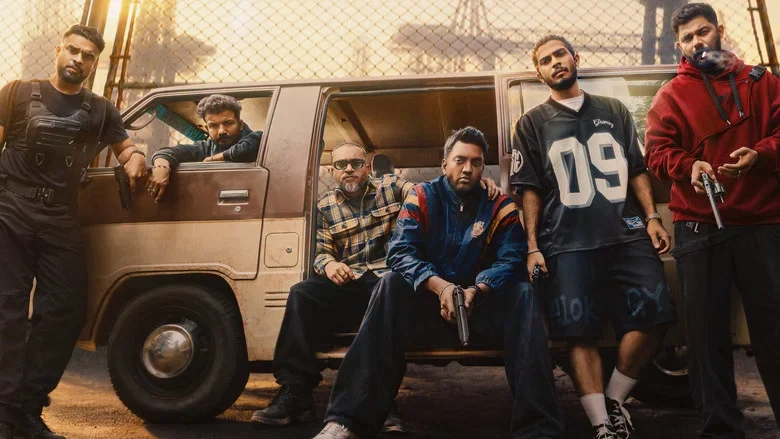
The premise is clean and, in the right hands, brutal: a crew of urban thieves whose bond becomes a physical constraint when the job collapses into a running escape. The film keeps insisting that no one gets left behind.
That insistence should be the engine. Instead it is the thesis, restated in dialogue and posture until loyalty feels less like a moral obligation and more like a group contract nobody has read.
Where a tighter crime picture would let the constraint generate dread, every extra second spent waiting for a fallen comrade is a bullet earned, this one treats the group as a chorus. The result is warmth without weight.
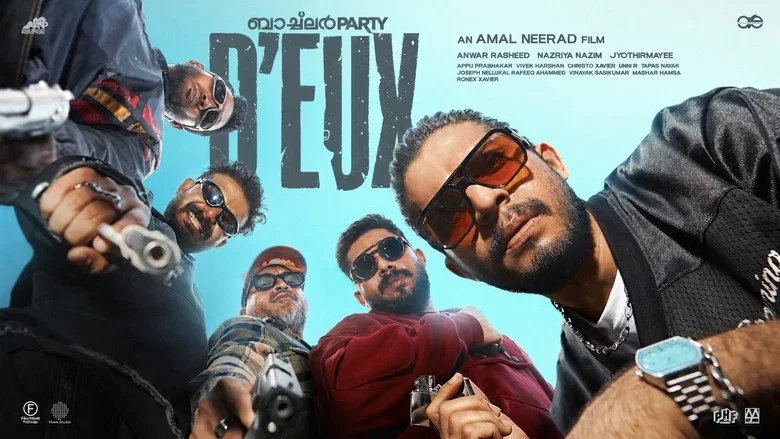
When Every Character Is the Protagonist, the Frame Has No Center
Neerad has always been a director of surfaces and silhouettes, and the ensemble format indulges that instinct to a fault. The camera keeps hunting for the most beautiful arrangement of bodies in a room rather than the most dangerous one.
Just as he demonstrated a more disciplined spatial grammar in O.M, where the sprawl was at least anchored to a single gravitational figure, here the sprawl is the point, and the point is diffuse.
Kunchacko Boban carries the early stretch with a kind of weary, unhurried authority, the face of a man who has run this route before and knows exactly which alley will betray him. It is a performance built on stillness and side-eye, and it works precisely because he refuses to sell the panic.
Naslen, by contrast, is asked to do the jittery-younger-brother register he has already refined elsewhere, and the echo is hard to shake. The nervous energy that landed as a genuine comic instrument in Scene here reads as a repeat booking rather than a new note.
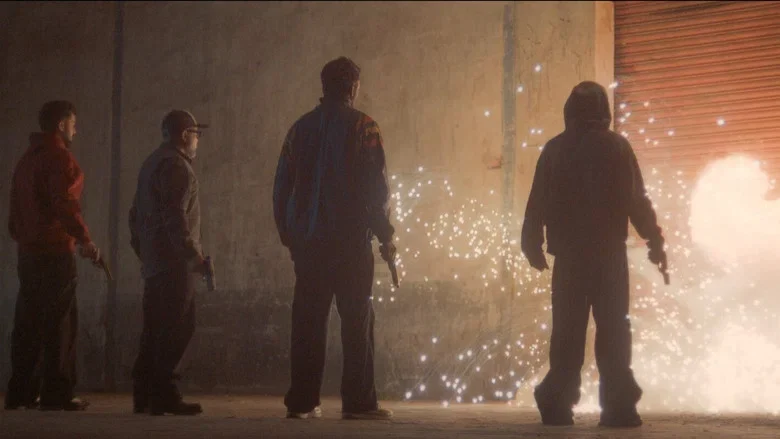
The Supporting Players Have Presence and Almost No Function
Soubin Shahir gets the film’s best throwaway, a long, flat, unimpressed stare at a situation that absolutely deserves panic, and it lands because he underplays the joke into the floor. It is a two-second gesture doing more narrative work than several minutes of shouted exposition.
Sharafudheen, meanwhile, is given urgency without a task: he runs, he shouts, he grabs a shoulder, and the screenplay never tells us what he actually wants. The ensemble is deep in faces and shallow in want.
The women in the cast are largely positioned as texture, a glance from a doorway, a hand on a forearm, and the film never grants them a decision of their own. For a story about collective obligation, that is a conspicuous omission.
Neerad’s Visual Grammar Is Gorgeous and Slightly Airless
The lighting is the film’s most confident asset: hard sodium spill cutting across wet asphalt, faces half-lit so that the unlit half does the acting. The widescreen framing keeps the group clustered at the edges of the frame, which is the right instinct for a story about people who cannot afford to spread out.
What the imagery lacks is escalation. The palette does not shift as the danger mounts; the same amber gloom coats the first act and the last. By the final chase, the eye has been given no visual signal that anything has changed.
The score, too, leans on sustained low-end rumble where a sharper rhythmic cut would have sold the ticking clock. Silence is used well in two or three standoffs, a held breath before a door opens, but the film does not trust those silences for long.
The comic register is the most uneven element. The tonal pivots between irreverence and jeopardy recall the broader problem that sank Melcow Pondicherry, where a thriller kept interrupting itself to be liked. Here the jokes are better placed, but the film still flinches from its own dread.
The Climax Chooses Warmth Over Consequence
The escape sequence is staged with real physical coordination, bodies moving as a unit through a corridor, a hand pulling a straggler through a gap, and it is the one stretch where the loyalty thesis becomes an image rather than a line of dialogue.
But the resolution declines to charge anyone for the choice. The crew survives because the film loves them, not because they earned it, and the final beat lands on a group laugh that feels unearned given what the previous two hours allegedly cost.
That is the film’s central evasion: it wants the tension of a crime thriller and the immunity of a hangout movie, and it never decides which one it is willing to sacrifice.
The Franchise Math Behind a Spiritual Successor
The commercial logic here is legible. Positioning this as a successor to the 2012 original gives the release a built-in nostalgia hook and a ready-made ensemble brand, and the cast depth is clearly designed to sell tickets across multiple fan bases rather than one.
What the strategy cannot manufacture is urgency. Theatrical audiences for ensemble crime comedies are increasingly selective, and a film that trades on affection for an earlier title needs to justify its own existence in the first twenty minutes, not the last.
For the lead, this is a comfortable swing rather than a career-defining one, the kind of ensemble booking that keeps a star visible without asking him to carry a film’s entire emotional risk.
That patience with character over spectacle is a welcome instinct across contemporary Malayalam thrillers, even when the execution here does not fully cash the check.
The Verdict: A Reunion That Never Quite Earns Its Own Danger
There is real craft in the framing, real charm in the ensemble’s easy shorthand, and one or two moments, Soubin’s deadpan stare, a hand yanking a body through a closing gap, that suggest the film this could have been.
What it settles for is a reunion picture wearing a thriller’s jacket, one that keeps promising that loyalty will cost something and then quietly waives the bill.
The final image of the group intact is meant to feel like a victory; it plays instead like a film that could not bear to hurt anyone it loved.

Ankit Jaiswal is the Chief Author, covering Indian cinema and OTT releases with honest, no-filler criticism. An SEO strategist by background, he brings a research-driven approach to film writing, cutting through hype to tell you exactly what's worth your time.