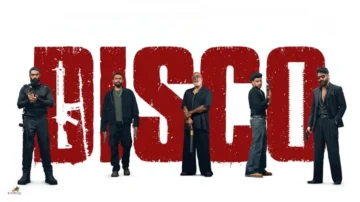
Dheeran Arunkumar opens on a commodity most crime films wouldn’t touch: human hair, sorted by length and shade, moving through mafia hands toward a global market.
Vetri plays Selva, the son pulled into that economy, and the film’s real subject is what the trade does to the family standing beside him.

A Crime Economy Built on Strands Instead of Gold Bars
The premise earns its novelty honestly. Indian hair is treated on screen as a fungible asset, valued for dark colour, length and strength, then converted into coercion, supply wars and bloodshed.
Arunkumar’s screenplay keeps the mechanics visible instead of hiding behind generic gangster mystique. Control of a product means control of people, and the film stages that equation with an almost clinical patience.
Where the screenplay tightens, it also flattens. The rivalries arrive on schedule, money, jealousy, betrayal, and the film leans on familiar crime-drama architecture to move them.
The Father-Son Axis Carries More Weight Than the Mafia War
Livingston’s Marimuthu is the film’s warmest presence, a father whose loyalty reads in posture and hesitation rather than speech.
When betrayal shifts the conflict from business to blood, the emotional pressure lands because Livingston and Vetri share scenes with real spatial intimacy, close framing, long silences, eyes that avoid contact before a confrontation.
The mafia apparatus around them is structurally antagonistic but dramatically anonymous. No single villain anchors the threat, so the danger feels institutional rather than personal.
That choice gives the film its unusual texture. It also costs the climax a face to hate.
Vetri’s Intensity Meets a Screenplay That Won’t Fully Commit
Vetri’s Selva is the bridge between trade-world mechanics and family drama, and he plays the role with a coiled restraint that rarely tips into showboating.
The performance recalls the procedural restraint that defined Ah, where atmosphere was allowed to carry tension the plot refused to explain.
Priyalaya’s Renu supplies the film’s emotional counterweight, handling love, anger and compassion in quick succession without losing the thread of a single character.
The ensemble beyond them is presented with limited dramatic function. Abhirami Venkatachalam and A. Venkatesh appear in the principal listings, but the screenplay gives them little scene-level work to register.
Where the Craft Holds and Where It Slips
Arunkumar’s direction is strongest when it stages the trade as labor, hands sorting, weighing, negotiating, before violence intrudes.
That contrast between commerce and brutality is the film’s most distinctive visual idea, even if the camera rarely pushes it beyond functional coverage.
The pacing follows a conventional crime-drama arc: setup, rivalry, betrayal, escalation. The middle stretch relies on plot momentum rather than atmosphere, and the film loses some of its early unease as a result.
The comparison to Melcow Pondicherry is instructive. Both films build tension from ordinary transactions turned sinister, but one trusts its own nerve longer than the other.
What the screenplay does well is embed greed in the mechanics rather than tacking on a moral at the end. The violence feels like an economic outcome, not a genre obligation.
A Family Drama Wearing a Crime Thriller’s Coat
The film’s emotional engine is the father-son relationship, and the crime plot exists to pressure it.
That structure echoes the thematic instincts of Enemy Of The Smuggler, another Tamil thriller that uses a specialized trade as a stage for loyalty and betrayal.
Neither film fully escapes the formula. Both lean on familiar beats when the premise deserves stranger choices.
Still, the hair-trade setting gives Black Gold a specificity that most mafia dramas lack, and the film earns some goodwill from that alone.
The Box-Office Question Nobody Can Answer Yet
The production banners behind Black Gold aren’t documented in the material available, which itself signals a release without the muscle of a major studio push.
For a mid-budget Tamil crime thriller with a recognizable lead and an unusual hook, the theatrical math depends on word of mouth rather than opening-weekend spectacle.
Vetri’s box-office leverage is real but narrow. He draws audiences who trust his choices, and this film asks them to follow him into a premise that promises more than standard gangster fare.
The broader exhibition market for contemporary Tamil thrillers rewards novelty when the execution holds and punishes it when the third act reverts to formula.
Black Gold sits somewhere in between, and its commercial fate will likely reflect that ambivalence.
The Verdict: A Thriller That Trusts Its Premise More Than Its Payoff
Black Gold is a film with a genuinely fresh economic engine and a father-son core that gives the violence somewhere to land.
What it lacks is the discipline to let that premise breathe without reaching for familiar crime-drama scaffolding when the tension should be doing the work.
Vetri and Livingston make the family conflict worth watching. The mafia war around them is less convincing, and the film never quite decides which story it trusts more.
It’s a promising swing from a director with an eye for unusual material, and a reminder that novelty in setup means little if the follow-through settles for convention.

Ankit Jaiswal is the Chief Author, covering Indian cinema and OTT releases with honest, no-filler criticism. An SEO strategist by background, he brings a research-driven approach to film writing, cutting through hype to tell you exactly what's worth your time.