The retro needle drops first, a buzzing wall of sound that promises a party. What follows is a two-hour-thirty-eight-minute negotiation between that promise and the cold reality of a criminal ledger.
A Hustle That Starts As A Party And Ends As A Debt
Ullas Chemban opens on a friend group that treats money as a rumour rather than a resource. Ousu and his crew chase a quick score with the breezy entitlement of men who have never been billed for their own mistakes.
The film’s first act runs on that social static, overlapping banter, borrowed bravado, the specific comedy of people who are broke but not yet frightened. It is a deliberately low-stakes register, and Chemban holds it longer than most crime films would dare.
When the scheme curdles into an underground mystery, the tonal floor drops out. Revenge and betrayal enter not as plot twists but as bills coming due, and the screenplay’s real subject reveals itself: the moment a lark becomes a liability.
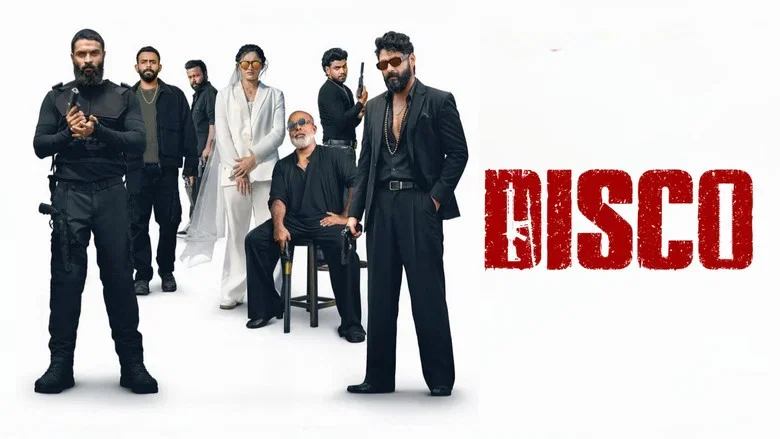
The Ensemble Is The Engine, And Also The Brake
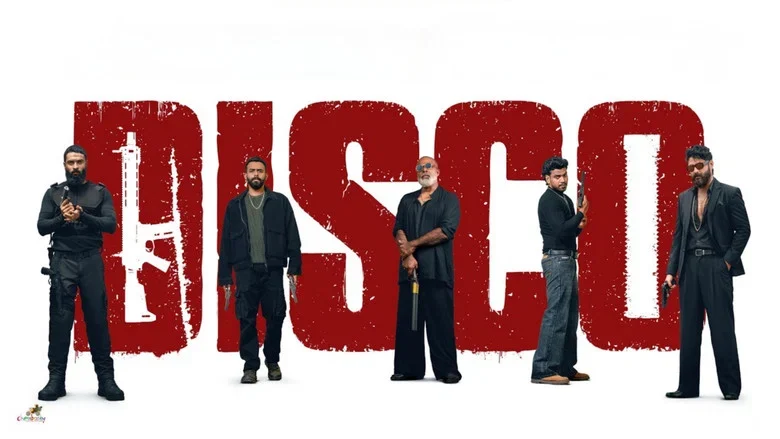
Antony Varghese carries the centre as Ousu, and the casting is the film’s sharpest commercial instinct. He plays the character’s early swagger with loose shoulders and a grin that arrives a half-second before the thought behind it.
That physical ease is the point. When the danger tightens, Varghese doesn’t announce the shift, he slows. The grin goes first, then the hands, until what’s left is a man doing arithmetic he doesn’t want to finish.
The supporting weight lands largely on Arjun Ashokan and Lukman Avaran, who give the group its friction and its loyalty in roughly equal measure. Ashokan’s timing keeps the comedy alive past the point the story has stopped being funny, which is a harder job than it sounds.
Avaran, meanwhile, plays the friend whose panic arrives early and stays late, a useful barometer for an audience trying to read the room. The ensemble’s warmth is genuine, though it occasionally smothers the thriller’s oxygen.
Chemban Vinod Jose lends the film a different register entirely, a veteran presence that quietly raises the stakes whenever he shares a frame. The film is better when he’s near it.
A Villain The Film Never Fully Builds
Here is where the machinery grinds. The underworld that swallows Ousu’s crew is a mood more than a structure, pressure without a face, threat without a thesis.
Without a defined antagonist, the second act’s revenge mechanics have nothing to push against. The crew runs, improvises, and survives, but the audience is never given a figure to fear, only an atmosphere to endure.
That’s a meaningful structural gap in a genre that lives or dies on the quality of its opposition. Titans made a similar bet on atmosphere over architecture, and it’s a gamble that pays off only when the dread is precisely calibrated.
Chemban’s direction keeps the camera close and the frames crowded, which sustains claustrophobia but rarely clarifies geography. In the action passages, it’s sometimes hard to tell who is chasing whom, and why it matters.
Retro Texture, Uneven Rhythm
Armo’s lensing leans into the retro-coded backdrop with warm, amber-toned interiors and a fondness for faces over spectacle. The visual grammar suits the film’s nostalgic streak, though it flattens the action into murk.
Manikandan Ayyappa’s score does the heavy lifting in the tonal transitions, pushing the comic passages into buoyancy before pulling the floor out beneath them. It’s the most reliable structural tool the film has.
The editing is where the runtime becomes a liability. At two hours and thirty-eight minutes, the middle stretch sags under repeated regroupings, and the film’s escalation loses momentum each time it pauses to re-establish who is angry at whom.
That said, the darker half does find its footing. Once survival replaces profit as the objective, the film’s pulse quickens and its stakes finally feel earned rather than announced.
The Commercial Arithmetic Of A Crowded Release Slate
Chembosky Motion Pictures is betting on a familiar formula: a bankable young lead, a stacked ensemble, and a genre that Malayalam cinema has been exporting with increasing confidence. The budget is modest by design, which lowers the bar for profitability.
But the marketplace is crowded, and the A certificate narrows the family audience that often decides a film’s theatrical fate. Antony Varghese’s box-office pull is real, his turn in Kattalan proved his action credibility, but this film asks him to share the frame more generously than his fans may expect.
The remake pipeline and franchise economics that dominate the industry’s current thinking offer no easy template here. Scene demonstrated how a strong star vehicle can still stumble when the material doesn’t trust its own tone, and Disco risks a similar wobble by refusing to commit fully to either comedy or crime.
What the film does have is a clear identity within the wave of contemporary Malayalam thrillers, a group-hustle story with retro styling and an ensemble that sells the camaraderie. That’s a viable niche, even if it isn’t a blockbuster formula.
The Verdict: A Hustle Worth Watching, Not Worshiping
Disco is a film about men who mistake momentum for strategy, and its own construction carries the same flaw. It moves beautifully until it has to explain itself.
What lingers is the quieter material, Varghese’s grin dissolving into calculation, the group’s easy banter hardening into something more transactional. Those moments suggest a sharper, leaner film buried inside this one.
Chemban has made a confident, uneven debut that understands the texture of its world better than its architecture. The hustle is real; the payoff is only partial.

Ankit Jaiswal is the Chief Author, covering Indian cinema and OTT releases with honest, no-filler criticism. An SEO strategist by background, he brings a research-driven approach to film writing, cutting through hype to tell you exactly what's worth your time.