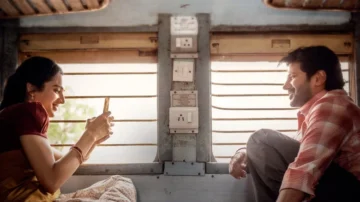
The lights go out across Chennai, and two strangers stay on a terrace because there is nowhere brighter to be. Eashwar Gopala Krishnan builds an entire film inside that enforced pause.
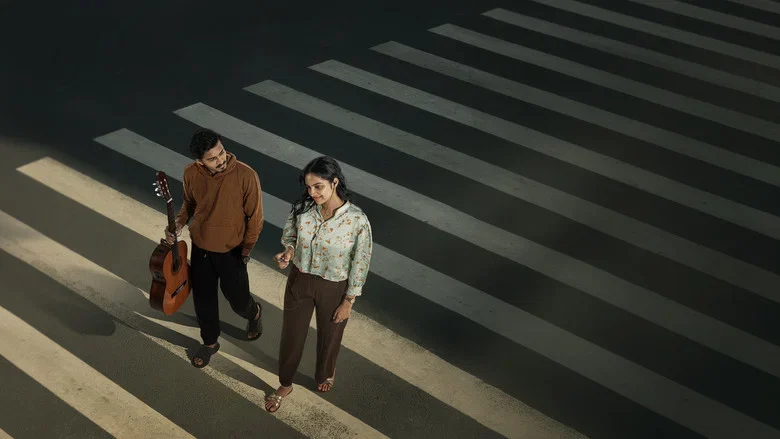
A Power Cut Is Not A Plot, But It Can Be A Cage
The premise is almost aggressively small: a freelance illustrator and a struggling music director share an apartment terrace through one evening of load-shedding. No antagonist arrives. No secret is unearthed.
What the film wagers is that the blackout itself can function as pressure, stripping away screens and streetlight and leaving two stalled careers exposed to each other. It is a gamble that pays in atmosphere more than in incident.
Gopala Krishnan’s instinct for containment echoes the spatial discipline other filmmakers have brought to two-hander dramas, though the comparison cuts both ways. Where Maya lady let its twin-identity conceit fray into theatrical overreach, this film errs in the opposite direction, hugging its single location so tightly that the middle stretch risks becoming a holding pattern.
Two Creative Professionals Who Cannot Finish Anything
The screenplay’s smartest engine is professional shame. Neither character is a romantic cipher; both are people whose work has quietly stopped working, and the conversation keeps circling back to that failure without ever naming it directly.
Sacchin Nachiappan plays the illustrator with a specific physical register, shoulders angled away, hands fidgeting with a pen he never actually uses, eye contact held a half-second too long before dropping. It reads as a man who has learned to apologize for his own presence.
MV Namritha’s music director carries the harder burden. She has to suggest a creative life that once had momentum, and she does it through vocal flatness, answering questions in a register slightly lower than the conversation requires, as if conserving energy.
Their dynamic recalls the kind of performance work that trades grand emotional declaration for incremental physical adjustment, the territory explored in Dark Chocolate, where a lead turn lives or dies on restraint rather than release.
The Silence Between Them Does More Work Than The Dialogue
The film’s finest passages are the ones where nobody speaks. Gopala Krishnan holds the camera on the terrace railing, on the distant generator-lit windows, on the two bodies occupying opposite ends of a concrete slab, and lets the discomfort accumulate.
Sound design does the heavy lifting. The generator hum becomes a bassline, distant street chatter a percussion track, and the absence of ceiling fans and television noise turns the rooftop into an acoustic chamber where every swallowed sentence registers.
What the film struggles to solve is escalation. Once the silence breaks and conversation begins, the writing leans on mutual confession rather than friction, and the scene settles into a comfortable rhythm that undercuts the tension the first act worked to build.
A Third Cast Member Who Never Becomes A Character
Arun Krishnan is listed among the cast, but within the film’s dramatic architecture he registers as a presence rather than a person, a figure who passes through the evening without altering its trajectory.
It is a structural oddity. In a two-hander this compressed, every additional body on screen should carry weight, and his does not, which leaves the film feeling slightly less airtight than its own premise demands.
The supporting ensemble beyond the central pair, neighbors glimpsed through stairwells, voices drifting up from below, functions as texture rather than drama, which is the correct choice for a chamber piece but also a reminder of how little the film wants to risk.
What The Blackout Lighting Actually Achieves
The visual progression from a normal Chennai evening into sunset and full darkness is the film’s most persuasive formal decision. Reduced illumination forces the camera closer, and the close proximity of two faces half-lit by a phone screen or a stairwell bulb generates a genuine intimacy.
AKR’s score stays deliberately sparse, arriving only at the edges of scenes rather than underlining them, which respects the material’s quiet register. The restraint is admirable, though it also means the film has few tools left when it needs a lift.
The editing, at a listed runtime that sits somewhere between a brisk forty-three minutes and a fuller hour, compresses the evening into a rhythm that occasionally feels rushed at the exact moments it should breathe.
The Ending Chooses Recognition Over Resolution
What the film ultimately offers is not a romance concluded but a recognition achieved, two people who needed to hear a specific thing about their own stalled lives, and who hear it from a stranger because a stranger has no stake in flattering them.
That is a genuinely mature dramatic idea, and the film’s refusal to convert it into a conventional coupling is its most defensible choice. It also leaves the final image doing more work than the screenplay has earned.
The tonal kinship with other recent Tamil dramas that prioritize emotional interiority over plot machinery is clear, and the comparison is instructive.
Where Angelina let a fragile central performance carry a mystery that forgot to resolve itself, this film at least knows what it is: a brief, honest conversation between two people running out of momentum.
A Limited Release That Tests The Patience Of The Exhibition Market
The commercial math here is unforgiving. A forty-three-minute chamber drama with no star anchor, no verified production banner of scale, and no marketing footprint beyond a trailer listing is not built for the theatrical ecosystem that currently rewards event cinema and franchise continuity.
Whatever banner is backing this release faces a familiar arithmetic problem: the audience for intimate, dialogue-led Tamil drama exists, but it is increasingly conditioned to wait for streaming. A film this short and this quiet will struggle to justify a ticket price against the living-room alternative.
For the lead performers, the calculation is different. Nachiappan and Namritha are doing the kind of work that builds critical credibility rather than box-office leverage, and the film’s value to their careers will be measured in future casting conversations, not opening-weekend numbers.
The broader question, whether short-form, single-location drama can sustain a theatrical window at all, is one the contemporary Tamil dramas pipeline has not yet answered, and this release does not settle it.
A Small Film That Earns Its Quiet, Even When The Quiet Runs Thin
Sooriyan Maraindha Maalai is not a film that will convert anyone who believes drama requires escalation. It is a film that believes a rooftop, a blackout, and two people who have stopped finishing things are sufficient material for an evening.
For long stretches, that belief holds. The performances are specific, the sound design is attentive, and the refusal to manufacture a villain or a twist is a mark of confidence rather than timidity.
But confidence is not the same as command, and the film’s middle stretch drifts where it should tighten, mistaking emotional honesty for dramatic momentum. It is a small, sincere, occasionally frustrating piece of work, and in a market that rarely makes room for either, that is worth noting.
The lights come back on. The two of them go back inside. What lingers is not whether they will meet again, but whether either of them will finish the thing they were avoiding.

Ankit Jaiswal is the Chief Author, covering Indian cinema and OTT releases with honest, no-filler criticism. An SEO strategist by background, he brings a research-driven approach to film writing, cutting through hype to tell you exactly what's worth your time.